Participants are wanted for a study into the association between vision impairment and sleep, health, and wellbeing. The researchers are keen to identify the effects of different conditions including aniridia.
Many people with aniridia experience sleep issues which may be related to having hypoplasia, and other anomalies such as with the pineal and pituitary glands.
Sleep and biological daily (circadian) rhythms are essential to maintaining the healthy balance and functioning of the mind and body. Our master internal circadian clock coordinates our body’s daily physiological and behavioural cycles to the Earth’s solar day. This includes daytime alertness and sleep timing, to synchronization of changes in hormone secretion, to fluctuations in mood and cognitive ability.
The researchers are based in Oxford and want to hear from people with visual impairments from around the UK.
Rare Disease Day is always a very good opportunity to bring people together and raise further awareness of aniridia.
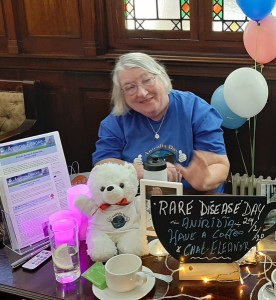
To mark the occasion, trustee Eleanor Burke hosted an aniridia meetup at Wynn’s Hotel in Dublin on Saturday 29 February 2020, from 3pm-6pm.
Despite the very stormy wet weather there were a total of eight people 4 with aniridia. Jill came with her son Stephen, Marty came with his mum and Finton came too. .
Eleanor
The event was free and included a non-alcoholic welcome drink.
Anyone affected by aniridia was welcome to attend, including patients, parents, children and professionals. As proven by the most recent gatherings in Scotland & London, our meetups are a wonderful opportunity for people to share experiences, get supportive advice and make new friends, so please do join us!
If you would like to organise a meetup in your area, then you are more than welcome to do so, and indeed we encourage it. Email meetup@aniridia.org.uk to let us know when and where it will take place, and we’ll help you to promote it.
Aniridia, caused by mutation in the so-called eye ‘master regulator gene’, PAX6, can impact on vision in several ways. In addition to the absence or near-absence of the iris, people with aniridia are at high risk of cataract (cloudy lenses) and glaucoma.
One of the most intractable problems however is the deterioration of the front surface of the eye, the cornea, which can occur over time, leading to inflammation, opacity and irritation. Conventionally, this corneal deterioration (‘aniridia-related keratopathy’ or ARK) is treated as a failure of the stem cells that maintain the corneal epithelial
surface, and transplant of stem cells can improve vision, at least for a while.
However, there is a lot more going on: the corneal surface of people with aniridia is typically more fragile than found in the general population. Not only is it more likely to suffer small recurrent abrasions, it is also slower at repairing wounds, and metabolically slightly less able to respond to environmental stress. Corneas have fantastic powers of regeneration, but this ‘triple-whammy’ means that over time, the corneas of people with aniridia do tend to deteriorate, and there is no cure.
Typically, people with aniridia have only one functional copy of the PAX6 gene in every cell, instead of the normal two. The other copy has picked up a mutation that stops it from producing a functional protein, and of course these mutant genes can run in families. The mutations mean that cells in people with aniridia are not producing as much PAX6 protein as the eye needs to develop normally.
Recently drugs such as Ataluren and others have been developed and trialled that can
‘rescue’ mutant cells and allow them to produce more normal levels of protein. They show great potential to improve the eye condition in aniridia, but will only ever work for the minority of people who have a particular type of mutation where a single DNA base change ‘stops’ the gene somewhere in the middle. Drugs such as Ataluren allow cells to ignore such mutations, but are not designed to help the majority of people with aniridia who have different mutations, such as for example, the whole gene being missing.
To address this, we are working with researchers such as Professor Daniel Aberdam at INSERM (Paris) and Tel Aviv University. They have screened for new safe drugs that for one reason or other, can increase PAX6 protein levels in human cells that carry aniridia-causing mutations. They found two drugs that in cell culture tests in vitro, can safely raise PAX6 levels in mutant corneal cells, rescue gene expression and help with wound healing. We believe these are very exciting as candidate cures for the corneal problems associated with aniridia.
Fight for Sight have funded us to test whether these drugs can fulfil their promise. The intention is to test them in mice that carry Pax6 mutations equivalent to those found in people, to see if they are a viable oral or topical (i.e. eyedrops) therapy for aniridia. The Pax6 mice are perfectly healthy and live normal ‘lab mouse’ lives, but show the iris, lens and corneal problems associated with human aniridia. They therefore have relatively poor eyesight, and the idea of the project is to test whether these drugs can improve their vision. If it works on mice, there is good reason to think it will work on people too. It is a twelve-month project and so we hope to be able to report results by the end of 2020.
It is not intended that the drugs will make the iris grow back or give everyone with aniridia perfect eyesight – that’s a battle for another day. However, we are very optimistic that we will be able to ameliorate the corneal problems that can be an important component of the vision loss associated with aniridia, and a persistent irritation to people affected.
While a cure for aniridia is probably a long way off, there is hope that significant improvement of vision will become routine in the medium term.
Draft guidance about using artificial iris implants in England is open for consultation.
This follows a review evidence on the efficacy and safety of artificial iris implants for people with aniridia.
The recommendation is that, for the moment, surgery to insert an artificial iris in patients with congenital aniridia should only be performed as part of research.
Do you agree?
Take part in the consultation and let us know your views so that we can represent patients.
The consultation will close at 5pm on Thursday 19th December.
The final version of the guidance is due to be published in March 2020.
What is NICE guidance?
The purpose of NICE guidance, is to provide information for doctors in England on the risks and usefulness of a treatment. The issuing of NICE guidance is not ‘a stamp of approval’ for any particular treatment. It is simply a review of the latest research and other evidence regarding how safe and effective the treatment is. This evidence is used to draw up recommendations for surgeons on how and when the treatment should be used.
The NHS is not obliged to follow the guidance but it is considered best clinical practice.
NICE was established in legislation as an England-only body. However, we have agreements with the devolved administrations so that Interventional Procedures guidance applies in Wales, Scotland and Northern Ireland.
What is an artificial iris implant?
An artificial iris is a medical device which can be placed inside the eye. It is designed to reduce glare by preventing excess light from entering the eye. It is a ring similar to a natural iris, but unlike a natural iris it cannot change in size. It can be black or colours to mimic a natural iris.
It may give some improvement in visual acuity but cannot reverse low vision caused by conditions such a foveal hypoplasia or nystagmus which many people with aniridia have.
There are several models available from different manufacturers. Surgery is required to fit the implant in front of the eye’s lens. The exact surgical procedure depends on the model of artificial iris being used and the patient’s individual needs.
As with all surgery, there is some level of risk. Patients with aniridia often have other eye conditions such as glaucoma or clouding of the cornea (keratopathy) which can develop after, or be made worse by surgery.
For this reason fitting an artificial iris implant is often done alongside cataract surgery. Cataracts is when the eye’s natural lens becomes cloudy. In surgery it is removed, and usually replaced by an artificial lens. Add an iris implant to the to the artifical lens reduces the need for (and therefore the risks of) two separate surgeries.
What does the draft guidance say?
NICE has drafted two guidance documents,
one for congenital aniridia (aniridia which is present from birth)
one for acquired aniridia (where one or both irises have been damaged through injury).
After reviewing all the available evidence the NICE Interventional Procedure Advisory Committee recommended that:
for congenital aniridia, the artificial iris implant procedure should only be performed as part of formal research (as it has been up until now).
This is because there is not yet enough evidence available on its safety and efficacy.
for acquired aniridia there is a little more evidence available and so the procedure can be performed but only with special arrangements. This means there is still some uncertainty about whether the procedure is safe or effective.
What does this mean for patients?
There is no change for patients with congenital aniridia in England.
Artificial iris implants have been used in a small number of cases in the UK as part of clinical research. This will continue.
Not all hospitals with an ophthalmology department will be able to offer artificial iris implants. Patients would need to ask their ophthalmologist for a referral to a specialist centre to get the treatment.
For patients with acquired aniridia, artificial iris implants may start to become available more locally over time.
The guidance gives patients considering artificial iris implants the chance to review the currently available evidence on the safety and effectiveness.
The feedback Aniridia Network has heard from medical experts is cautious; iris implants would not be recommended for most patients with congenital aniridia at the moment.
Artificial irses are definitely not a “cure” for aniridia. The main potential benefits could be a reduction in glare and hence the symptoms of photophobia, plus a more “normal” appearance to the eye if coloured implants are used.
The main risks are causing or making worse existing glaucoma and keratopathy, plus other complications which could arise during or after surgery (for example if the implant was to move out of place). These complications can cause further sight loss and may necessitate further surgery.
Where iris implants have been used in the UK so far, it has most commonly been done alongside a cataract operation. Surgery purely for fitting an iris implant may be considered not to have enough potential benefits to outweigh the potential risks.
Patients should bear in mind that this procedure is still considered experimental. Any decision should only be made after an in depth discussion with their ophthalmologist about their individual circumstances.
How can I find out more and give my views?
Read the draft guidance and submit your comments using these links:
We at Aniridia Network would also like to hear what our members think about this draft guidance so we can respond to the consultation in a way that represents the patient community as a whole. Tell us what you think by emailing: info@aniridia.org.uk.
The team will determine whether taking either of the drugs by mouth or as eye drops can restore levels of a vital protein to normal levels. If successful the study could lead to future trials to test whether the drugs can reverse symptoms in adults, or even prevent them from occurring in babies.
A woman has raised £2,629 for people with aniridia and WAGR syndrome by completing a gruelling swim across the English Channel – at the second attempt.
Nicola S Morgan took on the challenge to help buy a £1,800 electronic magnifier for 7 year old Mari who has WAGR. The remaining £600 collected was split between Aniridia Network and International WAGR Syndrome Association (IWSA) – support organisations that Mari and her parents are members of.
Nicola’s said
“A massive thank you to the people who donated for little Mari – thank you guys, it means a lot. Surround yourself with supportive people and surround yourself with people more successful than you’’.
Swimming
Nicola only learned to swim in 2011 – by teaching herself. She had a desire to understand the power of mindset and resilience, so set herself the huge goal of swimming the ‘Mount Everest’ of swims from Dover to Calais. It is an accomplishment completed by only around 1,800 people, just 36% of them women.
1st attempt
In 2017 she started near Dover and spent 14.5 hours in water. She was pulled from the sea just 4 miles away France, as she was stuck in a relentless current.
She felt she had let herself and the crew down. However, a comment from the support boat’s captain convinced Nicola to try again: “You haven’t failed, it’s just unfinished business”.
Training
For the past two years, Nicola has trained tirelessly in seas, lakes and swimming pools –sometimes for over 8 hours a day, a few times a week. She acclimatised herself with ice baths, and developing her swimming technique.
Throughout the long and difficult training, Nicola has relied on the strength and support of her business partner, Einir Williams at NSM Training and Consultancy. Einir has also spent many months of her own time attending practices across the country – always there to give her support and motivation.
On the night of the 2nd swim, Einir was one of the key members of the support team on the boat ‘High Hopes‘. They monitored Nicola’s progress, prepared her feeds and gave her constant encouragement to continue, such as ‘‘it’s your turn to win’’. Nicola knows that she could not have achieved her goal without Einir by her side throughout the entire process, and would like to give a special thanks to her.
2nd attempt
The next try began at 11.04pm on 16 July 2019. It involved swimming in the pitch black night, in chilling 8 degrees Celsius water, through swarms of jellyfish. Nicola developed a shoulder injury within the first 6 hours. Not an enjoyable experience! The next day, after 15 hours and 46 minutes Nicola succeeded in the phenomenal task. Her 33km exhaustive swim ended with cheers from locals on the French beach.
An amazing feat such as this requires dedication, courage, and an unbreakable level of resilience – skills which Nicola advocates strongly to everyone she meets.
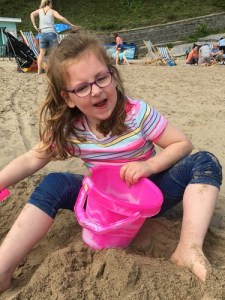
Nicola was mainly raising money for Mari, from Caernarfon in North Wales.
Mari has aniridia as part of the extremely rare WAGR syndrome. At just 7 years old, she has already had 11 surgeries. When only 12 days old she was rushed to hospital for an operation on her bowel. A few days before she was 1, doctors discovered she had 7 tumours on her kidneys. A year of chemotherapy and surgery followed to deal with this cancer, which can develop as part of WAGR.
Her aniridia means she is registered blind, lacks depth perception and struggles to see in bright light, but can read very large text close-up – which she very much enjoys.
Although, her recent hospital check-ups have been she is at risk of tumours returning and losing more sight.
Mari is a loving, caring and affectionate child who charms everyone she meets. She is very determined and has relied on her resilience to find her own way of doing and enjoying things. She is very much like any other child who enjoys swimming, crafts, dancing and riding her sccoter! Mari’s parents are keen that she is treated like any other child who simply needs a bit more supervision to ensure her safety. In her short life she has been through so much but she is such a happy little girl, she is really tough and doesn’t complain about anything.
Mari attends a mainstream school and loves it there. She has additional support and is learning braille. She requires learning aids and equipment to support her with her learning.
After hearing of Mari’s story, Nicola was determined to achieve her goal and raise as much money for Mari as possible on the way.
Electronic magnifier
Mari’s parents were raising money for an Optelec Clearview HD. It is a video magnifier that enlarges the text and images on paper to a size Mari can see.
With the sponsorship Nicola earned they were able to buy this life-changing piece of equipment for £2,800.
Using the device, she can now read and learn more, two activities she loves. This will help her gain independence.
Mari’s mum Caryl said:
“Thanks Nicola for your kindness and bravery swimming the channel!
Mari loves her new Optelec, here she is reading before bed…🥰 xx”
There was still money left over and so this was split into donations to two relevant charities.
International WAGR Syndrome Association
IWSA promote knowledge and awareness of WAGR syndrome and its complications and treatments, to stimulate research and to reach out to those affected, in an effort to improve their lives.
It is a not-for-profit organization, comprised of a network of families, health care professionals, educators, and others who care for individuals with WAGR syndrome. Its members are located all over the world.
Aniridia Network
We are a charity that supports people with aniridia in UK and Ireland. We helping people with aniridia as well as their families, doctors and teachers to be: hopeful, confident, supported and well informed about aniridia and related issues.
Membership of both organisatiosn is free. Their funding for the organization comes from donations and fundraising activities led by member friends and families.
In October there was a donation handover ceremony. Former Aniridia Network trustee Emily received the £300 cheque and said:
“Well done for your amazing feat. This money will help Aniridia Network help families just like Mari’s with providing support and education and help all those people with aniridia achieve their goals too.”
The money will go towards organising supportive events for patients, subscriptions, grants for research into sight saving treatments, and creating information leaflets/newsletters. It will make a big difference to people with aniridia.
Massive congratulations and thank you again to Nicola on her achievement and generosity.
The cards even have lovely designs by children from around the world who have aniridia. Send us your design to include.
Christmas cards in emails send a happy seasonal greeting, plus you:
1. save time and effort by not buying, writing and posting paper cards
2. save trees and energy by not using paper for cards and envelopes.
3. improve treatments for aniridia by donating the money you would have spent, to make the European Aniridia Conference possible.
You choose the how much to donate when sending ecards. Please be generous, but all amounts make a difference.
The money donated will be used to host the world’s best eye doctors and scientists, plus patients and relatives, at a big UK conference. Together they will make vital progress on new treatments and share expertise to prevent sight loss caused by aniridia.
The conference will be in London 14-16 August 2020 by Aniridia Network. Everyone is welcome to come. Register your interest, save the date in your calendar and look out for more details coming soon.
Add your own card design
We would like to offer more Christmas card designs by people with aniridia. Send photos/scans of artwork to communications@aniridia.org.uk. We will upload the best ones for anyone to use in their cards. Your design could go around the world!
Everyone at Aniridia Network and Aniridia Europe wishes you a very Merry Christmas, spent in a way that you enjoy, time to recharge and a successful year to come.
This month we held 2 successful meet-ups in different parts of the UK, bringing together a variety of people affected by aniridia.
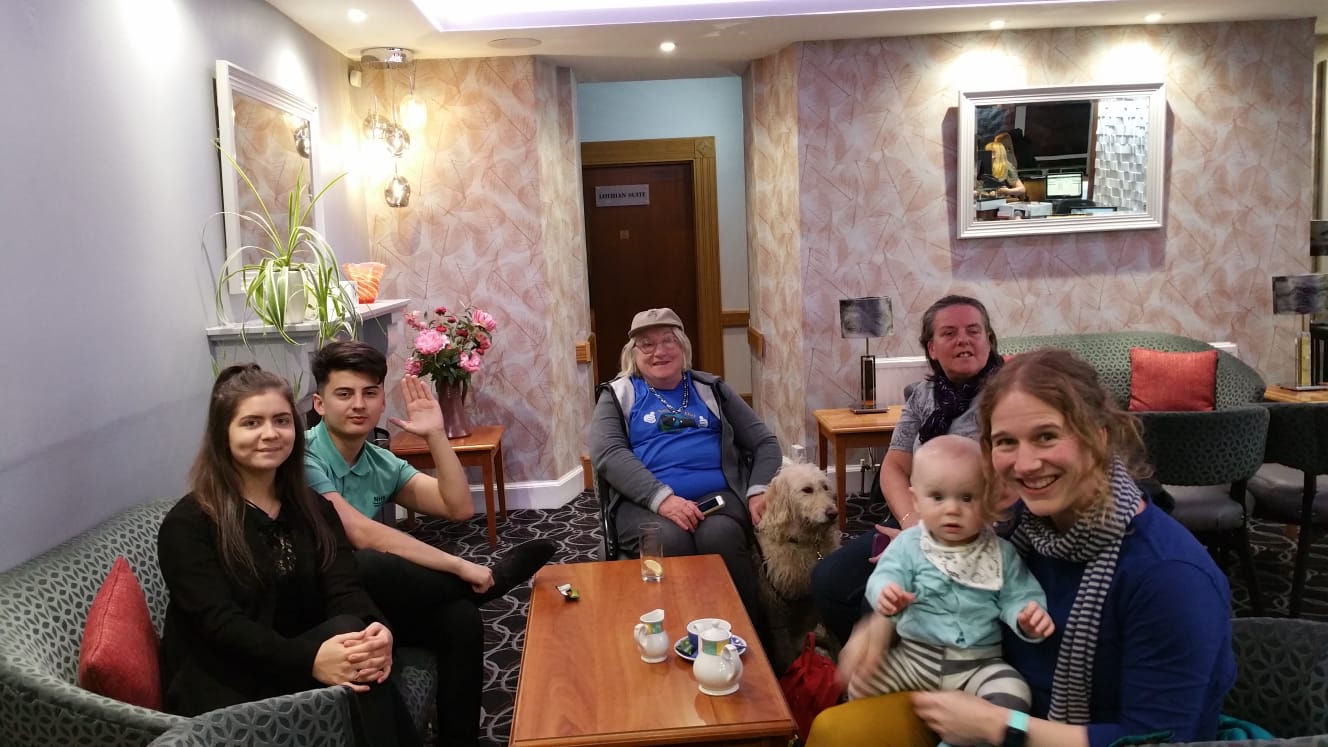
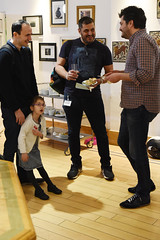
In the north we were proud to hold our first ever event in Scotland, when trustee Eleanor Burke welcomed 11 people to the Best Western Kings Manor Hotel in Portobello, Edinburgh for an informal get-together.
Attendees ranged from parents and their children to couples and individuals, including a gentleman from RNIB Scotland. Everyone received a welcome beverage, and over the next 3 hours they all enjoyed networking and discussing their various experiences of living with aniridia. The children also got to play with a very special Aniridia Day teddy bear, which one lucky 5-year-old was able to take home.
In the south-east, meanwhile, we once again held a social gathering after the Sight Village exhibition in Kensington, London. A group of 9 people, hosted by trustees James Buller and Dave McKay, met for drinks at Pret, before moving on to Bill’s restaurant for a nice dinner. It was a lovely evening of socialising and shared stories of life with aniridia.
Thank you very much to everyone who attended these meet-ups, making them so enjoyable, informative and worthwhile. And big thanks to our trustees Eleanor, James and Dave for hosting them. These events are always a fantastic opportunity to meet others with the condition.
We are hoping to repeat both of these meet-ups again next year, and we will of course share the dates and locations with you nearer the time.
But everyone is welcome to organise aniridia meet-ups in their area, and we highly encourage you to do so. Once you’ve arranged a venue, date and time, please do let us know and we’ll help you to advertise it. The more opportunities we can all provide for people with aniridia to get together, the more it benefits our community through networking, support and shared experiences.
On the weekend of 7-8 September, Kieron Price ran 100 kilometers along the Thames Path in an incredible 21.5 hours. He raised over £900 for aniridia research via Fight for Sight.
He took on the challenge because his daughter Evie has sporadic aniridia. This naturally came as a big shock to Kieron and his partner when she was first diagnosed. But they are giving Evie every support, and they are very happy with the checkups and treatments that Evie is receiving at Great Ormond Street.
Evie is also coping well with the condition, as Keiron explains:
“Because Evie was born with it, she handles it like it’s part of everyday life. She copes and adjusts where she has to. Everyday this little girl surprises me. She’s aware that she has a condition, although she still doesn’t fully understand what it is, but she deals with it. She has asked why she doesn’t have blue eyes like Mum, Dad and now brother so trying to explain the reasons why can be sometimes difficult.
We know the condition won’t define who Evie is and will encourage Evie to try new things. Nor will it stop us to try and find a way to slow it down, stop it, prevent it and hopefully one day cure this disease.”
A huge well done and thank you to Kieron on his achievement! Everyone who knows him is so proud for him.
Teresa & Vaughan Kay, along with their friends Thomas Thorpe & Vicky Grimmer, have challenged themselves to a summer of fundraising, by taking part in 4 big cycling events. And half of all the money raised will go to the Aniridia Network.
So far they have successfully completed 3 events, raising nearly £850 for Aniridia Network:
5th May 2019 – Tour De Broads Spring, 100 miles – completed in 6 hours 20 minutes
7th July 2019 – Norwich Cycle Swarm, 70 miles – completed in 4 hours 40 minutes
18th August 2019 – Tour De Broads Summer, 100 miles – completed in 6 hours 40 minutes
Their final event – the Dusk til Dawn 12 Hour Mountain Bike Night Race – takes place on 5-6 October 2019. Please support them if you can.
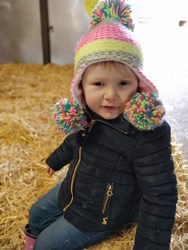
They’re doing it for their daughter Rhiannon. She has aniridia, nystagmus and cataracts, and is a “happy, smiley, chatty little girl”. She also loves her regular music sessions, where she has made many friends who are also visually impaired.
Teresa & Vaughan attended our conference last year, where they met others with aniridia for the very first time and enjoyed the various speeches. We also helped them compile a “Pupil Passport”, to help teachers and other care-givers understand Rhiannon’s condition and support needs.
Already their efforts have raised a lot of money and awareness, including appearances on ITV Anglia News and BBC Look East, and articles in the Daily Mail, The Sun and local newspaper the Eastern Daily Press.
We are very grateful they have been inspired to fundraise for us this year, and we wish them all the very best of luck with their final event!

 Participants are wanted for a study into the association between vision impairment and sleep, health, and wellbeing. The researchers are keen to identify the effects of different conditions including aniridia.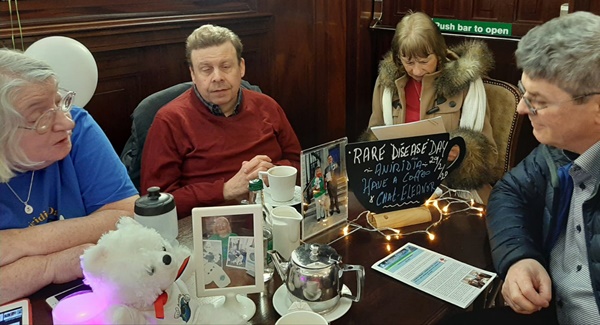
 By researcher Martin Collinson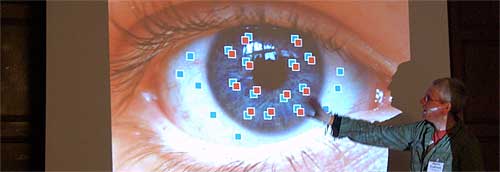
 Draft guidance about using artificial iris implants in England is open for consultation.
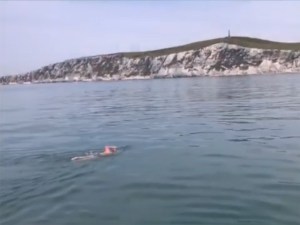 A woman has raised £2,629 for people with aniridia and WAGR syndrome by completing a gruelling swim across the English Channel – at the second attempt.
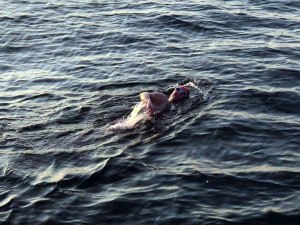 In 2017 she started near Dover and spent 14.5 hours in water. She was pulled from the sea just 4 miles away France, as she was stuck in a relentless current.
 Nicola was mainly raising money for Mari, from Caernarfon in North Wales.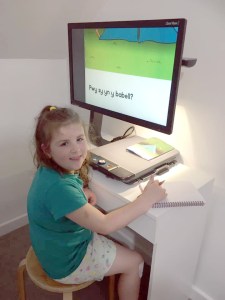


 The money donated will be used to host the world’s best eye doctors and scientists, plus patients and relatives, at a big UK conference. Together they will make vital progress on new treatments and share expertise to prevent sight loss caused by aniridia.
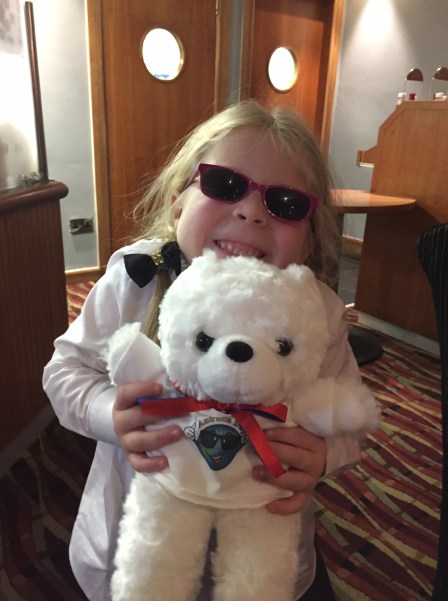 Attendees ranged from parents and their children to couples and individuals, including a gentleman from RNIB Scotland. Everyone received a welcome beverage, and over the next 3 hours they all enjoyed networking and discussing their various experiences of living with aniridia. The children also got to play with a very special Aniridia Day teddy bear, which one lucky 5-year-old was able to take home.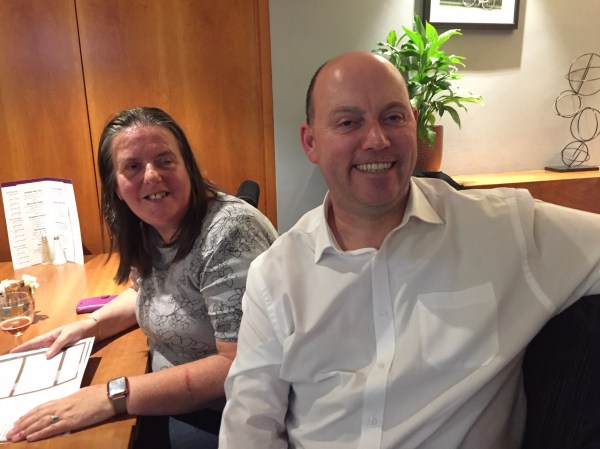
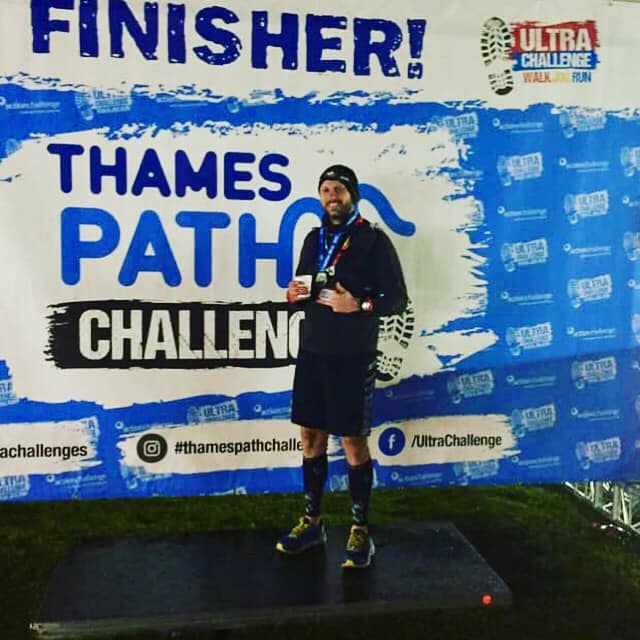
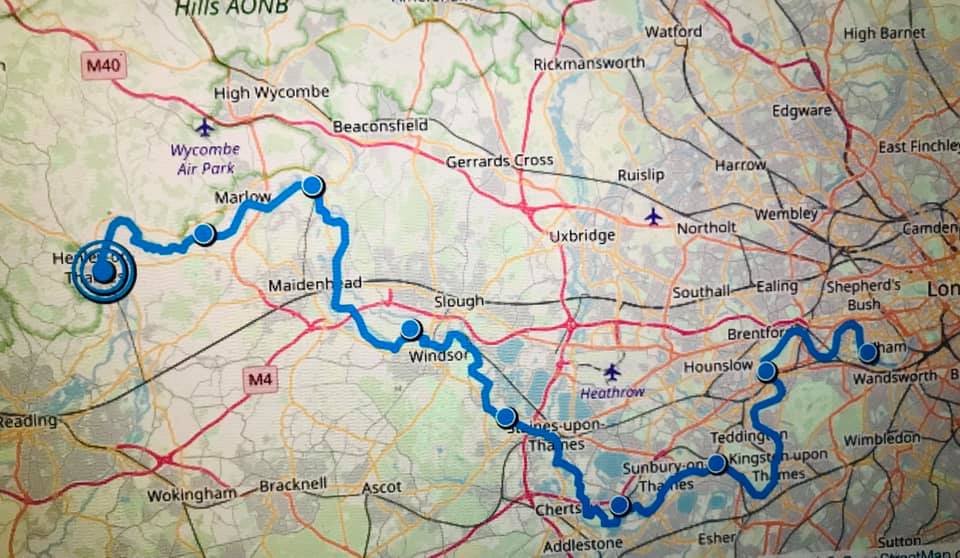 He took on the challenge because his daughter Evie has sporadic aniridia. This naturally came as a big shock to Kieron and his partner when she was first diagnosed. But they are giving Evie every support, and they are very happy with the checkups and treatments that Evie is receiving at Great Ormond Street.
 Teresa & Vaughan Kay, along with their friends Thomas Thorpe & Vicky Grimmer, have challenged themselves to a summer of fundraising, by taking part in 4 big cycling events. And half of all the money raised will go to the Aniridia Network.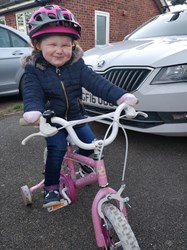





 Aniridia Network