
Our next event will be online,1-4pm Saturday 1 November 2025. We have put together a great line up of speakers, to talk about a plethora of aniridia related themes online: from personal experiences to cutting edge research.
Come along and meet others with aniridia, their families, and the fantastic medical and scientific experts pushing forward our knowledge on aniridia.
Draft agenda
- 13.00 Session 1
- Welcome
- How PAX6 gene deficiency affects your body – Professor Mariya Moosajee, Moorfields Eye Hospital
- Brain development and the aniridia gene – Calvin Chan & Samuel Heczko, Edinburgh University
- 14.10 BREAK
- 14.20 Session 2
- Privilege, Protest. Power – Elliott Lee, person with aniridia
- Annual General Meeting 2025 – Aniridia Network trustees
- Train station maps for visually impaired people – Emily Nash, person with aniridia
- 15.10 BREAK
- 15.20 Session 3
- Questions and answers (particularly relating to glaucoma) – Mr John Brookes
- 15.50 Open discussion and social after party
As with all our recent conference sessions we aim to record and publish these talks later on YouTube
How PAX6 gene deficiency affects your body
Professor Moosajee, Moorfields Eye Hospital

It is now accepted that reduced PAX6, caused by genetic changes involving this gene, does not just affect the eye (causing aniridia) but has an impact on many other organs of the body. In this talk, I will expand on the impact of PAX6 outside the eye, and expand on insights gained from looking at all the metabolites in the blood of aniridia patients (compared to unaffected age and gender matched control individuals).
Professor Mariya Moosajee is a clinician scientist, she is a Consultant Ophthalmologist specialising in Genetic Eye Disease and Head of the Genetics Service at Moorfields Eye Hospital, Professor of Molecular Ophthalmology at UCL Institute of Ophthalmology, and Group Leader of Ocular Genomics and Therapeutics at the Francis Crick Institute, London.
@MariyaMoosajee on Threads
@profmariya on Blue Sky
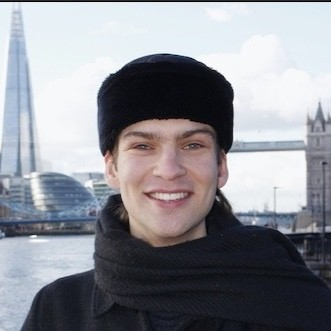
Exploring PAX6 related gene regulatory networks & its role in the developing brain
Samuel Heczko & Dr. Wai Kit (Calvin) Chan, University of Edinburgh
We all come from a single cell. But how does this cell know when and how to divide into a brain? And how does the aniridia associated gene PAX6 guide this process?
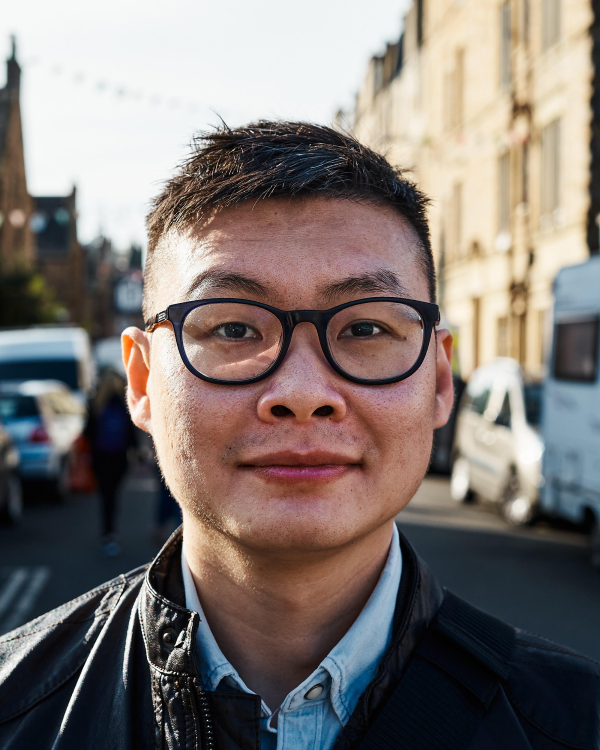
Samuel is a Phd student of developmental neuroscience under the supervision of Dr Chan. Samuel on LinkedIn.
Dr. Wai Kit (Calvin) Chan is a Research Fellow at the Centre for Discovery Brain Sciences. His research focuses on the molecular and cellular mechanisms underlying forebrain development and pathology, particularly in the context of human neurodevelopmental disorders. He is currently investigating PAX6 haploinsufficiency using advanced organoid and assembloid models, employing techniques such as single-cell RNA sequencing, immunofluorescence, and electrophysiology.

Privilege, Protest. Power
Elliott Lee, person with aniridia
Identifying privilege, embracing protest, challenging power have all been integral to a journey these 25 years that I could not have imagined. Fighting for a seat at the table for the most marginalised has morphed into a passion, although that has only been possible through recognising my own vulnerabilities and taking part in civil resistance. Aniridia has shaped who I am, and I have driven that into a vision for a future that carries hope and dignity for all.
Elliott is a social activist and political campaigner who champions the most vulnerable. From a shy kid to a vocal advocate, he fearlessly confronts hate, the political status quo, and even has an arrest under his belt (From protesting). Mission? ensure every voice is given its place at the table.
Annual General Meeting 2025
Aniridia Network trustees
At the annual general meeting the trustee’s will seek approval of the minutes of last year’s meeting, then present highlights from the charity’s annual report, giving time for questions and comments. The results of the trustee election will also be announced.

Can access to station information improve train travel for people with sight loss?
Emily Nash, Coventry University
My research is looking to identify and understand what barriers currently exist and find solutions to improve access. I will talk about how interviews and a usability study are helping achieve this.
Emily Nash lives in South Wales with her two children and they all have aniridia. Emily is currently completing a PhD in improving access to train travel for people with sight loss. She presented at the 2023 conference about her lived experience and the plans for her research.
Emily has been a member of Aniridia Network since 2015 and was a Trustee when she first joined.
Emily Nash on LinkedIn
Questions & Answers
Mr John Brookes, Moorfields Eye Hospital
A chance to ask a Consultant Ophthalmologist about aniridia issues, particularly regarding how glaucoma is treated in children and adults with aniridia, from medical, to laser and surgery. Questions need to be submitted in advance during event registration or to enquiries@aniridia.org.uk.
Mr Brookes trained in London and qualified in 1993, subsequently specialising in ophthalmology and further, in paediatric glaucoma, for which he has been a consultant at Moorfields Eye Hospital since 2004. His main interest is in secondary glaucomas in children, such as aniridia and their surgical management.
Our events are aimed at people who have aniridia and their families, plus interested professionals in the UK.
Statements from previous events – people affected by aniridia tell us what they felt the best part of our conferences were:
- other people, having never met anyone else with aniridia.
- the social sessions worked really well as I find it hard to approach and speak to people I don’t know.
- benefiting from and meeting the speakers, experts in visual impairment, was very helpful for my children with their development and education needs.
- being with others with the same visual impairment – very reassuring and supportive.
- so much information that you can’t easily find it from other services.
- meeting and relating to a group of people with the exact same condition/conditions as myself, and hearing their experiences
Being there makes me feel:
- there are so many opportunities for my daughter out there.
- better informed, part of a great community, more hopeful
- uplifted and proud to be part of Aniridia Network
- really positive and thoughtful.
- positive, connected, hopeful, informed, gave me direction
To people who have not come before I say:
I highly encourage new parents to attend as it gives them a place to express their worries and get more answers than any other service.
come to meet people with same conditions/relations with people with aniridia, consultants/doctors and basically enjoy yourselves. It’s worth coming as it’s interesting, informative and enjoyable.
Past conferences
- Aniridia Network Conference and annual general meeting – Online 27 July 2024
- Aniridia Network Conference and Annual General Meeting – Birmingham – 2 September 2023
- Aniridia Network Conference and Annual General Meeting – Online – 13 August 2022
- 5th European Aniridia Conference 31 July – 1 August 2021
- Aniridia Network Annual General Meeting – Online – 1 August 2021
- Aniridia Network Conference and Annual General Meeting – Online – 21 June 2020
- Aniridia Network Conference and Annual General Meeting – Birmingham – 1 June 2019
- Aniridia Network Conference 2018 – London – 14 April 2018
- Aniridia Network Meeting – Dublin – 8 April 2017
- Aniridia Network UK Meeting 2016 – Wallington, London – 2016 – 14 May
- Conference 2015 – Newcastle – 26 September 2015
- Conference 2014 – Bristol – 7 June 2014
- Conference 2013 – May 18 – London
- Conference 2012 – Manchester
- Conference 2011 – Birmingham





 Aniridia Network