A mother and son’s perspectives of aniridia

Thirteen and a half years ago, if you had asked me what Aniridia is, I would not have a clue. But an event which happened in 1999 changed all of that: my son Daniel was born.

The first few months of Daniel’s life were fine – as much as they can be for first time parents! And then, in March 2000, my health visitor noticed Daniel’s eyes flickering up and down as he lay on his changing mat. What followed was every parent’s worst nightmare: the confirmation that there is ‘something wrong’ with their child.

Daniel was eventually diagnosed with Aniridia in October 2003. Prior to this the consultant ophthalmologist at Queen’s Medical Centre, Nottingham, was unsure of what condition Daniel had. At one point we were told it was Peter’s Anomaly, only to be told on the next visit that it wasn’t. No doubt any parents who are reading this will know the barrage of information you are given only to be ushered out of the door and subsequently forgetting all that has been said apart from the most important of facts: your child is visually impaired.

Finally, in 2006, we had confirmation that Daniel has partial aniridia. He has regular hospital visits and wears spectacles to control his squint. He did have nystagmus  but bizarrely this has disappeared. Daniel is a very lucky young man. I keep telling myself this. It could be worse. It should have been worse. He has partial sporadic aniridia and thankfully his vision is stable and his eye muscles are strong.

And yet Daniel continues to face stigmatism due to his vision. It seems to me (and I could be wrong) that because Daniel does not walk around with a white cane and a guide dog in tow, people can be very dismissive of his disability. Daniel is very independent but he has poor vision. He looks ‘normal’ and acts ‘normal’ and so society are very judgemental when they see a teenage boy looking through a monocular whilst standing at a bus stop. They stare and make comments. It can be very distressing for me. I wanted to know how Daniel copes with it.

And so I decided to ask him. What follows is a teenage account of having Aniridia and all that goes with it. I hope you find it helpful.

What is it like having aniridia?

(Laughs) I don’t really know! You’re asking me to describe something that I think is normal. I don’t know what it’s like to not have Aniridia, if that makes sense. I don’t know anything different.

You say that you don’t know anything different but are there times when you feel different?

Yeah. When I have to use my equipment (monocular, magnifier, raised desk) at school – well my old school. I have been called names and stared at. Sometimes people just want to look at them because they are curious but that makes me feel awkward.

At my old school I got bullied a lot about using my equipment. It wasn’t a great time. I felt different and it upset me. Things are better now at my new school but I still feel different when people are looking at things that I can’t see. Things like planes or hot air balloons in the sky.

What is the best thing about being you?

Everything! (laughs) I love my family, being around my family I mean. They are a huge part of my life.

And the worst things?

You don’t know you’re different until it’s pointed out to you. It’s hard because you feel ‘normal’ but then your differences are highlighted.

How do you deal with that?

I get on with it. I can’t change how people are and I don’t want to change who I am. I would not change my condition – if there was a ‘cure’ for aniridia I would not take it. Because it is a part of me, it’s who I am.

What are your plans for the future?

I want to go to university and succeed in that. I’d like to be a chemist. I don’t think my condition will affect my goals. I think I can pretty much do anything I want to!

Are there any things you find hard to do or cannot achieve?

I can’t see long distance. Roads and streets are a nightmare! I cannot read small text and I hate bright lights as it hurts my eyes and gives me a headache.

I won’t be able to drive either. That upsets me because I want my independence but it is something I just have to deal with.

Also there is a chance I will pass on aniridia to any children I have with my future wife (smiles shyly at this). This makes me feel sad. I don’t want my children to go through what I have gone through with bullying and stuff.

Perhaps when you have children society will have changed and people will be more understanding. What do you think?

Maybe. Everyone has the right to feel ‘normal’ don’t they? I know that when I’m with my friends and family I feel the same as everyone else and that’s good. But it is other people’s reactions that makes me feel different.  People should think before they stare or make comments.

If you were Prime Minister of the UK what would you change?

I would give disabled people back their Disability Living Allowance. It’s wrong that so many people have had their money taken away. I would also make sure funding is in place for blind and visually impaired people so they can use services that would help them.

Posted in Parents' accounts, Patients' tales | Leave a comment

Meet-up in Bristol on 5 October 2013

4:30pm, Terrace Bar/Coffee Shop, Bristol City Centre Marriot Hotel, 2 Lower Castle Street, Old Market, Bristol, BS1 3AD
RSVP: meetup@aniridia.org.uk

NigelAnyone affected by aniridia, including relatives are invited to join us in Bristol to find out more about each other and discuss aniridia related topics.

We are holding an aniridia meet-up at 4:30pm on 5 October at the Bristol City Centre Marriot Hotel. It’s immediately after the Nystagmus Network Open Day also taking place in the hotel. Beware that the Bristol Marriot Royal Hotel is a different place!

JennyLike previous events it’s going to be a “really interesting night”. Jenny and Nigel, two adults with WAGR/11p deletion syndrome and aniridia respectively and both trustees for Aniridia Network UK will be your hosts.

Keith, who came to a previous meet up in London said about it: “In one evening, I learnt so much. For the first time felt I have peers who understand my condition – in many cases a hell of a lot better than I do. For the first time I felt supported.”

This is a fringe event of the Nystagmus Network Open Day which is described as “your chance to talk to people of all ages who have nystagmus, are parents of children with nystagmus or have a professional interest in nystagmus as teachers, orthoptists, optometrists, rehab workers, etc.”

“You can speak to medics, researchers and other professionals in an informal setting, including members of the nystagmus research teams from Cardiff, Leicester and Plymouth. You can join in discussion groups on topics such as nystagmus and education or employment.”

We encourage you to also book a place at the Open Day. but you can come to just our meet-up if you want.

The hotel bar at The aniridia meet-up will be a relaxed social event. Children are welcome. The hotel is only half a mile from Bristol Temple Meads, the main train station. It is free to attend. You can buy your own food and drinks at the bar as you wish. Some people will be leaving around 7pm but any remaining can stay or move on to the Harbourside area of Bristol for dinner.

If you have any questions or need help joining the group on the day contact Nigel on 07969 446 921.

If you want to come, email meetup@aniridia.org.uk as soon as possible so we know how large a space to reserve. We’ll put up some signs with our logo to advertise our table. We’re looking forward to meeting you.

If you can’t come, how about organising a meet-up of your own? There’s a real appetite around the country for get togethers – it just needs someone to set a good time and place. Even better make it a fun and fundraising activity for ANUK too! Contact us for details of how we can help you make it happen near you.

Posted in Aniridia Network news, Other agencies, Parents' accounts, Patients' tales | Tagged , , | Leave a comment

A mother and son’s perspectives of aniridia

Thirteen and a half years ago, if you had asked me what Aniridia is, I would not have a clue. But an event which happened in 1999 changed all of that: my son Daniel was born.

The first few months of Daniel’s life were fine – as much as they can be for first time parents! And then, in March 2000, my health visitor noticed Daniel’s eyes flickering up and down as he lay on his changing mat. What followed was every parent’s worst nightmare: the confirmation that there is ‘something wrong’ with their child.

Daniel was eventually diagnosed with Aniridia in October 2003. Prior to this the consultant ophthalmologist at Queen’s Medical Centre, Nottingham, was unsure of what condition Daniel had. At one point we were told it was Peter’s Anomaly, only to be told on the next visit that it wasn’t. No doubt any parents who are reading this will know the barrage of information you are given only to be ushered out of the door and subsequently forgetting all that has been said apart from the most important of facts: your child is visually impaired.

Finally, in 2006, we had confirmation that Daniel has partial aniridia. He has regular hospital visits and wears spectacles to control his squint. He did have nystagmus  but bizarrely this has disappeared. Daniel is a very lucky young man. I keep telling myself this. It could be worse. It should have been worse. He has partial sporadic aniridia and thankfully his vision is stable and his eye muscles are strong.

And yet Daniel continues to face stigmatism due to his vision. It seems to me (and I could be wrong) that because Daniel does not walk around with a white cane and a guide dog in tow, people can be very dismissive of his disability. Daniel is very independent but he has poor vision. He looks ‘normal’ and acts ‘normal’ and so society are very judgemental when they see a teenage boy looking through a monocular whilst standing at a bus stop. They stare and make comments. It can be very distressing for me. I wanted to know how Daniel copes with it.

And so I decided to ask him. What follows is a teenage account of having Aniridia and all that goes with it. I hope you find it helpful.

What is it like having aniridia?

(Laughs) I don’t really know! You’re asking me to describe something that I think is normal. I don’t know what it’s like to not have Aniridia, if that makes sense. I don’t know anything different.

You say that you don’t know anything different but are there times when you feel different?

Yeah. When I have to use my equipment (monocular, magnifier, raised desk) at school – well my old school. I have been called names and stared at. Sometimes people just want to look at them because they are curious but that makes me feel awkward.

At my old school I got bullied a lot about using my equipment. It wasn’t a great time. I felt different and it upset me. Things are better now at my new school but I still feel different when people are looking at things that I can’t see. Things like planes or hot air balloons in the sky.

What is the best thing about being you?

Everything! (laughs) I love my family, being around my family I mean. They are a huge part of my life.

And the worst things?

You don’t know you’re different until it’s pointed out to you. It’s hard because you feel ‘normal’ but then your differences are highlighted.

How do you deal with that?

I get on with it. I can’t change how people are and I don’t want to change who I am. I would not change my condition – if there was a ‘cure’ for aniridia I would not take it. Because it is a part of me, it’s who I am.

What are your plans for the future?

I want to go to university and succeed in that. I’d like to be a chemist. I don’t think my condition will affect my goals. I think I can pretty much do anything I want to!

Are there any things you find hard to do or cannot achieve?

I can’t see long distance. Roads and streets are a nightmare! I cannot read small text and I hate bright lights as it hurts my eyes and gives me a headache.

I won’t be able to drive either. That upsets me because I want my independence but it is something I just have to deal with.

Also there is a chance I will pass on aniridia to any children I have with my future wife (smiles shyly at this). This makes me feel sad. I don’t want my children to go through what I have gone through with bullying and stuff.

Perhaps when you have children society will have changed and people will be more understanding. What do you think?

Maybe. Everyone has the right to feel ‘normal’ don’t they? I know that when I’m with my friends and family I feel the same as everyone else and that’s good. But it is other people’s reactions that makes me feel different.  People should think before they stare or make comments.

If you were Prime Minister of the UK what would you change?

I would give disabled people back their Disability Living Allowance. It’s wrong that so many people have had their money taken away. I would also make sure funding is in place for blind and visually impaired people so they can use services that would help them.

Posted in Parents' accounts, Patients' tales | Leave a comment

£1,000 donation from Ride London team

We had a £1000 donation from “the Fairy Queen Dream Team”, who completed the RideLondon-Surrey 100 cycling event today. The team was headed up by James, father of Ella who has WAGR/11p Deletion Syndrome. They were primarily raising funds for Cells For Sight research at Moorfields Eye Hospital but gave us this very generous donation.

The event “follows a 100-mile route on closed roads through the capital and into Surrey’s stunning countryside. With leg-testing climbs and a route made famous by the world’s best cyclists at the London 2012 Olympics, it’s a truly spectacular event for all involved.”

Find out more at the team’s Justgiving page

Thanks to all of the team, Moorfields and to James and wife Elly in particular for their efforts and generosity.

Keep rolling

What could you get sponsored for ANUK to do? If a collection, cake sale or car wash is more you thing then we would appreciate that too. Our fundraising target for this financial year 2013/14 is £3500 which we need to just keep going. Find out how to get involved.

Posted in Aniridia Network news, Fundraising | Tagged , | Leave a comment

1 tweet reaps new member, volunteer and website for ANUK

I monitor the internet for mentions of ‘aniridia’. Last week Phil from Liverpool tweeted that his wife, who has aniridia, had been declared ineligible for Personal Independent Payments.

I checked our database and found no record of her. So I wrote to invite them to join Aniridia Network UK. We also offered guidance on benefits from our disability rights advice service.

This story has become fairly common – we have gained several new members in similar ways. But in this case there is an extra chapter.

While establishing that Phil lives in the UK and finding an email address to contact him I browsed his website. It turns out that he is a freelance web developer. Furthermore, on his blog he had written a post entitled Giving Something Back. Here Phil offered to build and host a website for free for a worthy cause. He invited nominations.

So I excitedly wrote to  explain that ANUK is outgrowing its current website. I asked if he would work with me and other technical volunteers to develop a new site to help us achieve our aims.

I was delighted when Phil quickly replied to say that having received many requests; ours had made up his mind. On his Giving Something Back: Decision blog post Phil said: “It is a privilege and an honour to be able to improve not only a worthy charity’s website, but a charity that is integral to improving the lives of people who have the same condition as my family, who deserve every chance in life.”

I’m especially proud that this has happened as a result of social media – twitter and blogs. It not only fitting but these are areas I’ve been developing at ANUK  for the past three years. It’s a great example of how worthwhile it is to spend time on them at both personal and organisational levels.

So we are all very grateful to Phil and excited about the future. I’m really looking forward to working with him to develop a better aniridia.org.uk that has more features, is more accessible and works well on mobile devices. Aniridia Network UK has little money. We cannot afford to pay for website development. Instead like everything else we need volunteers to help us out. This works best when they are motivated by having aniridia themselves or in their family.

I’m sure that Phil’s family will enjoy being part of ANUK. And with their help we’ll give better online services to everyone in our community.

Posted in Aniridia Network news | Tagged , | Leave a comment

Cakes, car washes and stocks at RNC/ANUK fundraiser

Throwing sponges at person in stocksOn the 1 and 2 July 2013, Rosie, Megan and I joined together as a group to raise money for Aniridia Network UK and our further education college RNC (Royal National College for the Blind).

Over the 2 days, we held 3 events which were; cake sale, car wash and the most enjoyed by all was the wet sponges being thrown at teachers and students who were stuck in wooden stocks.

After lots of hard work from all of us we were very happy to raise £170, which is going to be split evenly between Aniridia Network UK and RNC.

This is just the start of my work with Aniridia Network UK, as recently I have been asked to be the Fundraising Officer for the charity.

We felt the amount organisation needed for these three fundraising events were very easy and we felt that it can be done by anyone who is willing to spare some time and effort.

Please keep your eyes open for any more fundraising news I have to share or any events that I maybe organising near you!

Thank you for reading,

Charles

Charles has also made an Audioboo recording about these events

Posted in Aniridia Network news, Fundraising | Tagged , | Leave a comment

Review of Aniridia Network UK Conference 2013

The ANUK Conference 2013 information deskBy Sarah

Conference 2013 was the first Aniridia Network UK (ANUK) conference that I had attended. I had quite an intense experience as I was there in both personal and official capacities – having aniridia and being part of the conference organising team.

Morning

After a sharp 8.30am start to sort out some of the logistics of the rooms and registration, people started to arrive and the day had truly begun. Several people were met at the nearby station and guided to the venue.

James presentingOnce registration was over and everyone was upstairs, we moved into the seminar rooms, where I was to act as facilitator and introduce the sessions. Our first session was, Introduction to Aniridia Network UK by trustee James. It was a useful session for anyone not familiar with the hows and whys of why we were all there.

Keynote

Sarah welcomes Veronica to the podiumVeronica van Heyningen CBE, our new patron, gave a keynote speech, entitled Working with Aniridia Network UK and Exploring Aniridia. This was an interesting session and although quite scientific I felt there was something in it for everyone. For example, even coming from a family of people with aniridia and after a lifetime of aniridia I wasn’t aware that there were 365 different mutations of the PAX6 gene.

Veronica said afterwards “It was a new and important experience to see how I can fit in and help as patron. It is also very interesting to see the spectrum of problems that people with aniridia encounter and learn to conquer. In future I hope to bring different members of the Medical Panel to talk about their expertise and to meet the members of ANUK, because direct meetings are really useful in both directions.

Annual General Meeting

Delegates looking through their conference materialsWe then moved onto the more official part of our day, the Annual General Meeting. Chair and Treasurer Katie and Nigel gave a presentation of the year’s events, developments and finances before moving onto taking suggestions for future activities from the floor.

All of the existing trustees were nominated and duly elected to serve for another year. Some other attendees were kind enough to offer assistance in various quarters such as fundraising and raising awareness of ANUK.

Exhibition Hall

ANUK Conference 2013We then adjourned to the hall for lunch and an opportunity to talk to each other. A researcher into aniridia who was there said that having “never met anyone with Aniridia it was great to meet everyone and chat to them. Everyone was so friendly and helpful. I learnt a lot about the genetics of aniridia and how it is relevant (or not) to those with aniridia. It was interesting to see how different it can be in different people. Really enjoyed it!”

The stall for Calibre Audio LibraryIn the exhibition hall were stalls from organisations providing services to visually impaired people. These proved very popular and the representatives were pleased to have come along.

There was also the ANUK fundraising stall. Here trustee Liz was selling raffle tickets, t-shirts and magnifiers. The t-shirts were a roaring success: all but one XXL were sold.

Afternoon

After lunch the conference team split the seminar room in two, so that we were able to offer a choice of sessions in the afternoon. I facilitated in one of the seminar rooms in the afternoon. Those attendees with little experience or knowledge of aniridia could attend the Aniridia: Check your knowledge session. The session was useful to a lot of people and may have helped to dispel a few myths.

Melanie giving her presentationPeople who already had a good grasp of the basics could attend the alternate session on surgery. ANUK’s new Medical Advisor Melanie Hingorani explained why surgery on people with aniridia is especially problematic. After there was a presentation about a pioneering stem cell transplant technique trial from a recipient and the research nurse.

Parents Lyn and Juile talkingThe next session in the room where I was located was about the ANUK Befriending scheme. For many parents finding out their child has aniridia is a shock and it can be difficult to get day to day support that isn’t loaded with medical jargon. Lyn runs the scheme to help those families that want to have someone to talk to when they need some down to earth reassurance from someone who has ‘been there’. Lyn explained how the Befriending Scheme worked and gave an example of a recent case, where it has been a benefit and a happy experience on both sides. This session gave comfort to that there was something in place in terms of informal support.

On a slightly more serious note, the next session focused on the Government’s recent welfare reform changes, which can appear quite confusing in terms of what they mean in practice. ANUK’s Disability Rights Adviser, Veda was able to describe the changes in practical terms and address questions raised by those present. I believed that this cleared up some uncertainties, though the changes are very complex.

Anyone with a disability understands the challenges faced by getting out there and finding work. Bernie gave practical advice and suggestions in the next session: ‘Surviving the job search jungle! Releasing the tigress!’. It included details of the services provided by the RNIB to help with job hunting. It was a useful session with lot of practical advice.

Lois giving her presentationMeanwhile in the other room, Lois and Ben, young people with aniridia were telling their stories of their lives.

One delegate said the most beneficial part of the day was “hearing from other people with experience of aniridia (both professionals and attendees), so that we can get an idea of what our daughter might come across in her life. Also a great opportunity to get practical tips from those in the know!”

Three families affected by WAGR/11p Deletion Syndrome held their own meetup session hosted by trustee Jenny who has the condition herself.

Wrap up

At the end it was time for the results of the raffle. Over £200 had been raised – brilliant! The crew from Royal National College for the Blind did very well; they won the gold and two bronze prizes.

Then we had to say goodbye to those who were not joining us for the evening activities.

Evening

Nary prepares to return a serveIt was a pleasant walk to the Islington Tennis Centre. After introductions, we were taught to play visually impaired tennis with a ball containing a bell. We practised our racket and ball skills, before being paired up for short matches. It was great fun for an hour.

Having built up an appetite with physical activity, the players joined the spectators in the gallery for a pizza dinner and chat. All the food was polished off and we said our final goodbyes about 8.30pm.

Conclusions

Even without the official commitments, I would go to conference again. There’s always some new information to pick up, a service or research work to find out about. After a year of being a trustee of ANUK I can recommend getting involved as a volunteer. It is rewarding and satisfying. You also get a true appreciation of what goes on behind the scenes to make a successful conference event.

Feedback from other people included:

The WAGR/11p Deletion Sydrome meetupThoroughly informative, professional and positive conference. Thank you.” – Susan

Brilliant conference, we came from North Wales and so glad we did! It was lovely to meet other children and families and adults with the condition, we learnt loads and have also made some great new friends!” – Caryl

“Fantastic conference. Had a great time. Was lovely to meet so many of you for the first time and catch up with those of you I haven’t seen for ages! So many highlights but WAGR/11p gathering was amazing.” – Jenny

ANUK says thank you to everyone who came and the speakers, venue staff and volunteers including: Lyn, Andrew, Katherine, Jenny, Lois, Bernie, Ben, Sylvia, Nigel, Katja, Melanie, Valerie, Veronica, Veda, Peter, Liz, Margaret, Francis, Zoe, Sarah, Odettte (et al) and most of all Coordinator Heather for making the Aniridia Network UK Conference 2013 such an amazing success. We couldn’t have done it without you.

More photos from the day

Posted in Aniridia Network news, Medical staff talking, Parents' accounts, Patients' tales, Research, Welfare experts advising | Tagged , | 1 Comment

Leicester researchers seek under 7s with aniridia

Researchers in Leicester are seeking children with aniridia to take part in a study of the retina and optic nerve. Would your child like to participate?

They are monitoring the normal and abnormal development of the retina and optic nerve in infants and children and comparing this to adults. An imaging technique called ultra-high resolution optical coherence tomography is being used to do this.

Helena, Sarim and Viral-from Leicester University at the Aniridia Network UK Conference-2013

Helena, Sarim and Viral-from Leicester University at the Aniridia Network UK Conference-2013

Dr Helena Lee, Clinical Research Fellow in Ophthalmology, said “We hope that the knowledge we gain from this research will lead to improved early diagnosis, management and treatment of conditions affecting retinal development.”

“I have looked at lots of other children but so far none with aniridia, which ironically is probably one the conditions in which the equipment may be of most benefit in monitoring its progression . Basically the more infants and children that come in with aniridia, the quicker I can optimize the machine for use with them. Potentially we will be able to monitor glaucoma, develop visual prognostic indicators and perhaps develop a picture of what is happening in their eyes as they are growing.”

Professor Irene Gottlob

The principle investigator is Professor Irene Gotlob who recently joined the Aniridia Network UK Medical Panel. So were are pleased to be returning the favours by supporting her.

Taking part will involve a number of examinations at Leicester for which travelling expenses may be claimed  Find out more about what the research involves and how to sign up. If you have any questions contact Helena on hl146@leicester.ac.uk.

Posted in Research | Tagged , | Leave a comment

Phil’s triathlon raises over £500 for ANUK

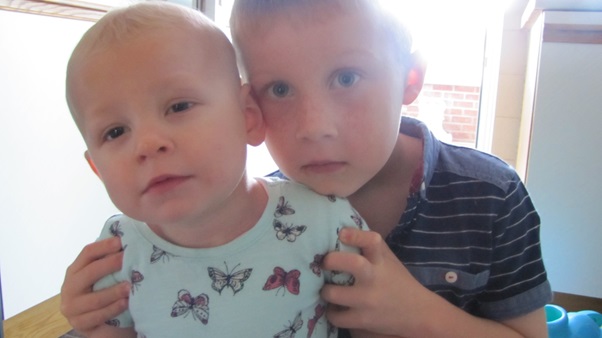
Photo of two young children

Phil’s daughter Evie who has aniridia, with her brother

A massive thank you and well done to Phil who has raised £560 for Aniridia Network UK by running a triathalon. The race at Ripon racecourse in Yorkshire was his first ever attempt at the swimming, cycling, running challenge. Here’s a video of Phil crossing the line wearing his ANUK t-shirt in 3 hours and 38 minutes.

ANUK Fundraising Officer Liz said afterwards “We are very grateful to Phil, his sponsors and all the donors for helping us continue our work of supporting people with aniridia and their families. It will help towards funding our buddy scheme and in printing information leaflets for new parents like Phil.”

Keep going

What could you get sponsored for ANUK to do? If a collection, cake sale or car wash is more you thing then we would appreciate that too. Our fundraising target for this financial year 2013/14 is £3500 which we need to just keep going. Find out how to get involved.

Posted in Aniridia Network news, Fundraising | Tagged , , | Leave a comment

Solar sneezing – effect of light on the nose and brain

I have aniridia and I noticed that when exposed to brightness, particularly sunlight I sneeze within a minute.

While taking part in the National Institutes for Health research I took the opportunity to ask Dr Han why this might be.

She sent me details of the solar or photic sneeze reflex. It turns out  about a quarter of people experience a prickling sensation or sneezing when exposed to bright light. Someone has even managed to concoct an acronym to label it ‘ACHOO’ syndrome!

A number of medical papers have been published on the subject. One describes an experiment where an EEG machine measured the brain activity of test subjects, while they looked at a bright flashing light. The ‘photic sneezers’ were seen to have ‘a generally enhanced excitability of the visual cortex, In addition a stronger pricking sensation in the noses of photic sneezers was found to be associated with activation in the insula and stronger activation in the secondary somatosensory cortex’.

It seems there is some neurological link between the eyes and nose, perhaps with a genetic aspect, but the exact cause and reason of reflex is still unclear.

It is more than just a curiosity though. One piece of research considers the risks for combat pilots whose enemies favour attacking ‘out of the sun’ and so this part of the sky must be watched.

A sneezing reflex has also been observed in some eye surgery patients when being given an anaesthetic injections into the eye – scary!

I speculated to Dr Han that the inability of a person with aniridia to block out bright light could make them more likely to experience the reflex if they have it. I suggested that this could be subject of another research study!

But anecdotally do you (or your child) with aniridia get a prickly nose or sneeze when it is too bright?

Give your thoughts in the comments below.

Posted in Medical staff talking, Patients' tales, Research | Tagged | 1 Comment