Tracy with aniridia talks of her job as an Eye Clinic Liaison Officer

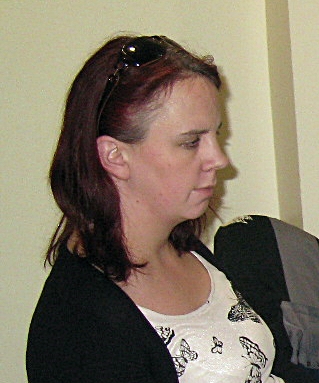
Woman sitting

Tracy at the Aniridia Network UK Conference 2012

Here’s a recording of an interview with one of our members who has aniridia. She has recently started work as an ECLO, providing information, advice and practical or emotional support on living with sight loss.

The interview is by VI Talk a monthly podcast aimed at anyone with a visual impairment, anyone who knows someone who is visually impaired or anyone who has connections with an organisation or group that offers services or support to visually impaired people.


Posted in Other agencies, Patients' tales | Leave a comment

Young people with aniridia needed for sleep research

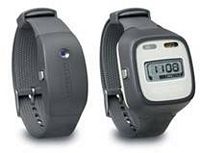
Scientific intrument that looks similar to a digital wrist watch

An actigraph, worn on the wrist

Scientists want adolescents and young adults to take part in a study to learn more about how an aniridia-related gene affects sleep.

Are you the kind of person they are recruiting?

  • aged 10 to 20 years old with aniridia
  • medically stable
  • do or do not have a sleep disorder
  • not taking or able to stop taking sleep medication for 2 weeks.
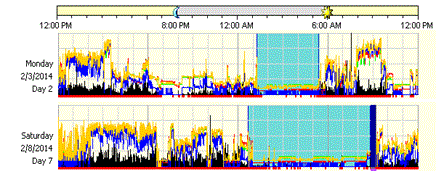
Multicoloured graphs

Output from an actigraph

Participation involves wearing a watch-like activity monitor called an actigraph on the wrist for 7 days and completing a sleep diary. 

The researchers are based in the USA. However the study is open to people in the UK and there is no need to travel to take part. There is no cost to participate, and volunteers will be compensated for their time. Minors will require parent/guardian permission.

For more information contact Alyson E. Hanish, MSN, RN:
Email: hanishae@mail.nih.gov
Phone from the UK: 00 1 301 451-7163

National Institute of Child Health and Human Development (NICHD)
National Institutes of Health
Building 10, Room 2-3145
10 Center Drive
Bethesda, Maryland 20892 

Find out more about about clinical trials at NIH.

Read about the research into aniridia and WAGR that this follows on from and which several members of Aniridia Network UK took part in.

Posted in National Institute for Health WAGR study, Research | Tagged , , , | Leave a comment

Aniridia and Nystagmus meetings in Leicester on 28 June 2014

4:30pm, Lounge Bar, Mercure Leicester The Grand Hotel, Granby Street, Leicester, LE1 6ES
IMPORTANT TO RSVP: meetup@aniridia.org.uk

Anyone affected by aniridia, including relatives are invited to join us in Leicester to find out more about each other and discuss aniridia related topics. Katie and Andrew, two adults with sporadic aniridia will be your hosts.

We are holding a free aniridia meet-up immediately after the Nystagmus Network Open Day also taking place in the Mercure Leicester hotel.

A picture of Katie Atkinson, chairperson of ANUK

Katie, ANUK Chairperson

Keith, who came to a previous meet up in London said about it: “In one evening, I learnt so much. For the first time felt I have peers who understand my condition – in many cases a hell of a lot better than I do. For the first time I felt supported.”

This is a fringe event of the Nystagmus Network Open Day which is described as “your chance to talk to people of all ages who have nystagmus, are parents of children with nystagmus or have a professional interest in nystagmus as teachers, orthoptists, optometrists, rehab workers, etc.”

Nystagmus Network logo“You can speak to medics, researchers and other professionals in an informal setting. Leicester University and the Leicester Royal Infirmary are home to probably the biggest nystagmus research team in the UK”

ANUK encourage you to also book a place at the Open Day. but you can come to just our meet-up if you want.

The aniridia meet-up will be a relaxed social event. Children are welcome. The hotel is a couple of minutes walk from Leicester train station. It is free to attend. You can buy your own food and drinks at the bar as you wish.

If you have any questions or need help joining the group on the day contact Katie on 07792 867 949.

If you want to come, email meetup@aniridia.org.uk as soon as possible so we know how large a space to reserve and in case any of the arrangements change. We’ll put up some signs with our logo to advertise our table. We’re looking forward to meeting you.

If you can’t come, how about organising a meet-up of your own? There’s a real appetite around the country for get togethers – it just needs someone to set a good time and place. Even better make it a fun and fundraising activity for ANUK too! Contact us for details of how we can help you make it happen near you.

Posted in Aniridia Network news, Other agencies | Tagged , , , | Leave a comment

Visiting Disneyland with aniridia

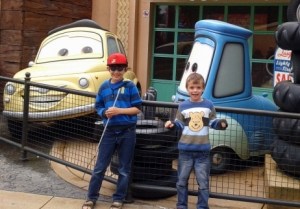
Two boys in front of characters from the film CarsEarlier this month Laura asked on the Aniridic Family Facebook group

Has anyone visiting Disneyland Paris been able to get a priority card for a child registered blind? Our son Josh is nearly 8 years old. He is not great in big, noisy crowds, and waiting outside in bright light even in his darkest glasses would give him a headache.

Several Aniridia Network UK (ANUK) members made helpful comments. We also pointed her at a recent blog post about visiting Disneyland Pairs by a parent of a child with nystagmus.

So when they went they took Josh’s proof of being registered visually impaired  and their VI teacher got them a letter from their consultant confirming Josh as blind.

Afterwards Laura said “They actually started filling out the green priority card while i was getting the documents out! We all had a wild time – Josh barely had to wait for anything. He sat at the front for all parades, cinema, and rides like Star Tours where you need to see a screen. All the staff chatted to him and made him feel important. Brilliant! The card did say ‘blind guest’ though – apparently partially sighted people could get the orange ‘easy access’ pass to sit at the front, but not avoid the long queues.”

According to the Disney website, if you don’t have a yellow European statement of disability card, you need to take a letter dated not more than 3 months ago from your consultant or GP confirming registration of severe sight impairment. This needs time to arrange. “I wouldn’t recommend rushing around trying to get people to write letters the week before you go like I did” said Laura.

“Josh did also use his symbol cane (normally only used in train stations to stop him getting squashed/trodden on etc!) and in some cases that meant we were waved straight through the queues. There were just a couple of rides where we had to come back later as they could only have one disabled person on at a time for safety reasons, but in those cases, we were given a set time to return and then didn’t have to wait.”

Another ANUK member parent said “We took our son’s yellow visual impairment card  and had no problems getting a pass. They are really good with children with additional needs and we had the best holiday ever.”

James Buller, ANUK Communications Officer said “This is a fabulous example of how useful our online network can be, and how important it is for us all to bring more people into our community of those affected by aniridia. Aniridia Network UK now has over 565 members but there are lots more to find.”

Posted in Parents' accounts | Tagged , , | 1 Comment

Questions & answers on aniridia

Session at Aniridia Network UK Conference 2014

By: Panel of experts and individuals affected by aniridia

A chance to ask that question that you always remember on the way home from your appointment or that there never seems to be the right time to ask?

The panel comprised:

The Q&A panel seated at a table

Mary, Amanda, Veda, Victoria and Jenny

  • Mary Cox
    Person with aniridia and parent of someone with aniridia
  • Amanda Churchill
    Consultant Senior Lecturer in Ophthalmology
  • Veda-Jayne Petre
    Disability Rights Adviser
  • Dr Victoria Towell
    Research Associate, UCL Institute of Ophthalmology
  • Jenny Langley
    Person with WAGR and ANUK Trustee
Posted in Medical staff talking, Parents' accounts, Patients' tales, Welfare experts advising | Tagged , | Leave a comment

Sighted guiding and general mobility presentation

Session at Aniridia Network UK Conference 2014

By: Rick Allbrook

Rick Allbrook from Guide Dogs for the Blind Association (GDBA) discussed their role as a mobility charity and how they support people with sight loss to get out and about independently.

The services that GDBA offers are expanding and whilst guide dogs will always be their core service and account for 70-80% of what they do, GDBA now offers mobility to children, young people, and adults. They also have a strong campaigning profile around dog attacks, Streets Ahead and talking buses.

They developed a new service called MyGuide. This is a nationally accredited programme of training sighted guiding so that more people with sight loss can be offered assistance in the correct way. It is very important that all visually impaired people know themselves how to be guided correctly, so that more people with sight loss can set their own standards on how they want to be guided when offered assistance by members of the public.

Posted in Other agencies | Tagged , | Leave a comment

Living with aniridia – A generational perspective presentation

Session at Aniridia Network UK Conference 2014

By: Mary Cox

Mary Cox, her father, and her two daughters were born with aniridia.  2014 was the centenary of her father’s birth.  In the previous 100 years understanding and treatment of the condition has improved greatly.  But people still have to deal with the consequences that aniridia has on their daily life.  The focus of Mary’s talk was the impact that aniridia has had on her whole family, lessons they have had to absorb, changes they have had to accommodate, and some practical tips to help others.

Mary previously spoke more about her life at Cornea Connect 2013.

Posted in Patients' tales | Tagged , | Leave a comment

Emerging molecular therapies for aniridia presentation

Session at Aniridia Network UK Conference 2014

By: Professor Colin E. Willoughby

The first part of this talk introduced the genetics of aniridia and in particular, the underlying molecular mechanisms, as this will form the basis to understand the developments in molecular therapies.

The final part dealt with the use of a drug called ataluren to treat the ocular pathology in aniridia. This was published by Prof Cheryl Gregory-Evans from the University of British Columbia, Vancouver in the Journal of Clinical Investigation.

This is of great interest to patients and families with aniridia. The term START therapy was coined in this paper to describe a topical formulation of ataluren.

The data and findings from this paper were presented; and the potential role of ataluren or stop-codon read-through strategies in aniridia and genetic disease were discussed.

This is a very technical topic and Prof Willoughby tries to make it palatable.

Update 2015

Video of Cheryl Gregory-Evans presenting at a conference by Aniridia Russia

Posted in Medical staff talking, Research | Tagged , , | Leave a comment

Stem cell research and treatment for aniridia presentation

Session at Aniridia Network UK Conference 2014

Introducing Cells For Sight

By: Dr Alex Shortt PhD FRCOphth

Cells For Sight: Stem cell research and therapeutic manufacturingThe Cells for Sight Transplantation and Research Programme. is a group of scientists and clinicians who work together at Moorfields Eye Hospital and the UCL Institute of Ophthalmology. The aim of the group is to develop new treatment for patients with blinding corneal diseases. The group is led by Professor Julie Daniels PhD and the clinical work of the group is led by Dr Shortt. In this session Dr Shortt outline the challenges that arise in treating cataracts and corneal disease in patients with aniridia. He also discussed recent advances that offer new hope to patients.

Developing a human model for aniridia related keratopathy

By: Dr Victoria Tovell PhD

Understanding how a disease progresses is the first step towards identifying potential treatment strategies.  In order to do this we ideally need a ‘model’ of the disease we are looking at. Generally animal models are used to look at disease progression to gain a better understanding of what is happening in vivo.

Victoria in her labIndeed scientists have developed a mouse model of aniridia by generating mice that are deficient of the PAX6 gene. These mice display characteristics similar to human aniridia and can therefore be used to investigate the role of the PAX6 gene in the progression of aniridia. However, differences between species mean that we cannot rely solely on data from PAX6 deficient mice. Dr Victoria Tovell therefore is looking into developing a human model of aniridia.

In their lab they can grow the different types of corneal cells from human donor corneas and use these cells along with tissue-engineering techniques to build a human cornea. Dr Tovell’s project aims to turn the healthy corneal cells that they grow into aniridic cells by deleting the PAX6 gene and then using these cells to make a tissue engineered human model of aniridia. This will enable them to study how human corneal cells behave when PAX6 is deleted and might provide some insight into potential treatment ideas. In this session, Dr Tovell talked about her progress with this project so far and the next steps she will be taking.

Stem cell treatment of aniridia related corneal disease

By: Dr Alex Shortt PhD FRCOphth

There are many different types of stem cells each with their own benefits and drawbacks. Stem cells taken from donor corneas or from the donors own mouth have been used to treat severe corneal disease in patients with aniridia. In this talk Dr Shortt gave an overview of what a stem cell is and what has been achieved so far in the treatment of aniridia.

Posted in Medical staff talking | Tagged , | 2 Comments

Mark and Harry: Our journey with aniridia presentation

Keynote session at Aniridia Network UK Conference 2014

There was no history of aniridia in the family, but when Harry arrived their journey with aniridia had begun.

This session is a personal account of learning to deal with Harry’s aniridia and its implications from a family perspective. Everyone’s journey is different and their challenges of moving the family twice in the UK and growing up through the education system with several changes of school are discussed.

By working to understand the condition, with support from a wide range of organisations, and by providing opportunities for Harry, they have grown as a family, had experiences that they might not otherwise have had and have learned a lot about themselves. They consider themselves to be fortunate, in that aniridia has given them as much as it has taken away.

Here’s a video of Harry showing off his juggling skills at a previous conference.

Posted in Parents' accounts, Patients' tales | Tagged , , | Leave a comment