A child with a rare condition brings additional challenges and opportunities

By Heather B

Being the parent of a child with a rare condition brings with it an additional layer of challenges and opportunities. Both my children were born with medical conditions but only one is rare.

Natasha was born with a cleft lip and palate. Support was available from diagnosis, from a professional team. So our emotional adjustment began before she arrived. We felt well supported, walking a path many people had walked before. We trusted the team because they’d seen it all before and could reassure us and advise best treatment. They could talk us through all the things to expect in terms of treatment as she gets older. She will remains under the same team until she’s 21. The professionals all know each other, communicate well and refer between each other as the need arises.
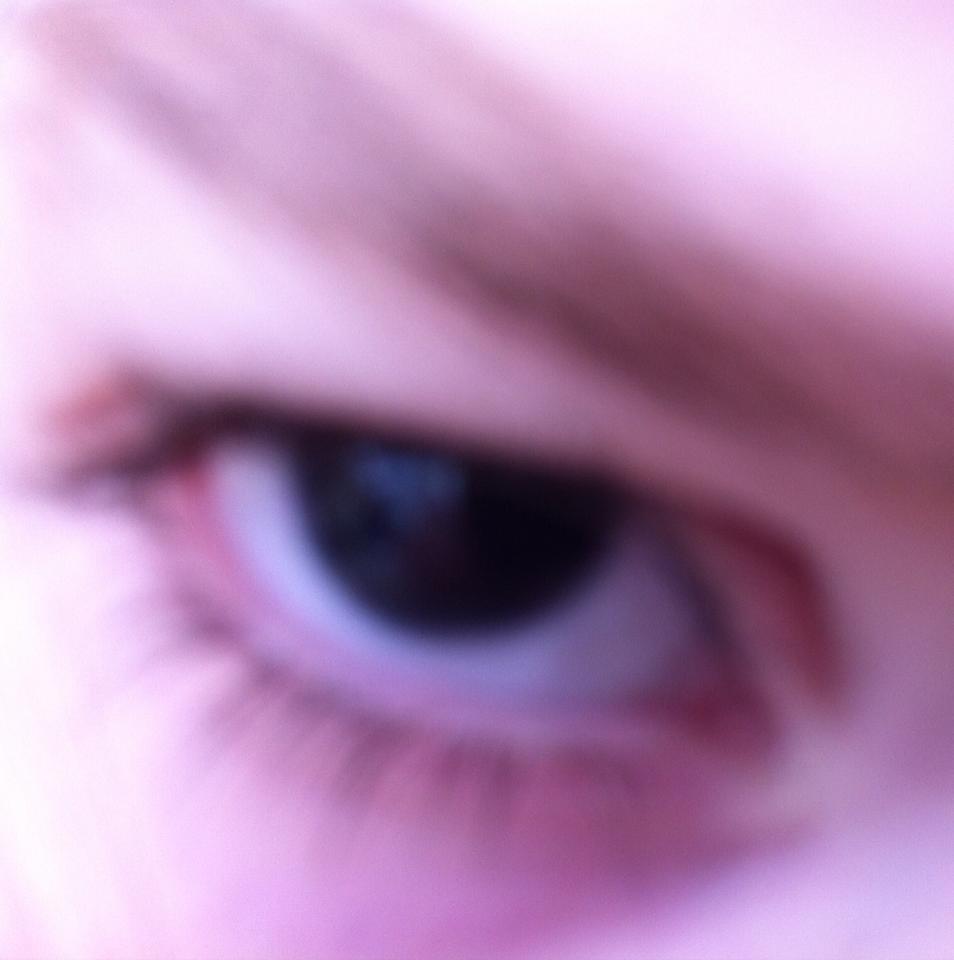
Zoe's eye without an irisHowever, Zoe’s aniridia was diagnosed at 5 weeks old, after we’d raised concerns. We got an initial diagnosis relatively quickly but were referred on immediately as the local consultant had never seen it before. The journey we’ve walked with Zoe has much more isolated.

Zoe’s care is not joined up; she regularly sees 4 different teams and they don’t communicate. It has been a constant journey of discovery, mostly with me seeking answers from other people with the condition or individual professionals who do a single bit of research.

Woman asking a question with a microphoneSeveral times we’ve highlighted problems and these have not been taken seriously as it did not fit into any neat box of the limited role of that professional. They don’t have time to do extensive research into aniridia or appreciate that the problems go beyond her eyes. This means we’ve had to fight for answers and the best care. Her care is micro managed with poor communication between the teams. Often we are left to educate the professionals. The hardest parts have been getting our sleep issues taken seriously and understanding the deteriorating nature of the condition.

Having described the constant battle we’ve had, she has done extremely well. She is registered blind but people often say you’d never know. This is both a compliment and a hindrance. Overall, I am extremely proud of her and how far she’s come. From a very unsettled baby who didn’t smile or sleep to a confident, brave child who has a learned a large range of coping strategies that we are often unaware of.

Our journey isn’t over yet, there are still areas we are working on, areas that we see as a difficulty that professionals don’t and I think in time these will be recognised as part of this syndrome. Until then I continue to support both my girls to live a fun, normal, healthy, fulfilling life. They both have excellent role models external to the family.

Please take a moment to understand the complexities of having a rare condition and send a little more understanding to those families who walk this complex, challenging yet rewarding path that they did not chose to be on.

Posted in Parents' accounts | Tagged , | Leave a comment

Researchers sell cakes to raise £115 in aid of ANUK

UCL-cake-sale-2014bResearchers at University College London raised £115 for Aniridia Network UK by making and selling cakes.

They had a cake stall in the common room of the UCL Institute of Ophthalmology which is attached to Moorfields Eye Hospital.

Organiser Victoria is studying cornea clouding caused by deficiencies in limbal stem cells common in people with aniridia. She and her colleagues recently hosted the Cornea Connect event as part of Cells For Sight. Watch the video of their presentations of their work at our Conference 2014.

We thank everyone who baked and bought cakes for their generosity.

If you’d like to do something similar to support us, contact fundraising@aniridia.or.guk for details on how we can support you.


Posted in Fundraising | Tagged | Leave a comment

Heather’s voyage of discovering support for herself and Zoe

Heather and ZoeHeather is mum to bright and bubbly four-year-old Zoe who attends the Royal London Society for the Blind Nursery. Zoe has aniridia and is registered ‘Severely Sight Impaired.’
Heather does not allow Zoe’s sight condition to define her; instead she devotes herself to enabling Zoe to be the happy and vibrant little girl that she is today.

RLSB met with Heather to hear about her experiences learning to come to terms with Zoe’s sight loss. She explained how several other mums, including her own, have helped her to accept, adapt and move forwards by supporting her every step of the way.

Read Heather’s heartfelt story on the RLSB blog

Posted in Parents' accounts | Tagged , , , | Leave a comment

Take a (No) #IrisSelfie to raise awareness and funds for aniridia

A toddler with aniridia and and adult withoutWe want to raise awareness of aniridia, help those who are visually impaired because of it, and support treatment research.

So we want you to post a photo of your eye, WITH or WITHOUT an iris on Twitter / Facebook / Instagram. People who cannot see well and children may need help taking the picture.

Alongside that please make a donation to Aniridia Network UK. Donate online, regularly if you can or just txt iris005 to 70070 to give £5.

Please write the message below with your IrisSelfie, customising it as you wish

Facebook:

To support those who don’t have one, I took this  #IrisSelfie & gave £5 to Aniridia Network UK by txting iris005 to 70070. I challenge you to do it too. Details: http://ow.ly/JPkVl 

Tweet:

I took this #IrisSelfie & gave @AniridiaNetUk £5 by txting iris005 to 70070. I challenge you to do it

To maximise awareness and fundraising we need this campaign to go viral. Challenge your friends and family to do the same by @mentioning them in your post.

If you cannot donate, support us in other ways. We badly need volunteers to accomplish all the things we’d love to do to help people with aniridia.

We are started the #IrisSelfie idea on Rare Disease Day, 28 February 2015. The day is an initiative to bring together people affected by rare medical conditions, such as aniridia.

In that spirit we have run the initiative with our friends at Aniridia Foundation International. They helped make it an amazing world-wide success. Aniridia associations in other countries are very welcome to get involved by adapting the campaign for themselves.

Posted in Campaigns, Fundraising, Patients' tales | Tagged , , , | 2 Comments

Milton Keynes meet-up

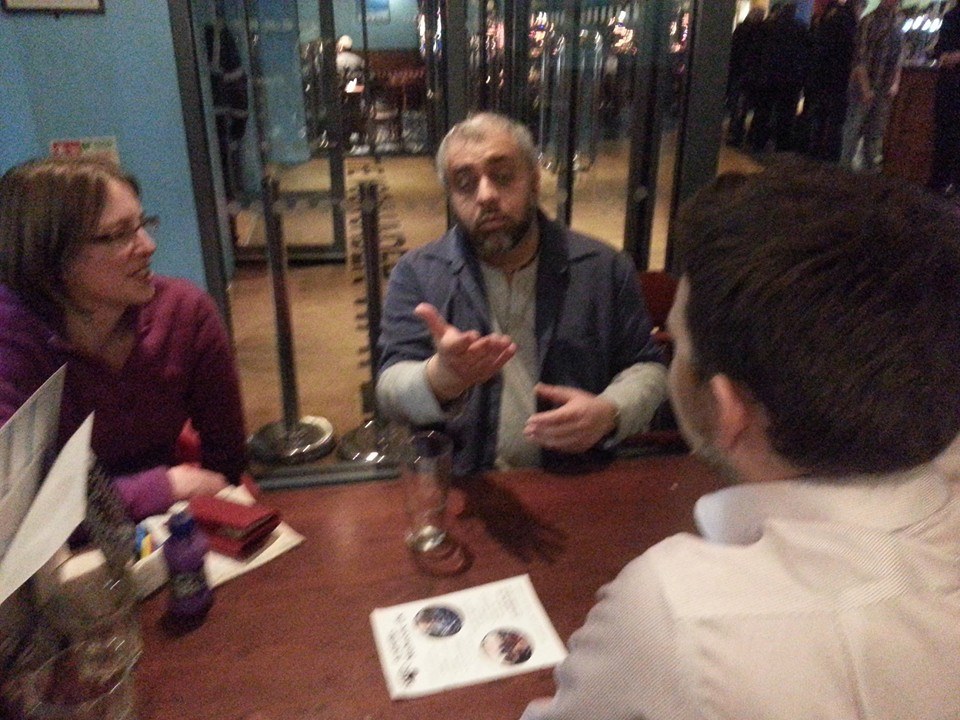
Two men and woman talking in pubWe met on met to discuss aniridia and celebrate Rare Disease Day 2015 at Whetherspoons at XScape,
Milton Keynes.
We had a great evening talking about dealing with school, doctor and even being a stuntman while having aniridia.
If you want to meet more people near you who are affected by aniridia how about arranging an event to do so? It is easy to do and we’ll help with the publicity. So if you would like to arrange one near you please contact us with your ideas.
Posted in Aniridia Network news | Tagged , | Leave a comment

Befrienders who speak languages needed

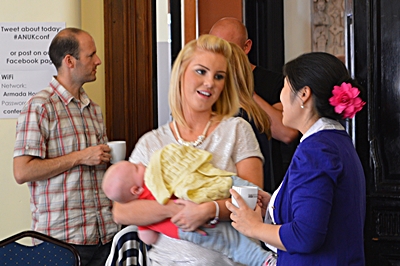
Mum holding a baby talking to a woman, dads talking in the backgroundThe Aniridia Network UK Befriending Scheme has successfully created over thirty five buddy relationships in the last two years.

We can only do this with the kindness of those of you who are willing to make contact with other families, who have members with aniridia.

Befriending is a real lifeline and can make a huge difference to those who request help.

In the last year we have had an increase in families for whom English is not their first language and it is often difficult to find buddies who can help.

We would like to find as many of you as possible who speak another language and are willing to help such a family.

If you feel you can help please contact befriending@aniridia.org.uk with details of the languages you can speak or write.

Posted in Aniridia Network news | Tagged | Leave a comment

Drug company donates £1,000 to ANUK

PTC TheraputicsA global biopharmaceutical company has provided a donation to ANUK for which we are extremely grateful.

PTC Therapeutics is the company that discovered and is developing ataluren for the treatment of disorders due to a genetic nonsense mutation. Approximately 20% of patients with aniridia have it due to a nonsense mutation. Data from preclinical studies by an independent investigator has been published in the Journal of Clinical Investigation in 2014. Ataluren, is the active ingredient that was administered both in eye drops and systemically in these preclinical studies.

Veronica van Heyningen

Veronica van Heyningen,

PTC Therapeutics was introduced to the Aniridia Network UK by Patron Veronica van Heyningen.

“Our goal is to advance science and provide treatments to patients where there are none. We appreciate your efforts towards this cause where there is a real need for treatment options. I am excited that we were able to contribute towards these efforts,” said Dr Tuyen Ong Head of Clinical Development and Translational Research of PTC Theraputics.

The company focuses on the discovery and development commercialisation of proprietary small molecule drugs for rare disorders, oncology and infectious diseases. PTC has developed proprietary technologies that it applies in its drug discovery activities and in collaborations with leading biopharmaceutical companies.

Aniridia Network UK is very thankful for this donation. It enables us to run our conference which brings together people affected by aniridia. Our last event discussed ataluren and we are following the ongoing trials in other indications with great interest” said trustee James Buller.

Posted in Aniridia Network news, Fundraising, Research | Tagged , , , | Leave a comment

Assist research by joining a patient registry

Man in hospital bed abd a doctor taking readings

James taking part in research at National Institutes for Health

It’s now easier than ever to assist research into aniridia and similar conditions. A patient registry has been set up and we encourage any of you with (with children who have) the following conditions to add your/their details to it.

  • Aniridia
  • Axenfeld-Rieger Syndrome
  • Gillespie Syndrome
  • WAGR/11p Deletion Syndrome
  • Other genetic conditions associated with Chromosome 11p

Patient registries collate knowledge about the symptoms and features of a disorder. This is especially important for rare disorders. A registry is useful to:

  • patients and their families, because it can lead to new understanding or treatments of the condition.
  • doctors, because it helps them learn how to care for people with the disorder.
  • researchers, because it enables them to study the disorder’s characteristics and makes it easier to find participants for studies.

International WAGR Syndrome Association logoThis new registry is based at Sanford Research, a non-profit organisation in the USA. It is supported by the International WAGR Syndrome Association. But it is open to the anyone with only aniridia etc too.

Kelly Trout, Health Consultant at IWSA said

“Unlike traditional patient registries, participants can choose whether, when, and with whom to share our data, AND that we will get information back from the registry. Information such as how many registry participants have which conditions, have had which surgeries, which treatments, with what results.

Another critical goal is to make cross-disease research possible. This has been extremely difficult in the past, because most patient registries aren’t standardized. So their data can’t be combined with or compared to the data in any other registry. The CoRDS/IWSA Patient Registry was designed with the National Institutes of Health Office of Rare Disease Research. So it will be compatible with any other standardised rare disease patient registry in the world. Cross-disease research is especially important for aniridia/chromosome 11p disorders, because they are so rare, and because they are so clearly inter-related.

Finally, another difficulty with traditional registries is their siloed nature. Many are maintained by a single institution, and are accessible only to that institution’s researchers. The CoRDS/IWSA Patient Registry will allow access to any IRB-approved researcher (if the individual participant has specifically agreed to it). This will make the data not only more accessible to a greater number and scope of researchers, but much more likely to produce results as well.”

Veronica Van Heyningen

Veronica Van Heyningen

Retired genetics researcher and ANUK Patron Veronica Van Heyningen said “This is a very exciting new venture, because clinicians and scientists, as well as fellow patients can learn so much from hearing about the experiences of each affected individual.  Having many detailed cases together can reveal real trends which may then lead to clinical help”

For details read the CoRDS Patient Registry frequent asked questions and then fill out the initial registration form.

You will then be sent details of how to fill in questions relating to the following

  • Allergies, Behaviour, Birth History
  • Development
  • Ears, Nose, Throat, Metabolic System
  • Eyes: Vision & Treatment
  • Digestive System
  • Heart
  • Kidneys, Genitourinary Tract
  • Lungs, Brain, Oral/Dental
  • Orthopedics, Psychology, Sleep, Therapy
  • Well-being, Wilms Tumor
  • Associated Conditions,Common Data Elements


Posted in National Institute for Health WAGR study, Research | Tagged , | Leave a comment

Aniridia doesn’t stop Jessica doing all kinds of sports

Jessica climbingByJessica

I am 21 living in London, have partial aniridia and have never let it stop me from any kind of sport. know some people get worried about sporting with an eye condition like this and am fully aware that some people have more symptoms. I simply wanted to share this as i know its hard, thought it might perk a few that might have concerns about getting involved with sports.

This was a photo taken when i went to Devon in an activity where you scale across the rock face and then jump into the sea. it was fantastic activity and very safe.

I have used a variation of really dark sunglasses, biking goggles and tinted contacts. all of which i found have been very useful over the years.
I used to use tinted contacts when i was doing any ball sports.

For climbing I wore the biking goggles (but i naturally wanted a few photos without them on). I also used my goggles when doing Tough Mudder. They are elasticated so you can adjust them to fit around helmets and would stay on my face despite crawling through mud and jumping into water.

This is mainly a point of saying i have found doing sports hard, but have always found a way i can join in.

Posted in Patients' tales | Tagged , | 1 Comment

Change to how you can help ANUK by shopping on Amazon

Amazon llogoThere is an easy ways to raise money for us simply by shopping on Amazon.co.uk. It costs you nothing.

Before buying do ONE of the following:

  • come to our website and use the Julbo sunglasses for infants link on the right side of many pages such as Support us.Jublo sunglasses
    Amazon will give us a commission of at least 5%
  • visit Give As You Live and find the Amazon page.
    Use the Shop now link.
    You will have to sign-in/up if you have not already done so.
    Amazon will give us a commission of 1.5%

Use the Give As You Live toolbar
– but not on Amazon

The Give As You Live method works on many other websites as well. To identify these they provide a plugin for your web browser. It only pops up when on a participating site – a really useful reminder.

Give As You Live toolbar screenshot

However Amazon have stopped the toolbar from working on their site! So please remember to use one of the methods above whenever using Amazon.

To date we have received £200 just from these simple actions. The more people who take part the more we will get so take part and encourage others to do likewise.

Many thanks

Aniridia Network UK

Posted in Aniridia Network news, Fundraising | Tagged | Leave a comment