Cornea Connect 2019

Dr Alice Davidson introducing the day

#CorneaConnect was a fantastic day discussing aniridia with medical researchers and patients at UCL Institute of Ophthalmology and Moorfields Eye Hospital.

It aimed to bring aniridia patients together with scientists and clinicians in the Cells For Sight team, to learn about cornea research and discuss experiences of sight loss.

This is important because corneal opacification often affects people with aniridia, due to deficiencies in the eye’s limbal stem cells.

First Sajjad Ahmad spoke about their planned trials to transplant Limbal stem cells on a ‘raft’ to aid their survival and growth on the eyes of people with aniridia, beyond the 3 years typically observed.

Carla then talked about her PhD project studying the growth of stroma cells with and without aniridia (PAX6 gene) to understand the effect on cornea disease.

Georgina gave a super talk about her life growing up with aniridia having 23 operations and now a daughter with the condition too.

In the afternoon the researchers put on an interactive session demonstrating the research being done and how it carried out in laboratories.

There was also a focus group session to talk about the question “What do patients think should be researched in relation to aniridia?”.

Georgina said afterwards:

“I had never met anyone else with aniridia, didn’t even know how to spell it.

Since my daughter was born in 2013 I started to do some research. I learnt about Blind Mums Connect group on Facebook and after 3 years found someone with aniridia. They told me about Aniridia Network. From them I heard about this event and booked onto it straight away.

It was very interesting. I learned a lot more about aniridia, how it can affect people differently and the research they are doing on the cells that cause the problem on the front of the eye.

I am so pleased I went as I met 3 other people with aniridia and it gave me such a boost that I wasn’t the only one in the country. It was just brilliant to talk to someone who had the condition and could understand how I felt.

When I got home I was buzzing. The next day I woke up with a real spring in my step and on the way to school my daughter and I played tag with out cane (don’t tell the mobility trainers). 

It has meant so much to me too finally meet some others with aniridia that I can’t really put it into words, but can’t wait to start helping them out and hopefully bring more awareness and get more research done. “

5 members of Aniridia Network attended the day and several previously attended the 2014 event.

More photos from Cornea Connect 2019

Agenda

Posted in Patients' tales, Research | Tagged , | 1 Comment

£200,000 aniridia drug research, based and funded in the UK underway

Two women in a laboratory surrounded by labelled bottles

Mariya and Dulce

Research into the growth of eyes with aniridia has begun, funded by Aniridia Network and two families in the UK.

In 2018, for the first time, Aniridia Network excitedly partnered with Fight for Sight to offer a £15,000 grant for investigations into aniridia. We evaluated five excellent applications from top doctors around the UK. We picked one that would take place at UCL Institute of Ophthalmology, which works closely with Moorfields Eye Hospital.

Meanwhile, exceedingly generous donations totalling close to £190,000 had been made by 2 sets of parents of children with aniridia to Moorfields Eye Charity. These were to fund 18-months of research by Dr Moosajee to identify new treatments for aniridia.

Using this combined money Dr Moosajee began a project at the start of 2019. She brought on board Dr Dulce Cunha, a post-doctoral research associate with a PhD in stem cell biology.

In their laboratory, they will grow cells for up to 17 weeks to make 3D model eyes. These will start with skin samples taken from people with aniridia. The stem cells will, therefore, lack a protein that normally results from the PAX6 gene which is often defective in people with aniridia.  Other models will be grown from cells that have normal PAX6 genes.

This will allow them to answer questions such as:

  1. What are the early effects on the developing ‘optic cup’ especially on the retina?
  2. Can a drug called amlexanox be used to cause the PAX6 protein to be created and what effect will that have?

Amlexanox is a drug similar to ataluren on which exciting trials are currently taking place in North America.

Dr Moosajee said

“the study will advance our understanding of PAX6 in early eye development, exploring its effect on retinal differentiation, eye growth and gene expression patterns. Plus it will provide proof-of-concept of amlexanox as a treatment for nonsense-mediated aniridia.
The results will add knowledge and make possible further investigations into other aniridia-related human ocular tissues. If successful, we will endeavour to repurpose amlexanox for aniridia and apply for further funding.”

She has taken two skin biopsies from aniridia patients and their skin is now growing in the lab; Dulce is currently converting these skin cells into stem cells so she can then grow them into early eyes.

Dr Cunha said,

“I am so excited by this project and can’t wait to see if the small molecule drugs work on the patient cell models.”

When the research is complete, the findings will be disseminated to Aniridia Network members and the scientific community by being published in peer-reviewed open access journals.

Dr Moosajee is also looking forward to reporting on all the great research she is doing, at the European Aniridia Conference 2020 in London.

She noted that medical projects require a lot of money, typically £180-250,000. Without the large donations from the parents, she would not have had the opportunity to apply for the supplementary grant.

Trustee James Buller said

“On behalf of everyone living with aniridia around the world, Aniridia Network says thank you for your incredibly kind gift that made this research possible.”

The grant process was expertly administered by Fight For Sight. The research met their priority for “Developing and testing new and more effective treatments, such as cell-based, gene or drug therapies or improving surgical procedures for a range of different eye diseases and conditions.”

Giving the grant meets the mission of Aniridia Network to “promote research into the causes, effects, treatment and management of aniridia and related conditions and publicising the results.”

The £15,000 was a combination of £7,500 each from Aniridia Network and Fight For Sight. It came from fundraising income from fundraising events and sponsored feats, donations and commissions such as Give As You Live or Amazon Smile. Both charities can only make more vital grants like this with your continued support.

Posted in Aniridia Network news, Medical staff talking, Research | Tagged , , , , , , , , | 2 Comments

WAGR & Pain Perception Research

The following is a transcription of a news release by IWSA (International WAGR Syndrome Association).

Research In WAGR Syndrome Patients Shows Importance of BDNF Gene In Pain Perception

Research published in the February 2019 issue of the journal, PAIN, has important implications for individuals with WAGR syndrome, and could also lead researchers to new methods for controlling pain.

The report details findings from the National Institutes of Health (NIH) Study of Aniridia, WAGR syndrome, and 11p Deletions. In that study, which spanned 2006-2014, researchers noted that some parents of patients with WAGR syndrome reported that their children appeared to have severely impaired ability to feel pain. They reported that significant injuries and even broken bones often went unnoticed.

Sensory testing revealed that patients with WAGR syndrome who had both copies of the brain-derived neurotrophic factor (BDNF) gene had normal/expected levels of sensitivity to pain. But patients with WAGR syndrome who were missing one copy of the BDNF gene had a “strong reduction” in their ability to sense pain.

These study results are important because approximately fifty percent of WAGR syndrome individuals are missing the BDNF gene. Decreased ability to feel pain puts them at risk for delays in diagnosis and treatment of medical conditions. Awareness of this feature and close monitoring of symptoms may help parents and physicians to safeguard the health of patients with WAGR/BDNF gene deletion

This research is also exciting because it offers new insight into how pain circuits function in humans. This insight could lead to new types of medications and new ways to manage pain.

Posted in National Institute for Health WAGR study, Research | Tagged | Leave a comment

Graham’s story of life with aniridia and stem cell treatment

Graham has written a blog post about growing up in the UK with aniridia and losing sight due to glaucoma/cataracts.

He also writes about the recent initial success at restoring some sight by transplanting stem cells that began in his mouth, on to his cornea. He says “the eye is getting better every day”.

This operation was performed by Samer Hamada at Queen Victoria Hospital.

How much improvement there is and how long it lasts will have to be monitored.

Read Graham’s story about life with aniridia and treatment of related conditions.

Posted in Patients' tales | Tagged , , | Leave a comment

Edward’s half marathon fundraiser

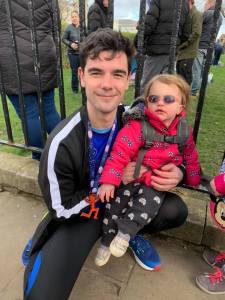
Edward wearing his half marathon medal and holding Sabrina, who has aniridia.Edward ran 12 miles in the Vitality Big Half Marathon to raise money for the Aniridia Network. He was inspired to do so by his cousin’s daughter Sabrina, who has aniridia. He says:
“Sabrina is an amazing girl with a genuinely contagious smile, and a very trendy pair of glasses! Sabrina’s condition will never stop her from doing the things she loves, but your donation could go towards something life changing for Sabrina, and put an even bigger smile on her face.”

Edward completed the marathon in 2 hours and 59 seconds, raising £625 (plus £107.50 Gift Aid) for the Aniridia Network, for which we are very grateful. And you can still donate on his JustGiving page.

Thank you to Edward for taking on the challenge for us. It really helps us put on events that bring together scientists seeking better treatments for children like Sabrina.


Posted in Fundraising | Leave a comment

Scarlett’s sponsored walk

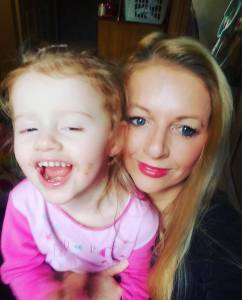
Scarlett and Rachel smiling

Scarlett & Rachel

Rachel’s 3-year-old daughter Scarlett has aniridia. Together they did a sponsored walk at Tiverton Canal Basins in Devon on 3 March, joined by family and friends.

Despite the rain, the walk was a great success, and they raised a fantastic £1198 for Aniridia Network!

Rachel says:

I enjoyed doing it and the awareness raised. I had half the town talking about aniridia & vision impairment who had never heard of it.

Scarlett enjoyed it despite the wet & windy weather. She jumped in every muddy puddle going. She was drenched and we were all very muddy!

And I’m pleased with the amount from the 3 weeks of fundraising. Thanks for all who helped and joined in.

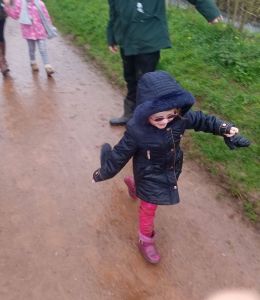
Scarlett looking happy in her dark blue coat and dark glasses as she walks along the muddy path

Scarlett

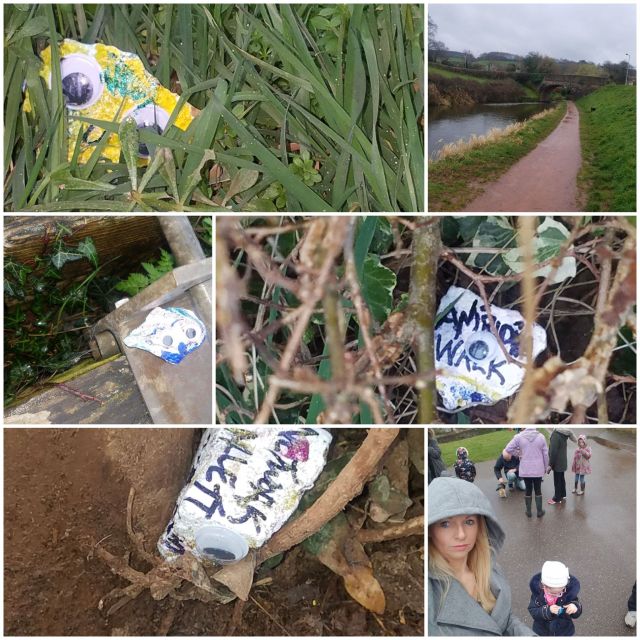
Scarlett also painted some colourful aniridia rocks for people to find during the walk, as a way of saying thank you to everyone who supported her.

Rachel and Scarlett were also featured in their local newspaper, helping to raise even more awareness of aniridia. And you can still sponsor them to show your appreciation.

Many thanks to both of them for completing the challenge and raising so much money for the Aniridia Network. It’s very much appreciated!

Collage of photos showing rocks decorated in different colours by Scarlett, one saying Aniridia Walk. One photo shows the view along a grass-lined path by the river, and another shows Rachel and Scarlett together.

Scarlett’s painted rocks

Posted in Fundraising | Leave a comment

Professors’ Bremond Gignac and Rama message for Rare Disease Day 2019

To mark Rare Disease Day on 28 February 2019, two of the top specialists in Europe, made a commitment to keep researching aniridia.

Thanks to the French aniridia group Geniris for making this video, that we added subtitles to.

Also check out @welleyenever‘s brilliant photo diary, including insights into life with aniridia. It won a competition held for last year’s Rare Disease Day – congratulations. Be sure to check out his many other excellent blog posts too.

Posted in Medical staff talking | Tagged | Leave a comment

1,000 Miles in 200 Days Fundraiser

1 thousand miles in 200 days. Laura walking while wearing a Aniridia Network tshirtLaura Cartmill has aniridia and autism, which presents challenges for her everyday life. But she hasn’t let her impairments get in the way of her ambition to achieve and inspire.
For example, she plays football at the Torquay United club for people with disabilities, which has helped her confidence to grow tremendously since she joined in 2012.

And now, at the age of 27, she has completed an amazing fundraising challenge to raise money for Aniridia Network.

Laura walked 5 miles a day to clock up 1,000 miles in 200 days. The sponsorship via her Just Giving page brought in nearly £600 for Aniridia Network and similar amounts for 5 other charities.

Laura said

To complete a challenge like this is incredible. I am so proud about doing this and it’s the most amazing thing I have ever done. This whole challenge has been a journey to inspire other people.  It is a special feeling,  if anyone has a goal to achieve just go for it. It can be done, you can do anything that you want to achieve. Do it your own way, anything is possible

The challenge started on 30 July 2018 and ended on 15 February 2019.

Now she is planning to go further:

I will be starting a new challenge on 1 August 2020: 5 thousand miles in 500 days. I will be doing 10 miles everyday by mixing walking and cycling. I am so excited already.

A massive thank you to Laura for doing this for us, and all her donors for their support.

Find out how you too can support Aniridia Network.

Posted in Fundraising | Tagged , , | Leave a comment

Light stimulation centre wows child with aniridia

By Rob and Amelia

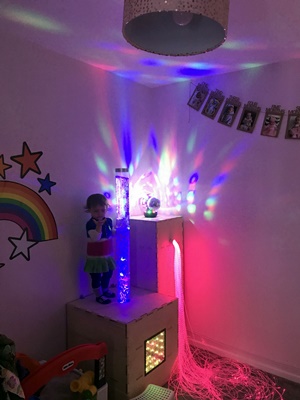
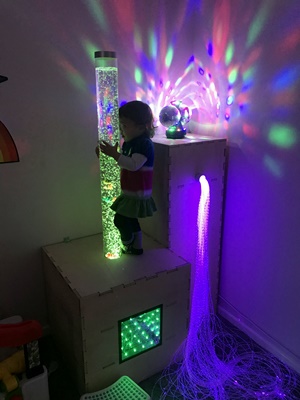
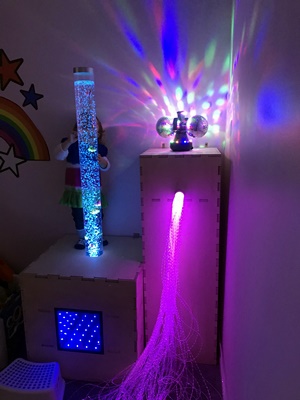
From about 5 months old our daughter, who has sporadic aniridia, has shown an interest in LED lighting.

After speaking with doctors at Moorfields Eye Hospital and more importantly, all the lovely people we met at the Aniridia Network Conference and on the Aniridic Family group, we decided to build a light centre!


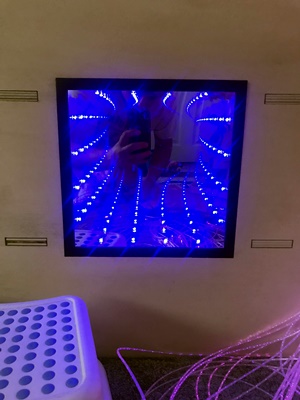
We had some help from my wife’s workplace and family bought some of the parts for her birthday. Most of the equipment was sourced from Amazon and eBay. I designed the boxes and Amelia had them cut out at work using a laser cutter. Sabrina absolutely loves it and the older she gets the more and more she interacts with it. We hope it helps with visual stimulation but mostly we made it for her to enjoy it. Her favourite part is definitely the bubble tube which is relatively inexpensive. She also loves the disco lights and plays very intricately with the fibre optics; these are very sturdy and made especially for children who have autism or to give visual simulation.

Children who are visually impaired may not independently explore their “regular” environment. Providing a range of stimuli helps children to develop and engage their senses and supports their physical development. These stimuli can include lights, colours, sounds, sensory soft play objects and aromas.

If you can’t stretch to your own light stimulation centre, check out these toys which can help the development of children with visual impairments.


Posted in Parents' accounts | Tagged | Leave a comment

Goggles and aniridia

Underwater photo of boy swiming with screwed up eyesSwimming is a very healthy and enjoyable activity, but with reduced vision and highly sensitive eyes due to aniridia, regular goggles may be of limited use.

Children, for example, may find it difficult to see their instructors in swimming lessons. And adults may be reluctant to go swimming if they feel goggles restrict their field of vision and fail to reduce glare.

The solution for many is to get goggles that are tinted or polarised or have prescription lenses. And there are various places you can look for these.

A local high street optician may be able to help or advise you, and there is no harm in asking. However, there is no guarantee they can supply them, and even if they do the cost may be prohibitive.

So it is worth shopping around further. For example, one parent on the Aniridic Family Facebook group recently shared her own experience:

“My daughter is a keen swimmer and was finding it hard in her lessons to see what the instructor was doing (the instructor always goes up close to show her). However, there are times where she can’t see what to do with normal goggles on. We went to Specsavers and they said there was a chance they can’t do it, or it could cost between £75-125.

After trailing the internet I came across a site called Prescription Swimming Goggles. I got my daughter a pair of mirrored ones. These are for outdoor swimming, but having just got back from Spain they were a godsend. My daughter’s swimming has improved dramatically, so much so that within 2 weeks she received 3 badges and was moved up a group. To make it even better they only cost me £25 and were delivered in 3 days. I even got myself a pair.”

Various other websites have also been recommended by people with aniridia and parents of children with the condition:

Speedo Goggles are made by the famous swimwear and accessories brand, and include coloured lenses and prescription goggles.

TYR Goggles have a wide selection available, including polarised lenses, and a Swimple range for children. Their international site even allows you to customise Swimples and other types of goggles in various ways.

Aquasphere Goggles are available for children and adults, including polarised lenses.

We also recommend searching for the “goggles” in Aniridic Family to find out what others have to say.

Underwater photo of boy wearing a scuba mask


Posted in Parents' accounts | Tagged , , | Leave a comment