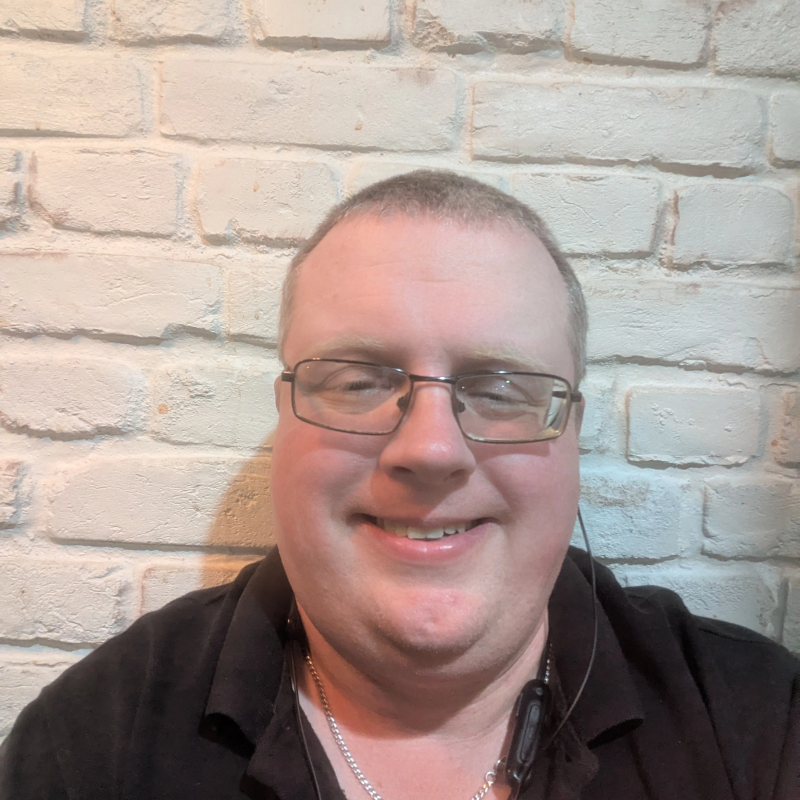
By Robert, who has aniridia
You have probably been asked this question before:
Are you a glass-half-full or a glass-half-empty person?
Well, let me rephrase that for our community.
Are you a person living in a society that isn’t built for you?
Or are you a person that isn’t built for the society around you?
As a rule, I would say we with aniridia are all people who were simply not built for the design of the world around us. Does that make us glass-half-empty? Well, probably yes—but none of us can see the damn glass anyway, so let’s not worry about it!
What I am trying to say is that we all spend our entire lives constantly adapting to this environment just to make life baseline manageable for ourselves. We have all held a piece of paper so close to our face that we fear we might snort it up our nose with our next breath, simply because we’d rather strain to read it than make a scene by demanding a larger font or asking someone to read it aloud. We do it for a quiet life.
But you cannot be a ‘quiet life’ person and a change-maker at the same time.
Let me tell you the truth about living in a world that wasn’t designed for us: we are clever, capable people who have immense value to offer. We possess an elite skill set that society is actively missing out on. Paradoxically, it is the world around us that is acting like the ‘glass half empty’ and choosing the quiet life. The system looks at us and says, “It’s too difficult, there aren’t enough of you to justify adapting, it takes too much time, and it costs too much money.”
Well, I am here to tell you that is about to change.
Why? Because, if I am totally honest, I am a complete pain in the backside. But more to the point, I have the skills—and you have the skills—to shift the status quo. And no, you don’t have to be a pain in the backside yourself; you can leave that expertise entirely to me. Practise what you are good at, right?
Apart from not being able to see past the end of our noses, what do we have in common? On paper, possibly nothing. Our individual eye conditions are entirely unique to the bodies they come with; no two of us navigate exactly the same way. But do not despair: the fact that you have to focus on what is right in front of your nose is actually your greatest technical asset. It is the very thing that will change the world in our favor.
When you demand that the world changes to accommodate your journey, you inadvertently fix the world for absolutely everybody else. Your lived experience is an unmatched professional skill set. Everybody gets older. Everybody eventually becomes more physically or sensorily vulnerable. Because we have spent our entire lives adapting from birth, we are the natural experts in resilient design. It is time we used that skill set for the greater good.
Now, at this point, you do not have to don a cape or start wearing your underpants on the outside of your trousers like Superman. You don’t have to be a loud disruptor. Though, thinking about it, maybe I will try the underpants-on-the-outside trick next time—anything to get my point across to a local authority!
You are probably thinking, “Dear God, Robert, get to the point.”
Okay, I will. I am an Accessibility Consultant. What does that mean? I’ll tell you what it doesn’t mean: it doesn’t mean moaning about rigid regulations or helping corporations tick a box. It means showing society that we are worthy of being everyone’s absolute equal. It is not our job to clumsily adapt to an inaccessible environment; it is the environment’s job to adapt to us so we can navigate with dignity.
When I walk into a high street venue and the tap-and-go card machine inevitably fails, I am instantly stuck trying to read tiny buttons on a flat, highly reflective screen without a shred of assistance. What am I supposed to do? Smash my face against the terminal so close that I could tap my PIN number out with my tongue? Or am I forced to compromise my financial security and beg a stranger, “Please read this for me, here is my code”?
I don’t want to choose between feeling that vulnerable or that anxious. What I want is simple: I want that business owner to have placed a low-cost visual magnifier right next to the card terminal. It doesn’t structurally redesign the hardware, but it gives me an immediate fighting chance at independent customer logic. Just imagine how much better the high street would be if every terminal featured that simple touch. That small change benefits the whole community—including the elderly lady whose sight is fading after a lifetime of perfect vision. She profits from that magnifier just as much as we do.
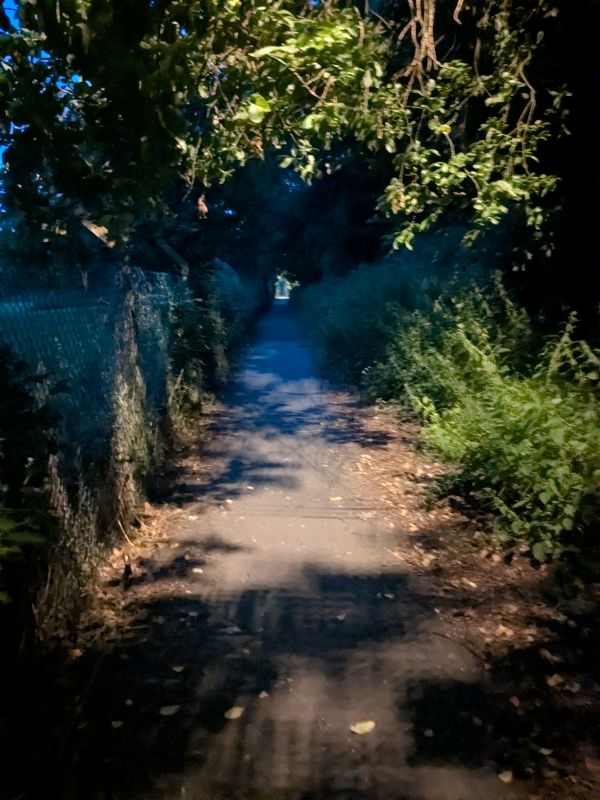
This is exactly why I am taking my lived-experience walkthroughs to the public realm. Right by my home in Wrexham, an old converted railway path serves as my primary walking route into town. Currently, it is a sensory hazard: unlit at night, aggressively overgrown with stinging nettles, and obstructed by dark green and black cycle chicanes that sit at ankle height—perfect for tripping over.
Does this defect only threaten me? Absolutely not. Anyone can get stung; anyone can take an impact fall over an unpainted post in the dark. The difference is that the able-bodied public simply adapt and tolerate the decline because they don’t possess our specialized observation skills.
Wrexham County Borough Council has chosen a bureaucratic roadblock over a simple fix, which is why I am putting on my metaphorical cape to highlight the issue. The solutions are blindingly simple and cost virtually nothing:
First, paint the cycle barriers a high-visibility, contrasting color instead of camouflaging them against the bushes.
Second, establish a regular, logical maintenance routine. Don’t claim there’s no budget or staff; it takes one worker a few minutes during their regular bin-emptying route to clip back an intruding bramble or nettle before it causes an injury.
Third, fix the lighting. Ingeniously, the council already has windmill-driven streetlights on this path. The only issue is that they haven’t installed enough of them. Placing them directly over the cycle chicanes to illuminate high-visibility safety paint solves the entire navigation risk.
Whether it is me navigating with limited sight or a neighbor walking home after a few too many drinks in town, we both possess the fundamental right to travel our local paths with confidence.
Our lived journey insights can fix these broken layouts. To local authorities and high street businesses alike, I say this: give our community a moment of your time and invest in our professional expertise. Stop treating our autonomy as an afterthought, and see the untapped commercial and social value your disabled residents bring to the table. We aren’t here to make life difficult for everyone else; we are here to make infrastructure work better for humanity.
Now, if you will excuse me, I am off to remove my underpants from my head. Well, what did you expect? I can’t see a damn thing, so let’s not even talk about where the Superman cape ended up.