Harry wins teen “Caring For Others” award

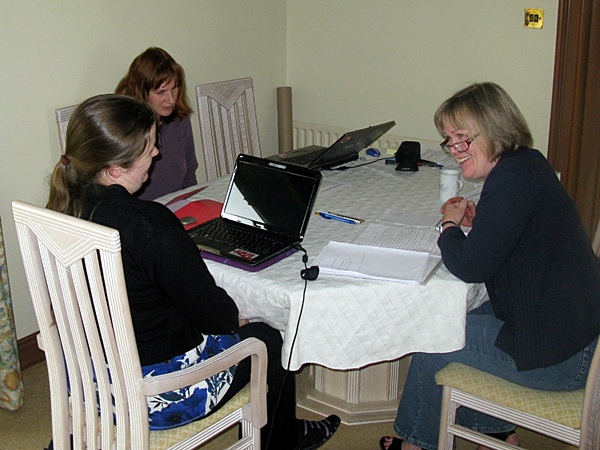
A boy with aniridia has won an award for his caring nature. Harry, 16, from the Exeter area won the “Caring For Others” category in the Teen Awards run by the Exeter Express & Echo newspaper. The awards “show that teenagers are some of the leading members of our community – but that their efforts too often go unsung.”

Harry was nominated by a tutor at his school for being “caring and considerate to all”, for example helping a peer who is a wheelchair user. His mum Becki said she was “very proud”.

Harry and his family are part of Aniridia Network UK. We’d like to take this chance to add our congratulations to him.

Read more about Harry’s award

Posted in Parents' accounts | Tagged | Leave a comment

Protected: Jenny’s career – Part 2: Looking for work

This content is password-protected. To view it, please enter the password below.

Posted in Patients' tales | Tagged , | Enter your password to view comments.

Fact check on Daily Mail piece about teenager with WAGR/11p deletion syndrome

A recent Daily Mail article aroused our interest. The piece features Gemma who has WAGR, also known as 11p deletion syndrome after its genetic cause. It includes aniridia among its possible symptoms.

We were glad to see a national newspaper raising the profile of this rare condition. However a number of statements in the article sounded strange to us or merited investigation. Jenny, one of our trustees is the UK representative of the International WAGR Syndrome Association (IWSA). So she asked Kelly Trout, their Health Consultant to comment.

The Daily Mail claims WAGR is a “70million to one condition affecting fewer than 100 people worldwide”.
IWSA point to a study that gives an incidence of 500,000:1 and that they have around 300 members. Aniridia Network UK (ANUK) alone knows of 21 people here.

Another claim was that Gemma is “expected to get ovarian cancer in next few years “.
IWSA say “Both males and females are at risk for a type of cancer called gonadoblastoma”. The incidence is not known but is increased if they are born with certain genital deformities.

The full text of IWSA’s factsheet is below. It’s very interesting background knowledge.

We at Aniridia Network UK want to say a big thank you to Kelly and IWSA for taking their time to respond so fully on this matter.

We also invite Gemma,  her family and any others with WAGR in the UK to join our community. We provide useful resources and our support, plus that of others in a similar situation. In the meantime we wish Gemma all the best, including medically and academically as she grows up.

Facts about WAGR/11p Deletion Syndrome

Kelly Trout, RN, BSN
Health Consultant
International WAGR Syndrome Association
November, 2011

How common is WAGR/11p Deletion Syndrome?

The actual incidence has not been determined.  However, some indication of the number of people affected can be derived from the following:

  • “WAGR/11p Deletion Syndrome occurs in one out of every 500,000 to 1 million persons” (1).
  • There are approximately 300 members of the International WAGR Syndrome Association.  The IWSA is the only organization in the world dedicated to information and support for this disorder (2)
  • Worldwide, the incidence of aniridia (a feature present in nearly all cases of WAGR/11p Deletion Syndrome) is thought to be approximately 1/96,000.  85% of these are familial (inherited), 15% are sporadic (not inherited). One third of sporadic cases of aniridia are found to be WAGR/11p Deletion Syndrome (3).
  • Worldwide, the incidence of Wilms tumor (a feature present in 50% of cases of WAGR/11p Deletion Syndrome) is 1/10,000 (4).  In a study of 3442 US children with Wilms tumor, 26 had WAGR/11p Deletion Syndrome, a rate of less than 1% (5).

What is the risk of ovarian cancer in females with WAGR/11p Deletion Syndrome?

Both males and females with WAGR/11p Deletion Syndrome are at risk for a type of cancer called gonadoblastoma, which can form in the cells of the testes in males or the ovaries in females (6).  The actual incidence of this type of cancer in people with WAGR/11p Deletion Syndrome has not been determined.  However, this much is known:

  • In males, the risk for this type of cancer is increased in boys born with cryptorchidism (undescended testicle). The risk can be significantly decreased by surgical repositioning of the testicle into the scrotum (7).
  • In females, the risk for this type of cancer is increased in girls born with dysgenetic (“streak”) ovaries (8).  In a report of 7 cases of females with WAGR/11p Deletion Syndrome, 5 girls had absent, small, or abnormal ovaries, 1 of whom had gonadoblastoma (9).  Information about diagnosis and appropriate medical management can be found here: http://wagr.org/genitalissues.html

Pancreatitis and WAGR/11p Deletion Syndrome

Individuals with WAGR/11p Deletion Syndrome appear to be at increased risk for pancreatitis (10).  The actual incidence of pancreatitis is unknown.  However, the risk for this condition is thought to be increased because:

  • The PAX6 gene is deleted in most people with WAGR syndrome.  This gene is involved in the development of the pancreas, and it is possible that deletions of this gene may result in defects in the anatomy and function of the pancreas (11).
  • Many individuals with WAGR/11p Deletion Syndrome have a condition called “hyperlipidemia” or “hypertriglyceridemia.”  These conditions occur when there are high levels of fatty molecules in the blood, called lipids. It is thought that having high levels of fats in the blood increases the risk of pancreatitis (12).
  • Certain drugs can also cause pancreatitis, particularly in those who are predisposed to the condition.  These drugs include a wide variety of common medications and anesthetic agents (13).

References

  1. Low Levels of Brain Chemical May Lead to Obesity, NIH Study of Rare Disorder Shows
  2. International WAGR Syndrome Association
  3. Aniridia in the Newborn
  4. Epidemiology of Wilms Tumor
  5. WAGR Syndrome
  6. Testicular Cancer in Children
  7. The Facts on Undescended Testicles
  8. Gonadoblastoma
  9. Genital Abnormalities in WAGR Syndrome
  10. WAGR Syndrome and Pancreatitis
  11. PAX6 Controls the Expression of Critical Genes Involved in Pancreatic a Cell Differentiation and Function
  12. Learning About WAGR Syndrome
  13. Drug-Induced Pancreatitis
Posted in Medical staff talking, Other agencies | Tagged , , , , | Leave a comment

Protected: 5 girls and 4 guide dogs go to Bognor Regis

This content is password-protected. To view it, please enter the password below.

Posted in Patients' tales | Tagged , | Enter your password to view comments.

At school with aniridia

Abbie-Rose

My name is Abbie-Rose and I am 14 years old which means I’m in year 9 at school. I live in Norwich and I have aniridia, nystagmus and a cataracts. I also have an auditory processing disorder (APD). My brother, my dad and I are all visually impaired. My mum is completely blind. We all have aniridia while my sister does not and is fully sighted.

At school I use different equipment like my laptop which
has Lunar Plus with a magnifier and speech. I also have a Compact Plus which is a video magnifier. Then there’s my binoculars which I use a lot for doing things like seeing the whiteboard at school or whatever is at the front of the class – though I do sit at the front in all my lessons. I also use my binoculars a lot out of school for things like looking out for the bus and checking I’m getting on the right one.

Also at school I have a teaching assistant (TA) come into my lessons. They help me with the stuff and they enlarge things I need like worksheets so I can see them.

When I started high school 3 years ago it was quite easy for me because no one really asked me questions until I went round to their house or into the city with me. They wanted to make sure I got there alright because I am visually impaired.

When I go out I use a symbol cane which tells people I’m visually impaired. When I use this it is much easier because people see you with the cane and try to dodge you, rather than waiting for you to dodge them – you get less people grumbling at you.

——-

What’s your experience of school and aniridia? Please add your comments below or better still write a short article like this one and send it to us.

Posted in Patients' tales | Tagged , , , , | Leave a comment

Give as you Live – a simple way to raise money for Aniridia Network UK

  • Would you like to raise money for Aniridia Network UK?
  • Do you shop online?
  • Then why not join Give as you Live?

It’s an online shopping portal run by Everyclick.com featuring many well known high street stores such as:

  • Marks & Spencer
  • John Lewis
  • Dorothy Perkins
  • Monsoon
  • Toys ‘R’ Us
  • Early Learning Centre
  • Comet
  • Currys
  • Sainsbury’s
  • Tesco
  • Asda

Every time someone shops with Give as you Live the retailer makes a donation to the customer’s favourite charity. With Christmas fast approaching this is a great time of year to raise money through online shopping, whether it’s buying gifts, selecting a party outfit or simply ordering your groceries for Christmas dinner!

It’s easy to use,

  1. simply visit www.giveasyoulive.com and if you don’t already have an account with Everyclick it only takes a couple of minutes to set one up.
  2. Remember to choose Aniridia Network UK as your favourite charity when setting up your account and then you are ready to go!
  3. You can then browse Give as you Live to select a store and click on ‘Shop now’ to visit the stores website and make your purchases.

To make things even simpler you can download the Give as you Live add on for your browser which will automatically let you know when you visit a participating Give as you Live retailer to give you the option to raise money with your purchase.

Don’t forget you can use Give as you Live all year round too and it’s not just shops which are  included. It’s also worth a visit if you are thinking of changing your

  • utility supplier
  • mobile phone provider
  • insurance company
  • or even booking a holiday.

For more information visit Give as you Live.

Happy shopping!

Posted in Aniridia Network news, Fundraising | Tagged | Leave a comment

Protected: On your bike

This content is password-protected. To view it, please enter the password below.

Posted in Parents' accounts, Patients' tales | Tagged , | Enter your password to view comments.

Sinead’s introduction

Sinead wearing a black gown and holding a sroll

Hi, my name is Sinead. I am 29 years old. I have aniridia, nystagmus, coloboma, and glaucoma. I am registered blind as I have only have 5% vision. I live in the Republic of Ireland and am the country’s first visually impaired solicitor.

I recently finished a six month placement with the Department of Public Expenditure and Reform. I am now searching to fulfil my short term goal: to get a job working in a private solicitor’s office. My medium term goal is to specialise in the area of equality/disability law and in the long term to own my own law practice.

My disability meant that my childhood could be summed up as: a fight against adversity. Why? Because I was constantly fighting the system to get appropriate support.
I was also bullied, physically and emotionally due to my disability. Growing up, I was always made to feel as if I would never achieve, just because I had these eye conditions. Hence I had a very negative mindset of myself.

However, that all changed when I was 17 years old. My careers advisor advised me not to do law: it was a reading based subject and thus I wouldn’t be able to cope. From that day, inside me, I started a silent rebellion. I was going to prove her wrong and I was going to start standing up for myself. I told myself having a disability isn’t something to be ashamed about. In fact it is something which makes me unique. I started to embrace my disability as something positive and when people would try and bully me I started to stand up to them.

I did prove my careers advisor wrong. I went onto college and achieved a degree and masters in law. In March 2009 I qualified as Ireland’s first visually impaired solicitor.

The doctors tell me I should be using a white cane or a guide dog. Sometimes I use a white symbol stick sometimes I don’t. Why? Because I have a positive attitude and I have developed creative ways to get around without needing it all the time. People say “but that is mad, you’re blind – you should be using your cane.”

But what is blind? Everybody is blind in some way. Does that mean they should have white canes? People don’t want to see beyond the barriers. I believe that people can achieve anything by looking on life with vision of the heart. For example, look at Mother Teresa – such a small woman in height and yet she made such a powerful, huge difference in society. I believe that we can all make a positive difference in society. Yet, the problem is people are limiting themselves with their own personal short-sightedness – all they see is the barriers, the hurdles and the bad news. They don’t see the positive – the support network around them – the team, the gift of just being alive.

Outside of law I have a passion for motivating people and making a difference in people’s lives. Hence, I set up my own website called: The Kane Ability: ‘Believe in yourself. Anything is possible’. I am driven to help people. I want to inspire and help others. When I do motivational talks it gives me a feel-good factor as I am able to express myself and make a difference in people’s lives.

For me, having tasted both sides of the spectrum: both a negative and positive mindset I realise that I have a unique gift. However, I also realise I couldn’t have such a positive attitude towards life if it wasn’t for the positivity and good will shown to me by my family and friends.

All of us are affected, in one way or another by the people we meet. This happens instinctively and on a subconscious level, through thoughts and feelings. We can all be inspirations.

Posted in Patients' tales | Tagged | Leave a comment

Protected: See what we can do

This content is password-protected. To view it, please enter the password below.

Posted in Patients' tales | Tagged , | Enter your password to view comments.

New approach to keratoplasty may be better for patients with iris implants

A study has found that Descemet’s stripping endothelial keratoplasty (DSEK) can be better than penetrating keratoplasty in eyes with an artificial iris. In eyes with partial or complete aniridia it helps restore clarity of corneas and may mean quicker improvement in vision

The study wanted to increase the number of things that would suggest to doctors that the DESK procedure is appropriate. It also sought to encourage doctors who have performed it on patients with aniridia to share their experiences.

“Corneal surgeons should consider performing DSEK in the setting of previous penetrating keratoplasty, partial or complete aniridia, or previous glaucoma surgery,” Dr. Anthony J. Aldave, MD at UCLA in Los Angeles said. “A lot of surgeons in such situations, especially if there is a combination of these factors, would consider DSEK technically difficult to perform and would therefore proceed with a full-thickness instead of a partial-thickness transplant.”

Source and more details Ocular Surgery News

Posted in Medical staff talking, Research | Tagged , | Leave a comment