
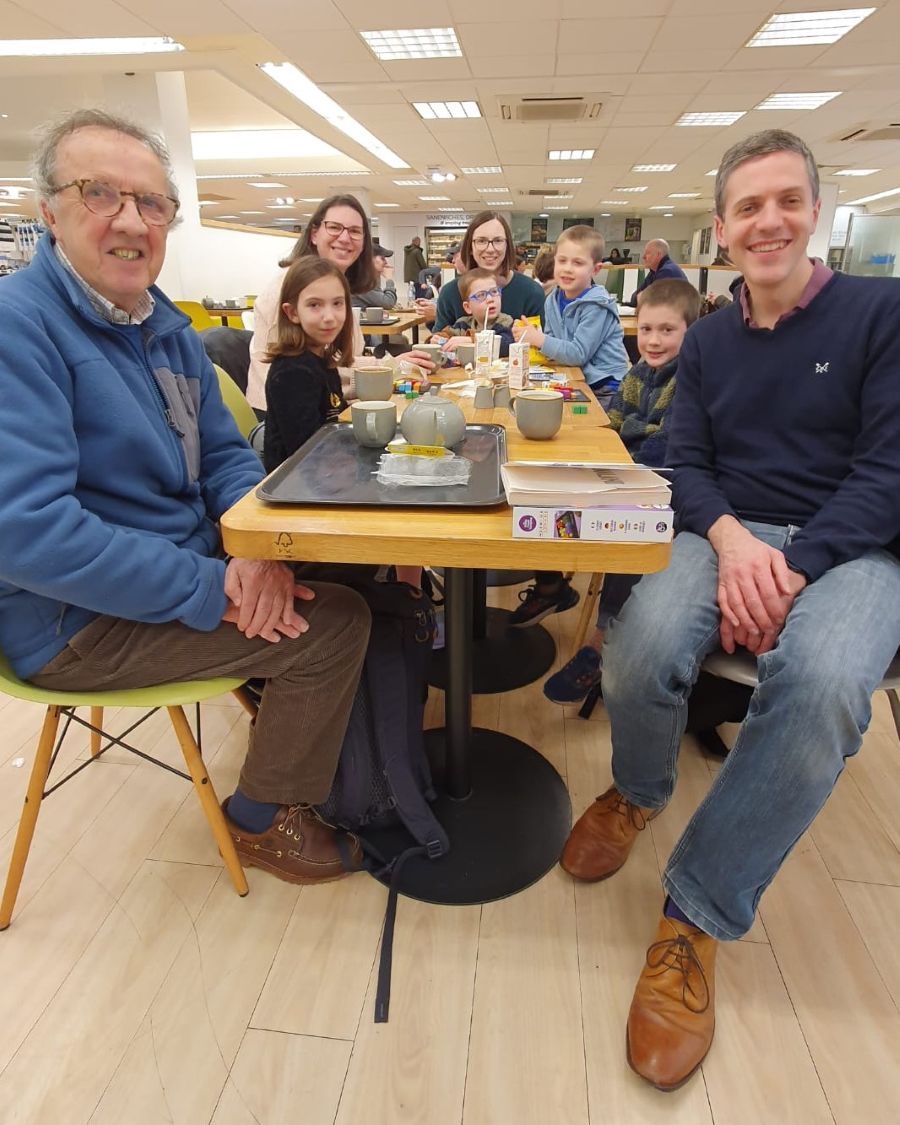
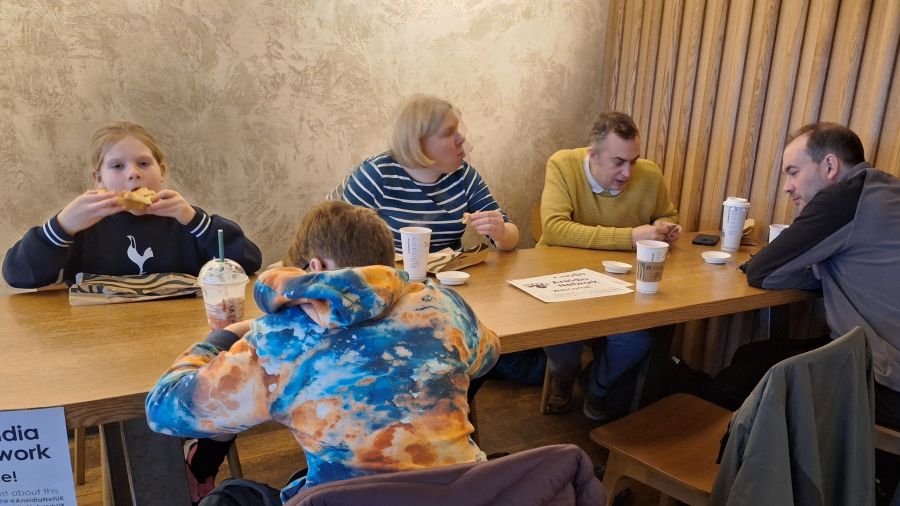
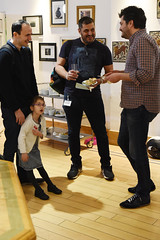
We held 4 friendly online/in-person gatherings of patients and their relatives to celebrate Rare Disease Day 2026.
- London Euston Station: Starbucks: Aaron, Johnathan, Keith, James, Emily and children
- Cambridge: M&S Food Cafe, Market Hill: Tony, Andy, Laura, Anastasia and children
- Manchester: Piccadilly Tavern: Gemma and Katie
- Online via Google Meet: Annie, Cerys, Simon, Johnathan, Andy, James
It can be hard having a rare disease and feeling like you are navigating this journey alone. So we enjoy talking to ask questions and hear from people who can share insights into living with aniridia. It makes a difference and empowers us.
To fit with the theme of Rare Disease Day, we focused on equity in medical care, discussing positive and negative experiences as well as self-advocacy with doctors.
If you would like to host a meet-up in your area, email meetup@aniridia.org.uk!
Rare Disease Day
We host events around this time of year to mark Rare Disease Day. It’s an international celebration held annually on the 28 February (29th on rare occasions!)
It’s aim is to work towards equity in social opportunity, healthcare, and access to diagnosis and therapies for people living with a rare disease.
With over 300 million people worldwide affected by rare diseases, this day serves as a crucial platform to highlight the importance of research, support, and resources for those who often feel overlooked. It’s a day to stand in solidarity, share stories, and foster a sense of community among those facing unique challenges.
Since its creation in 2008, Rare Disease Day has played a critical part in building a community that is multi-disease, global, and diverse– but united in purpose.
Find out more and get involved in supporting Rare Disease Day
Calling for equity
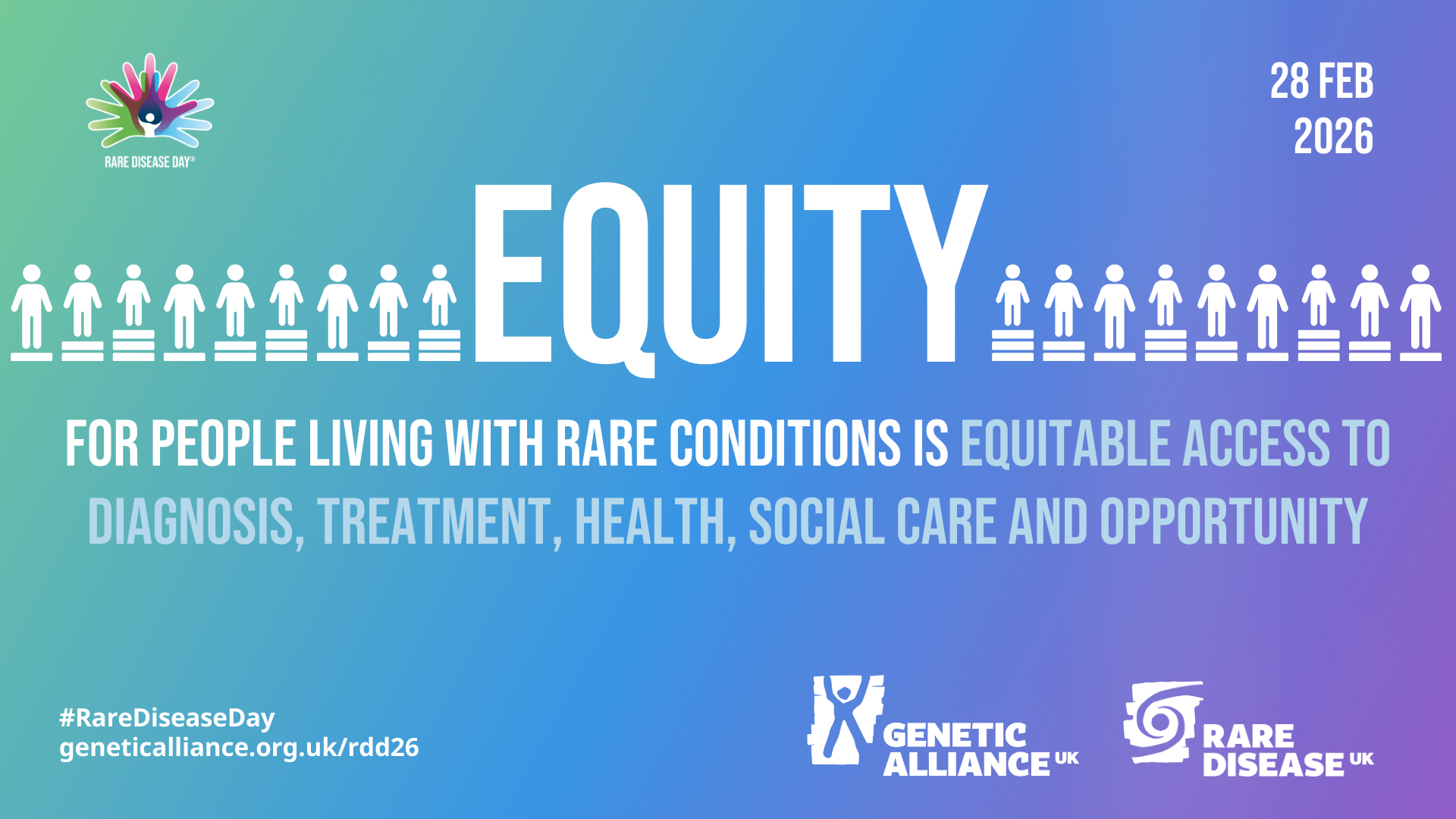
The theme of Rare Disease Day in the UK is ‘equity’, defined as ‘meeting people’s specific needs and eliminating barriers preventing their full participation in society.’
People living with a rare condition face many challenges with accessing health and social care services. This can happen for many reasons, including a lack of knowledge among healthcare professionals to support timely diagnosis and appropriate treatment, or limited access to specialist centres where care is provided.
People with a rare condition may have worse health outcomes than people in the general population due to the limited services and support available to them, and the support for people with different rare conditions is highly variable. Differences in health opportunities and outcomes which are systematic, avoidable and unfair are defined as health inequities, which are important to address to ensure that services are equitable for all people in the UK. (England 2025 Rare
Disease Action Plan – summary of health inequity scoping review).
Why your voice matters
People living with, or affected by, a rare condition are the experts in their rare conditions. Your personal story is the most powerful tool for driving change. Sharing your experience is important because it can help to: – Humanise statistics and data: It shows decision-makers and the public the reallife impact of rare conditions. – Inform better policy: Your lived experience highlights the gaps in the system, such as diagnostic delays or lack of coordinated care, providing evidence for the changes we campaign for. – Build community: It connects you with others, reducing isolation and fostering a strong, united community. By raising your voice this Rare Disease Day, you contribute directly to the ongoing work to implement the UK Rare Diseases
Framework and secure a future where everyone with a rare condition has equitable access to the best care.
Key messages
When raising awareness and campaigning, use a few clear, impactful messages that tell people and policymakers what changes you want to see and why. It is important that your messages reflect what matters most to you, but you can give your messages greater weight by connecting them to the shared concerns of the 3.5 million people in the UK living with a rare condition. Here are some examples
- Call for equity for rare conditions
Everyone with a rare condition deserves fair and equitable care from the NHS, no matter how rare their condition is. Equitable care means addressing individual needs, not treating everyone the same.
Read a briefing on equity for rare conditions from EURORDIS - Renew the UK Rare Diseases Framework
The UK Rare Diseases Framework must be renewed, refreshed, and underpinned by ring-fenced funding to drive continued progress beyond 2026.
Read about our campaign for a renewed UK Rare Diseases Framework - Improve care coordination
Only 1 in 10 adults in the UK living with a rare condition have a care coordinator to help organise different aspects of their care. People with rare conditions need well-coordinated, holistic care pathways and access to care coordinators.
care coordinators.
Read a factsheet on coordination of care for more information - Increase healthcare professionals awareness of rare conditions
Healthcare professionals need increased awareness and training of rare conditions to prevent misdiagnosis and improve early support. Medics For Rare Disease (M4RD) provide information and learning resources to healthcare professionals who want to know more about rare conditions.




 Aniridia Network