
By Mike
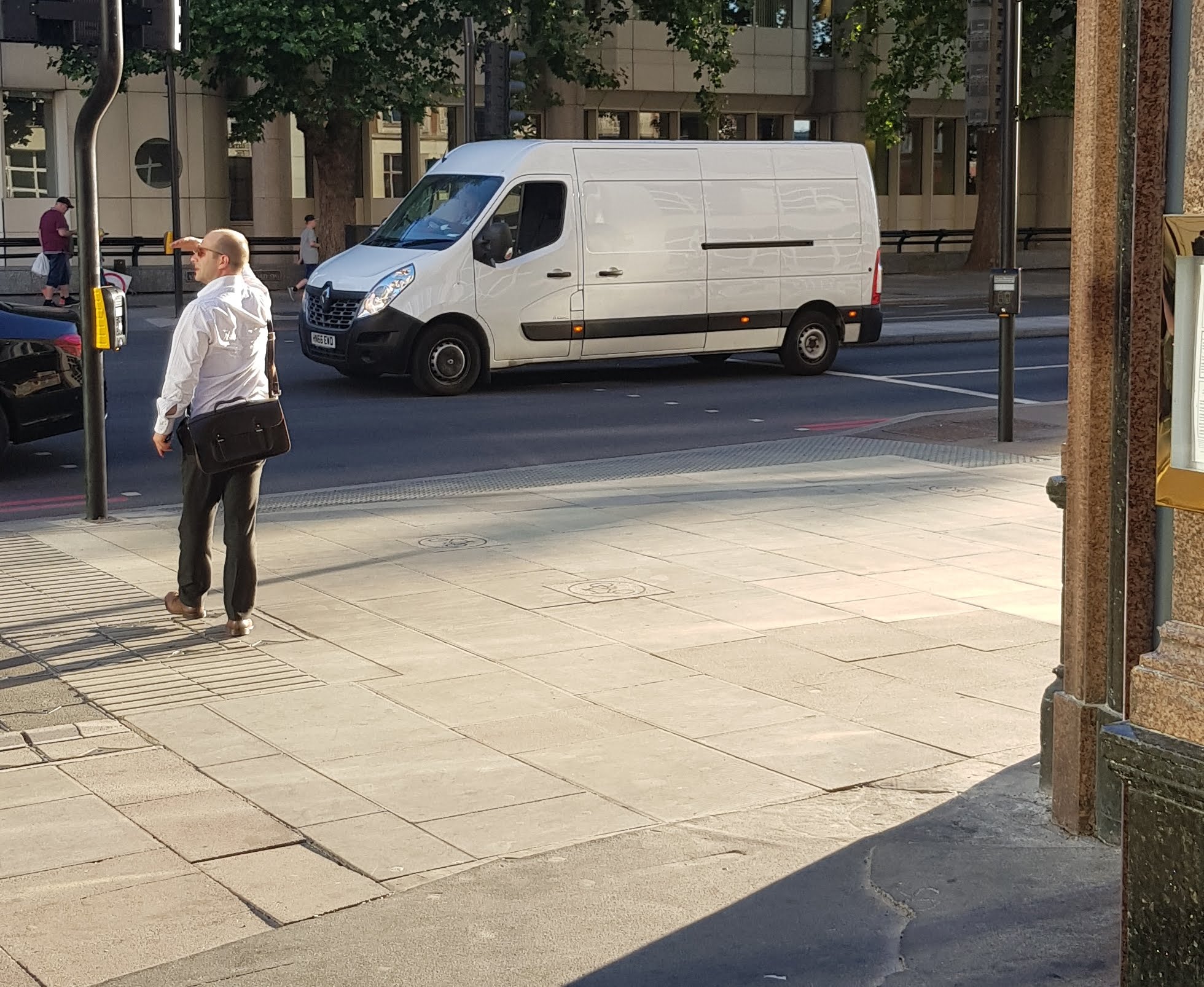
Today is World Car Free Day, when all around the world towns and cities allow people to experience streets free of motor traffic. It’s a great chance to re-imagine our streets around people. While not expressly an environmental movement, it’s no surprise that the benefits of reducing cars on the road is at the forefront of people’s minds when the subject of pedestrianising urban areas comes up.
That’s a positive outcome of our world becoming less car-centric, but not the only one. For many visually impaired people, including people with low vision aniridia, it’s not possible for us to apply for drivers’ licenses.

This is a real source of frustration for me. So much so that when I wrote a comic book using
superhumans as an analogy for disability, I specifically gave my main character superspeed, having always wanted a way to outpace motorists myself.
Besides the obvious disadvantage of not being able to travel at the speeds and with the convenience and comfort that motorists do, being unable to drive causes a litany of issues for blind and visually impaired people.
Despite the Equality Act explicitly stating that employers have a duty to make reasonable
adjustments for people with disabilities, and the fact that Access to Work could easily shoulder the burden of these adjustments for them where commuting is concerned, I’ve personally encountered many job listings which will not take your application unless you check a box confirming that you have driver’s license. These are jobs that do not involve driving in any way: the employer simply cites a remote location as the reason for the requirement, and discriminates against visually impaired people in the process.
Even in an urban area with a robust public transportation system, it’s common to find that the layout of industrial areas or retail parks makes walking through them a huge challenge, or even impossible to do safely, with pedestrian crossings being few and far between, and pavements often being non-existent. Many holiday parks suffer from the same affliction: presupposing that guests will have access to a car.
The problem is compounded by the photosensitivity common with aniridia: crossing the road on a bright day can be very dangerous when the sun is in your eyes, making it difficult to spot oncoming vehicles, with smaller cars and motorbikes being particularly hazardous.
Traffic lights without adequate accessibility features are also a real challenge. With enough ambient sunlight around, traffic lights can appear very faint during for someone with aniridia. This problem would be solved with beeping traffic lights, or a tactile cone to let you know when it’s safe to cross.
The problem is sometimes vandalism, neglect, or oversight can cause these features to be missing when they’re needed. The busy road I live near in Bristol has a set of traffic lights which suffers from exactly this issue. The lights are often bathed in direct sunlight, making them barely visible compared with the bright sunlight around them. The lights have no tactic cone, and don’t beep despite not being close enough to any other traffic lights to cause confusion.
The only safe solution is to use my monocular to see the lights clearly: which is often met by mocking abuse being shouted at me by passing drivers who don’t understand what I’m doing.
So with all that in mind, the rise of movements to pedestrians more of our infrastructure seems very promising to me. I hope that World Car Day teaches people that they don’t have to be as dependent on their cars, and we can built towards a car free future for the benefit of everyone.






 Aniridia Network