A decade as Patron of Aniridia Network

In 2013 Veronica van Heyningen became Aniridia Network Patron. Having helped to appoint a new patron she reflects on the progress we’ve made together.
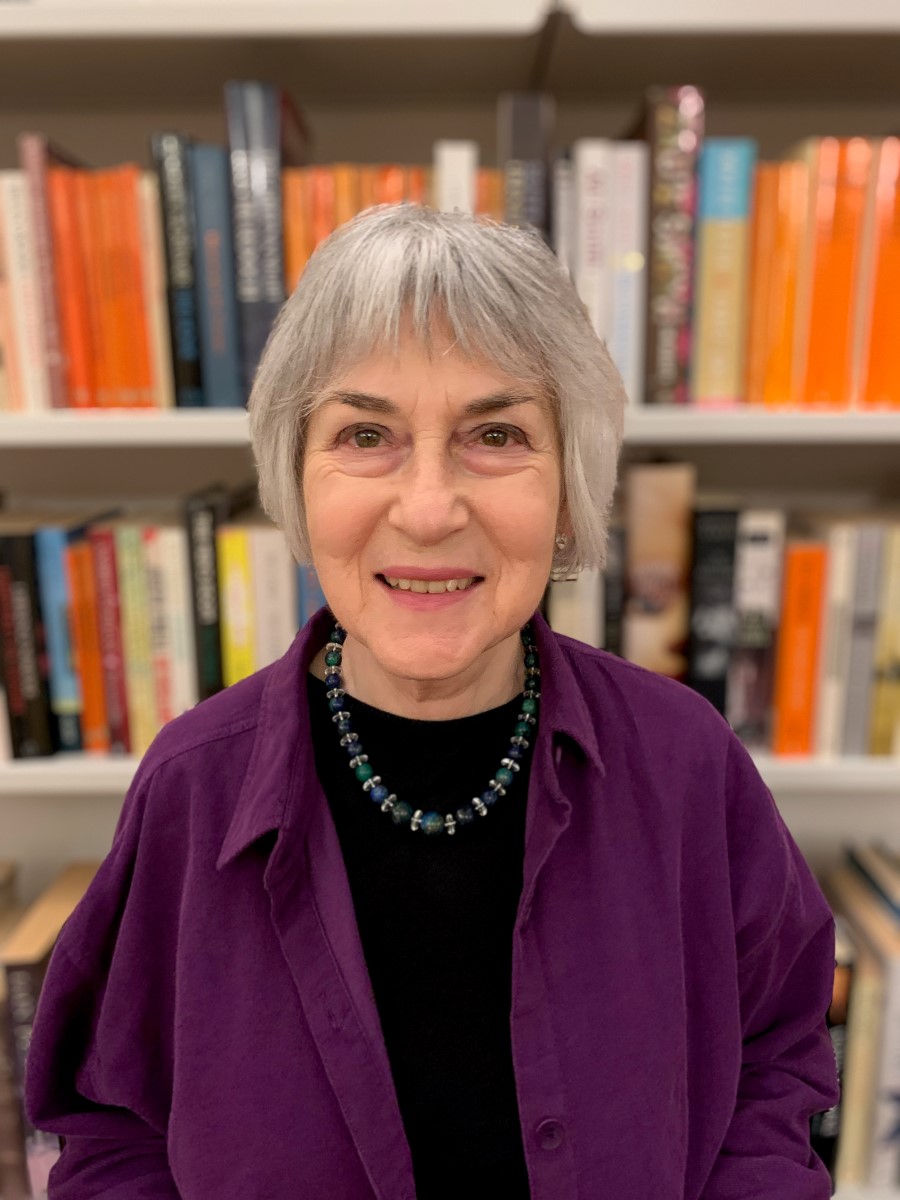

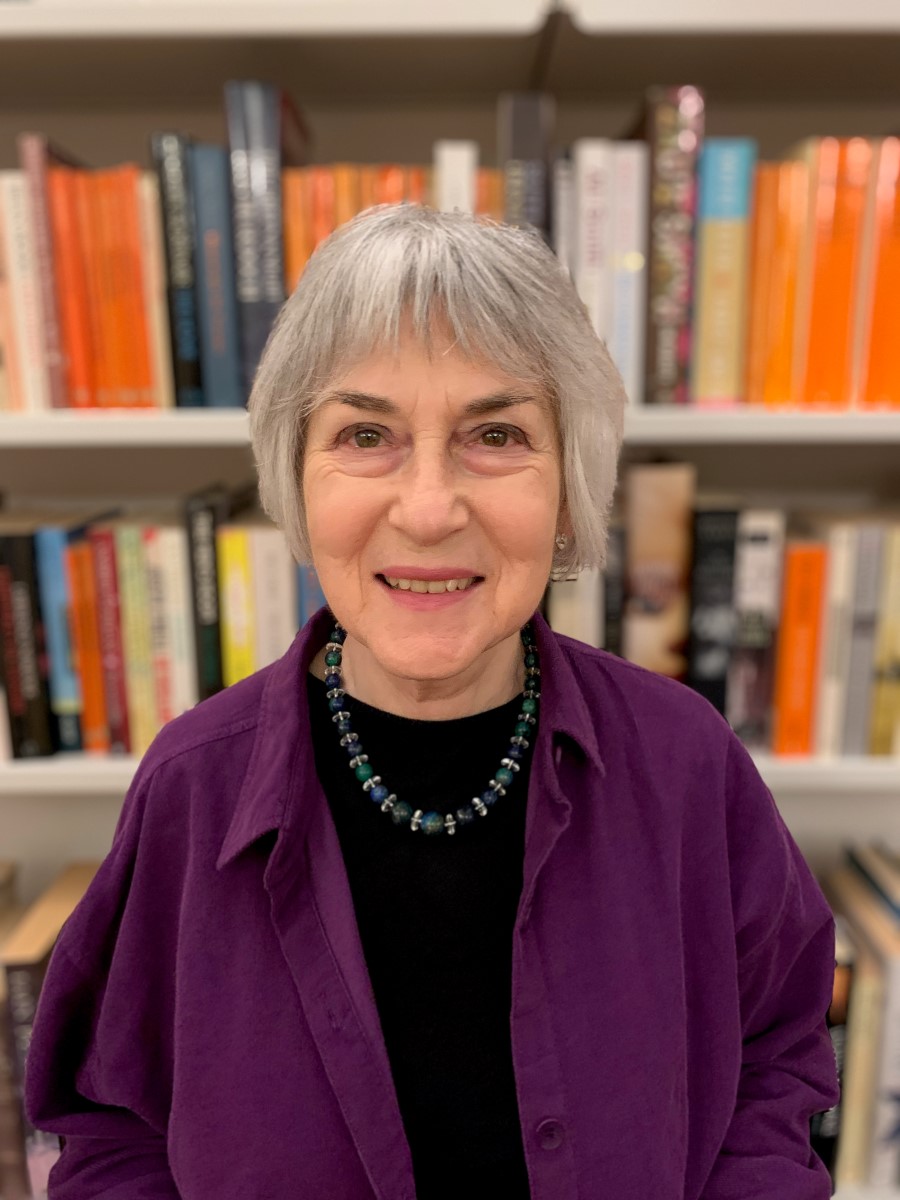
Woman in front of a large book case
Veronica van Heyningen

Ten years ago when I took up the role of Patron in this wonderful aniridia support group which has grown and matured greatly over that time span. It has been an honour and privilege to witness, and occasionally help along, the progress of the Aniridia Network. 

Because I am a scientist, not a clinician, one of the first things we set out to do was to establish a panel of clinicians with a broad spectrum of expertise relating to the wider experience of aniridia. The team has been led by Dr Melanie Hingorani and additional experts have been added since then. The aim is to allow any of you to ask questions at any time, through a single email address and many have done soand received guidance from the panel. 

Knowledge about the diverse effects of aniridia has increased significantly since the discovery of the major implicated gene known as PAX6. It has been wonderful to see the community contributing to and benefitting from the growth of the insights into the complexity and variability of the condition. Understanding the details is very much the first step to developing better therapeutic and management options. The sharing of experiences and strategies by Aniridia Network members has also been a great pleasure to witness. 

There have been many new initiatives by all of you, for all of you. I recall how excited and impressed I was when I first heard about the Pupil Passports to help deal with schools and education. 

The emergence of Aniridia Europe and the evolution of Aniridia North America have made raised the profile and engagement of Aniridia Network with the rest of the world. The firm establishment of the Rare Disease UK network has helped to strengthen support and visibility too. 

It has been great to observe all the positive changes including the setting up of Aniridia Network as a fully-fledged registered UK charity

I loved attending the annual meetings and also some Aniridia Europe and Aniridia North America meetings. It has been wonderful to meet many of you and to hear your stories and celebrate your many fantastic achievements individually and together. 

Man wearing a suit
Tony Moore

Because of all this growth and evolution, it seemed timely to bring in a wonderful highly eminent new patron. A number of you will know Tony Moore as he has looked after many people with aniridia in Cambridge, at Moorfields, Great Ormond Street and San Francisco. He is a fantastic ophthalmologist and superb diagnostician who has contributed greatly to our understanding of aniridia and other genetic eye diseases. He has been a longstanding, highly valued collaborator in our lab-based discoveries. We are co-authors on 25 scientific papers.

Although I am getting older and have growing family caring duties, I shall remain a Patron, but it will be a great to have Tony on board too. 
Posted in Aniridia Network news | Tagged , | 3 Comments

The diverse functions of PAX6: How Veronica grew our understanding

Our Patron Veronica van Heyningen worked at the Medical Research Council for more than 35 years. In that time she and her colleagues in Edinburgh did pinoneering work to undertand the PAX6 gene. They were identified it as the gene most frequently implicated in the changes associated with aniridia. Here she looks back on that work and how how it has improved our understanding of aniridia.


Woman in front of a large book case
Veronica van Heyningen

In 1983, my colleague Nick Hastie and I set out to look for the genes implicated in WAGR syndrome, which includes Wilms tumour and aniridia.  When these two distinct diseases occur together there is a chromosomal deletion involved, taking out the two neighbouring genes on one copy of the chromosome.  Nick and I contributed substantially to the international effort to map and identify these genes, at a time when this was a much harder and slower task than it is now, with detailed human genome information available.

Since these genes, WT1 and PAX6, were isolated, around 1990, we devoted much of our research effort to understanding how they work.  Nick’s group has focussed on WT1 and we worked on PAX6. These early studies on PAX6 heralded a new era for my lab.

We were first to demonstrate PAX6 mutations in aniridia and to show that the gene is turned on and “expressed” in each layer of the developing eye: in the retina, lens and cornea, which explains why all these components of the eye are affected when one copy of the PAX6 gene is not working.

From 1991 we focused on deciphering the many obvious and also some more subtle effects of mutation
affecting the PAX6 gene.

Following the initial pinpointing of the gene, mainly through the study of individuals with WAGR deletions, we explored how different types of genetic changes cause PAX6 malfunction and also the broader spectrum of effects that the mutations may lead to. Thus, we published papers on human PAX6 gene mutation effects on olfaction, brain structure and function, auditory function, potential sleep perturbation and the possible role of PAX6 in pancreas maintenance as well as development. Several of our papers explored exactly how individuals with different PAX6 mutations are affected and how their problems evolved with time.

Critical for these studies was the participation of the aniridia community – you! We maintained a database of human PAX6 mutations.

We also showed that a mouse, first described in Edinburgh as the ‘Small eye’ mouse, carries PAX6 mutations too.  This means that we can study many of the effects of PAX6 mutation in a small laboratory mammal since it is not possible to get eye tissue from people.

Using comparative studies in model animals such as fish and mice allowed us to dissect
the many different functions that the normal PAX6 gene fulfils. DNA sequence in the
gene’s flanking regions either side of PAX6 is conserved across multiple species. These
elements function as regulators of PAX6 expression in different stages and in different
organs. The importance of such “enhancer” regions was reinforced by discovery of a
novel mutation in one such element, leading to aniridia. The function of the element had
previously been shown experimentally and the change due to the mutation was also
demonstrated.

Some of our other studies described the identification of mutations in novel genes when
the eye malformation suggested a possible link to PAX6, but no PAX6-related changes
could be found. In several such cases we (and others) were able to identify different
causative changes in other genes. It is always exciting to solve such puzzles and link
similar eye problems to different genes. The newly identified genes often belong to the
same interacting gene networks and help us understand more about the roles of PAX6.

Correct PAX6 function is critical for eye development. Losing the full activity of just one
copy of the gene leads to aniridia-like phenotypes. The precise dosage and timely
expression of PAX6 in multiple eye components (retina, iris, lens, and cornea) is
essential for correct eye development. The gene also plays key roles in stem cell
functions in the mature eye. The role in corneal maintenance is well known to many with
aniridia.

PAX6 is now known to be critical for eye and brain development (multiple components) and pancreas development, and very likely for adult maintenance too. However mutation in one copy of the gene affects mainly the eye, leading to congenital aniridia.  We have studied PAX6 in great detail, showing that this gene plays a role in controlling other genes during development and also later on in maintaining adult cells. Other roles of PAX6 are still being explored.

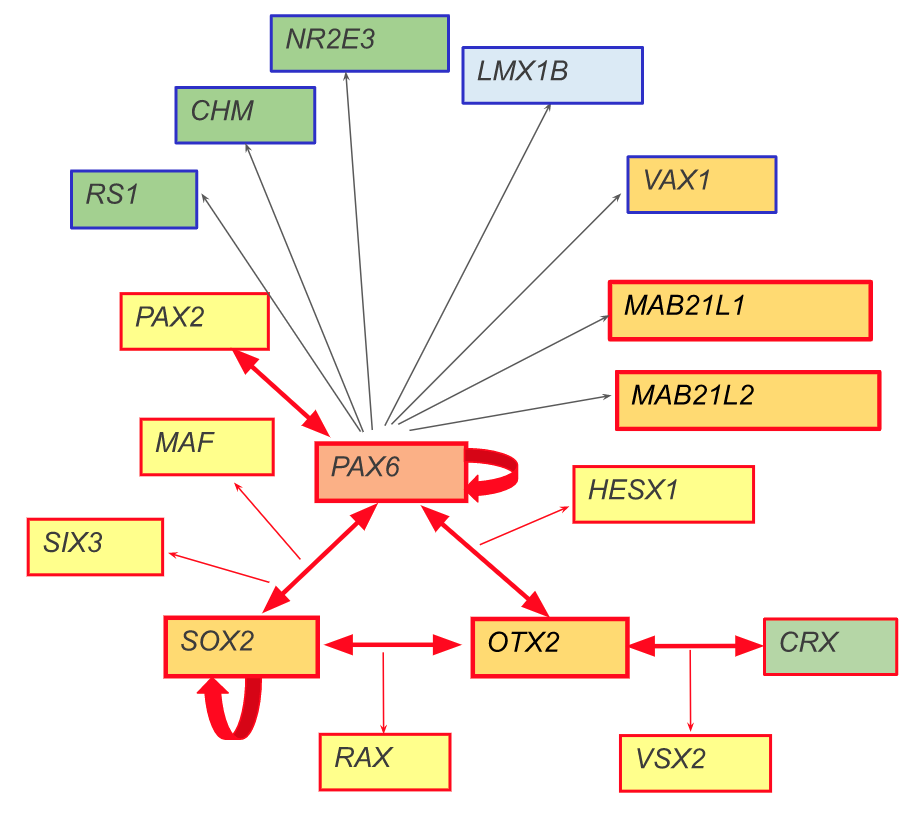
This diagram shows how PAX6 interacts with many other genes – all those shown here
are implicated in genetic eye disease.

PAX6 connected to genes in various ways. RS1 CHM HESX1 CRX VSX2 RAX SOX2 OTX2 VAX1 MAB21L1 MAF NR2E3 SIX3 LMX1B PAX2 MAB21L2. Details available on request

Most of them, like PAX6 itself, produce proteins that regulate the expression of target genes by interacting with the regulatory regions (enhancers) flanking th e target gene. Some associate at the protein level too. These genes with a role in eye development interact in a complex inter-connected network. When mutated they lead to eye disease

  • Green: retina
  • Yellow: developmental anomalies
  • Orange: complex syndrome
  • Blue: glaucoma

Even in retirement my interest in eye genetics has continued strongly throughout my time as Patron. When invited to participate in a meeting I tend to accept. In October 2022 I gave the Heritage Lecture at the EVER meeting in Spain.

I also published a detailsed biographical review of my work, showing the strong focus on PAX6 and genetic eye anomalies.


Posted in Medical staff talking, Research | Tagged , , , | 2 Comments

Meet ups for Rare Disease Day 2023

Four adults, 4 children at a coffee shop table, plus a baby in a pram.

Seventeen people were at our get togethers last weekend to celebrate Rare Disease Day, in London and Cambridge. They came to meet fellow aniridia patients and relatives to chat about all aspect of aniridia.

Andy hosted the Cambridge event in the Waterstones cafe. Andy and two of his 3 young children have aniridia too. He’s also the Treasurer of Aniridia Network. Anastasia and Kyriakos brough young Zinovia who has aniridia. Plus the retired ophthalmologist Tony Moore joined the group as he plans to get more involved with Aniridia Network.

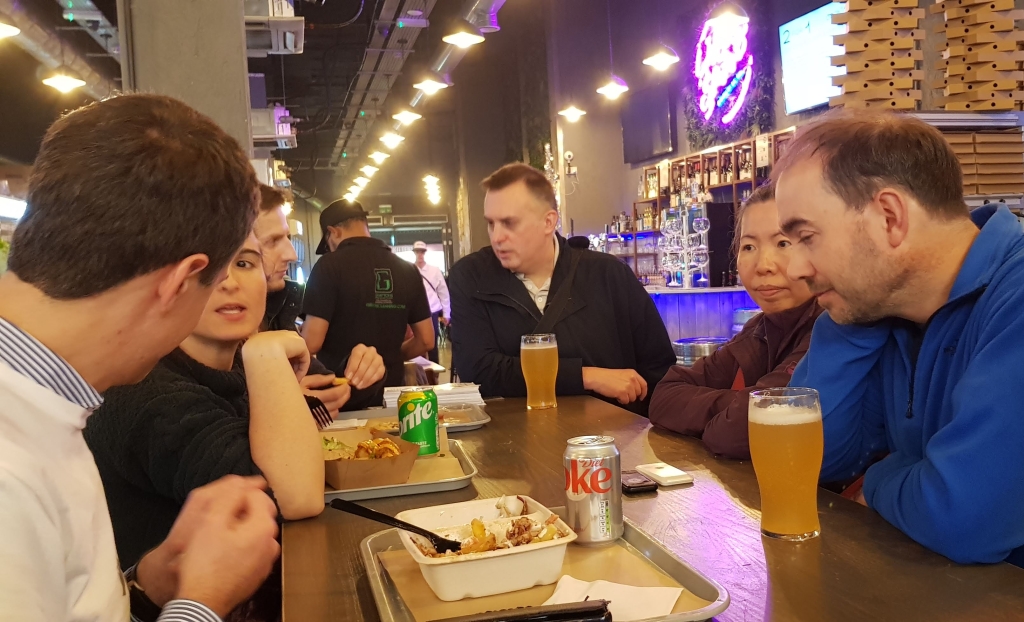
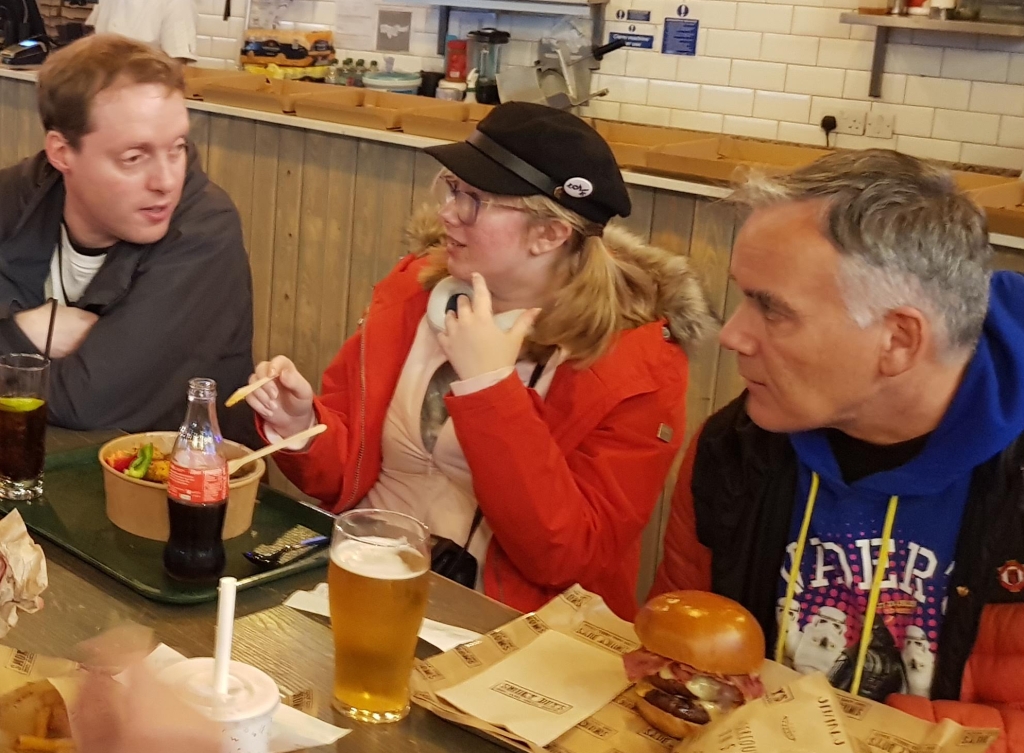
Volunteers James and Glen who both have aniridia ran the London meet up in the lively World Food Court of Stratford Westfield shopping centre. Attending were mum and daughter Helen and Anastasia-Maria who both have familial aniridia. 3 year old Dhruvin has WAGR 11p deletion syndrome. Later 71 year old John arrived too.

I am so happy finally to meet all of you! You are a great community..

Helen

While enjoyhing lunch they and discussions about aniridia all stages of life: development milestones, school, job and retirement. We showed all off our visual aids, including monoculars, eyesheilds and magnifiers.

These are all so amazing!

Anastasia-Maria
4 adults and two children around two circular tables

What is a meet up? Why come?

You may be sceptical or nervous about coming to a meet up. Tiereny wasn’t sure about our last event. Afterwards she said:

“Honestly, I was surprised at how much I did enjoy myself. I really loved hearing about other’s experiences, finding out what they did and how they got there.
It was also interesting and almost strange (in the best way) to hear a lot of my own day-to-day struggles mirrored in others. Having people understand these difficulties; on a level that even the most empathetic non-visually impaired person just can’t.”

Read more about our past brilliant meet ups

Rare Disease Day

Rare Disease Day logo

We host events around this time of year to mark Rare Disease Day. It’s an international celebration held annually on the 28th February (29th on rare occasions!)

It’s aim is to work towards equity in social opportunity, healthcare, and access to diagnosis and therapies for people living with a rare disease.

Since its creation in 2008, Rare Disease Day has played a critical part in building an community that is multi-disease, global, and diverse– but united in purpose.

Find out more and get involved in supporting Rare Disease Day

Posted in Aniridia Network news | Tagged , , | 2 Comments

My first aniridia meet up

After moving to London, I stumbled across Aniridia Network (AN) and decided to sign up.

Woman with brown hair and a red shirt
T McGuire

All my well laid plans to get involved, however, fell to the wayside as I got distracted by PhD study, making new friends, and getting involved in the variety of opportunities London had to offer.

That was until I noticed the next London meet up was fortuitously scheduled for one of my rare free evenings!

This would be my first time attending an Aniridia Network meet-up and I must admit I wasn’t sure whether it would be for me or if I would get anything out of it. Despite the initial skepticism I decided, as with anything in life, it was worth a go!

So, after work I hoped on the tube and made my way to the meet up location. Despite my doubts I had a really good time. Honestly, I was surprised at how much I did enjoy myself at an event that was, in essence, a collection of random people who only had an eye condition in common. But I really loved hearing about other’s experiences, finding out what they did and how they got there.

It was also interesting and almost strange (in the best way) to hear a lot of my own day-to-day
struggles mirrored in others. Having people understand these difficulties; on a level that even the
most empathetic non-visually impaired person just can’t; was quite eye opening.

Overall, I had a great experience and definitely plan to go to more. I recommend to anyone
considering attending and Aniridia Network meet-up to just go for it, see what happens. Maybe next time I will see you there!

Find out mroe about our past and upcoming events.

Posted in Patients' tales | Tagged , , | 2 Comments

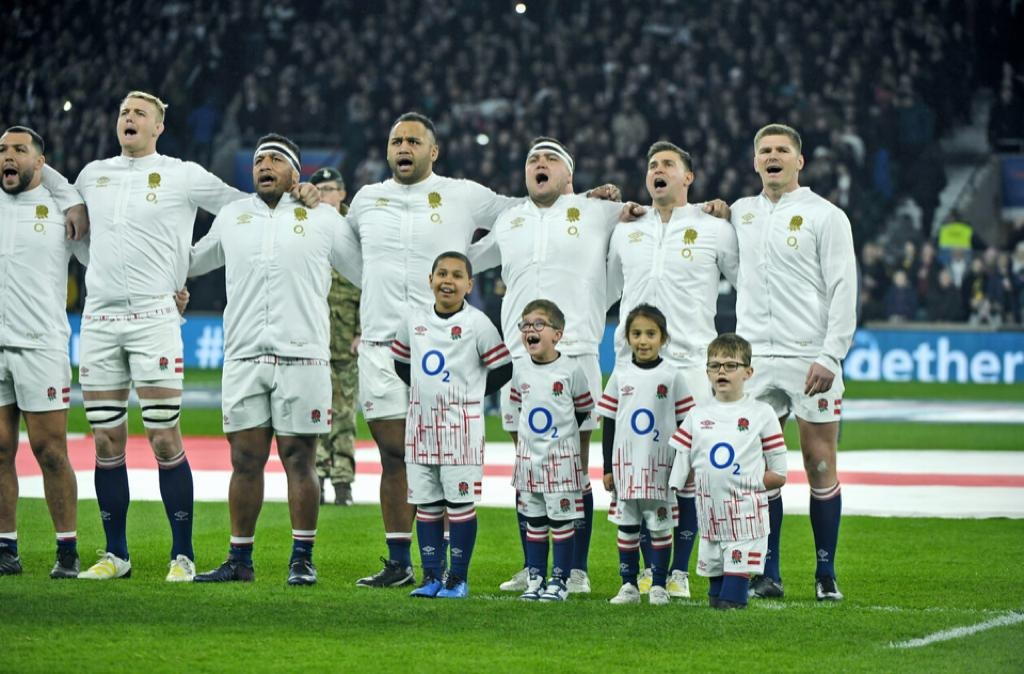
Finlay is England Rugby Union mascot

A boy with aniridia served as the mascot of the England rugby team at their game with South Africa. He proudly led the team out on to the pitch at Twickenham today.

7 England men rugby players singing the national anthem on a grass pitch with 4 children in front of them
The England Rugby Team and 4 child mascots. Finlay 2nd from left.

Finlay’s godparent moninated him following a call by the sponsor British Airways for 5-12 year olds who are keen rugby fans. He wrote:

Finlay is a bright, fun, energetic and courageous little boy.
What makes Fin a British Original is his sheer determination to live life like any other child despite his reduced vision. He loves sport and plays football every weekend and has even learnt to surf and ski with his mum and dad.
For me, a British Original is about never giving up on your hopes and dreams and he shows us all, day in and day out, that anything is possible.

Finlay is 7, lives in London and has aniridia, which incudes: foveal hypoplasia, nystagmus and photophobia. He was ‘buzzing, over moon about what was a very special day’

His dad Simon is behind an amazing inititaive to find drug treatment for some of the symptons of aniridia. Here is his presentation at the 5th European Aniridia Conference.

Posted in Parents' accounts, Patients' tales | Leave a comment

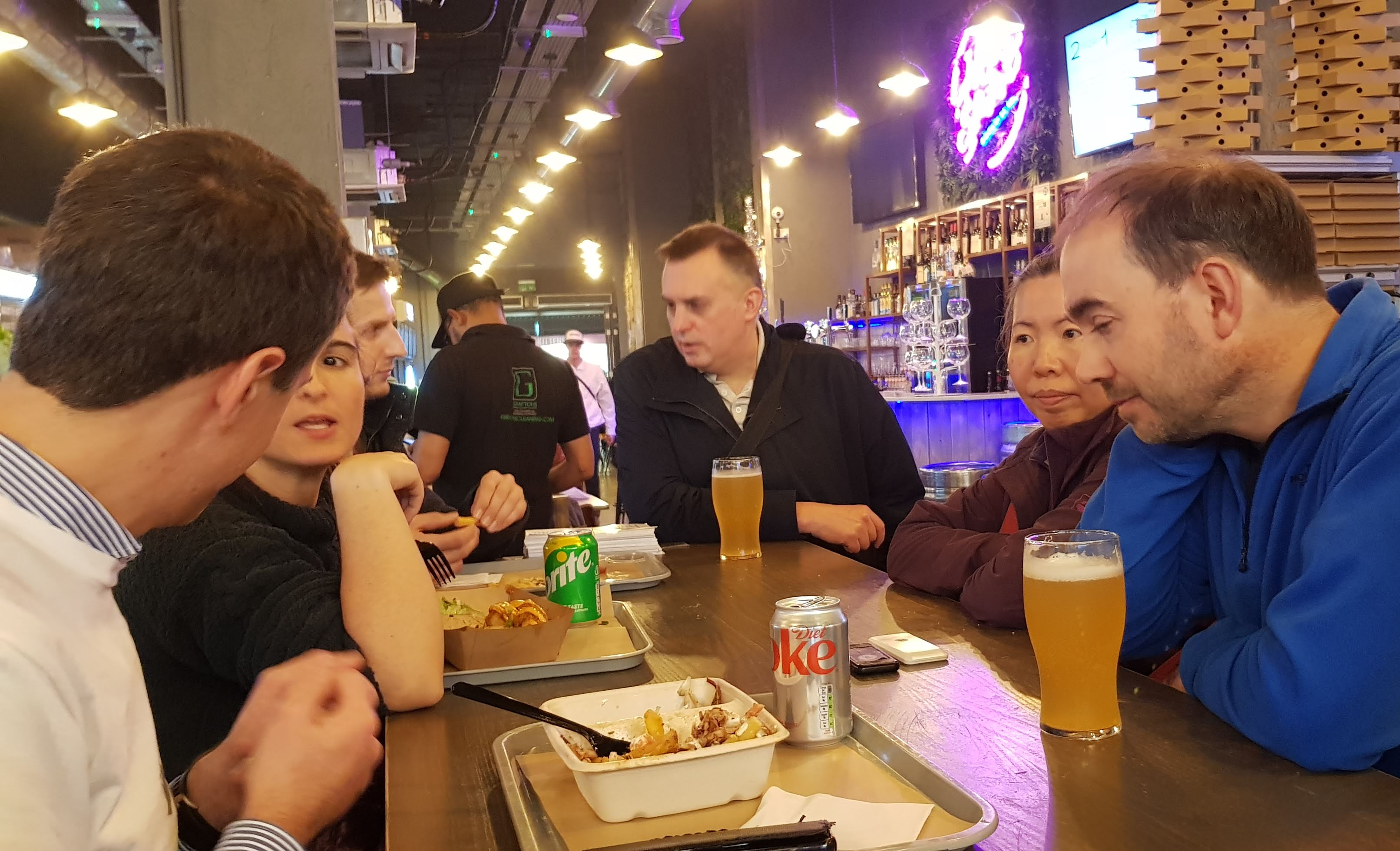
Meet up & stall after/at Sight Village London

4 men and two women talking around a table with food and drinks

We held a wonderful meet up of people affected by aniridia in Kensington. It was after the Sight Village exhibition where we had a stall. It was a brilliant day and evening where we talked about all aspects of aniridia with lots of attendees.

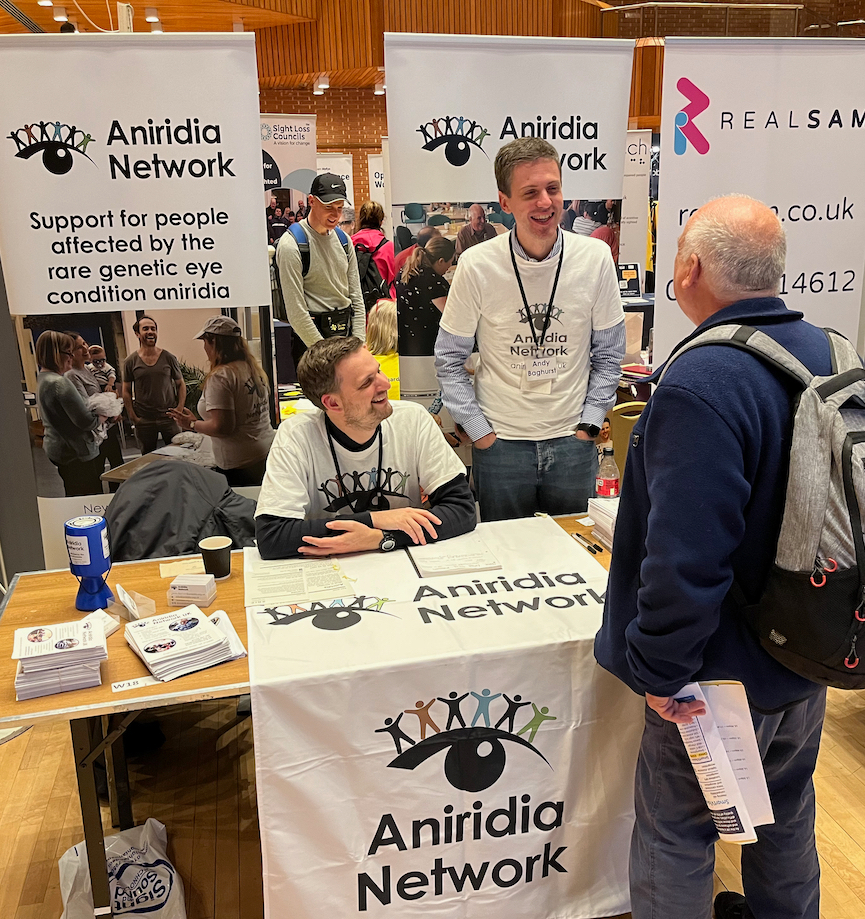
Sight Village

A stall with Aniridia Network branding and leaflets. Two men behind the stall talking to another visiting it.
James, Andy and John at the Aniridia Network stall

This exhibition showcased technology, kit and support services for people who are blind or partially-sighted. It is aimed at visually impaired people plus professionals and business that serve them. 

This was the first time we have had a our own stall at any event. It let us meet many people to improve their understanding of aniridia and raise the profile of our charity. We met people who have friends with aniridia, who took our leaflets to pass on. Council support workers signed up to our maling list. Two very kind people even put £20 each in our donations tin after hearing about our work!

Thanks go to volunteers Glen, Andy and James for running the stall.

Aniridia meet up

We moved on for dinner and a get-together at a nearby food court with other patients and relatives.

11 people came along for excellent chat about aniridia and to enjoy the choice of eateries: pizza, sushi, Thai and middle eastern.

This was my first meet up and I definitely look forward to going to my next one. It was great to meet some really cool people and get to know them”.

Tiereny

It was good to chat to others there. It’s always encouraging to hear of others experiences and challenges  and how they make adaptions to cope with aniridia. Sometimes its just the simplest of things like not noticing people waving at you or finding people in a large place which affect us the most, but its good to chat over these things. It was also good to hear about how those with aniridia are still able to live full lives, both in and outside of work.

Johnathan
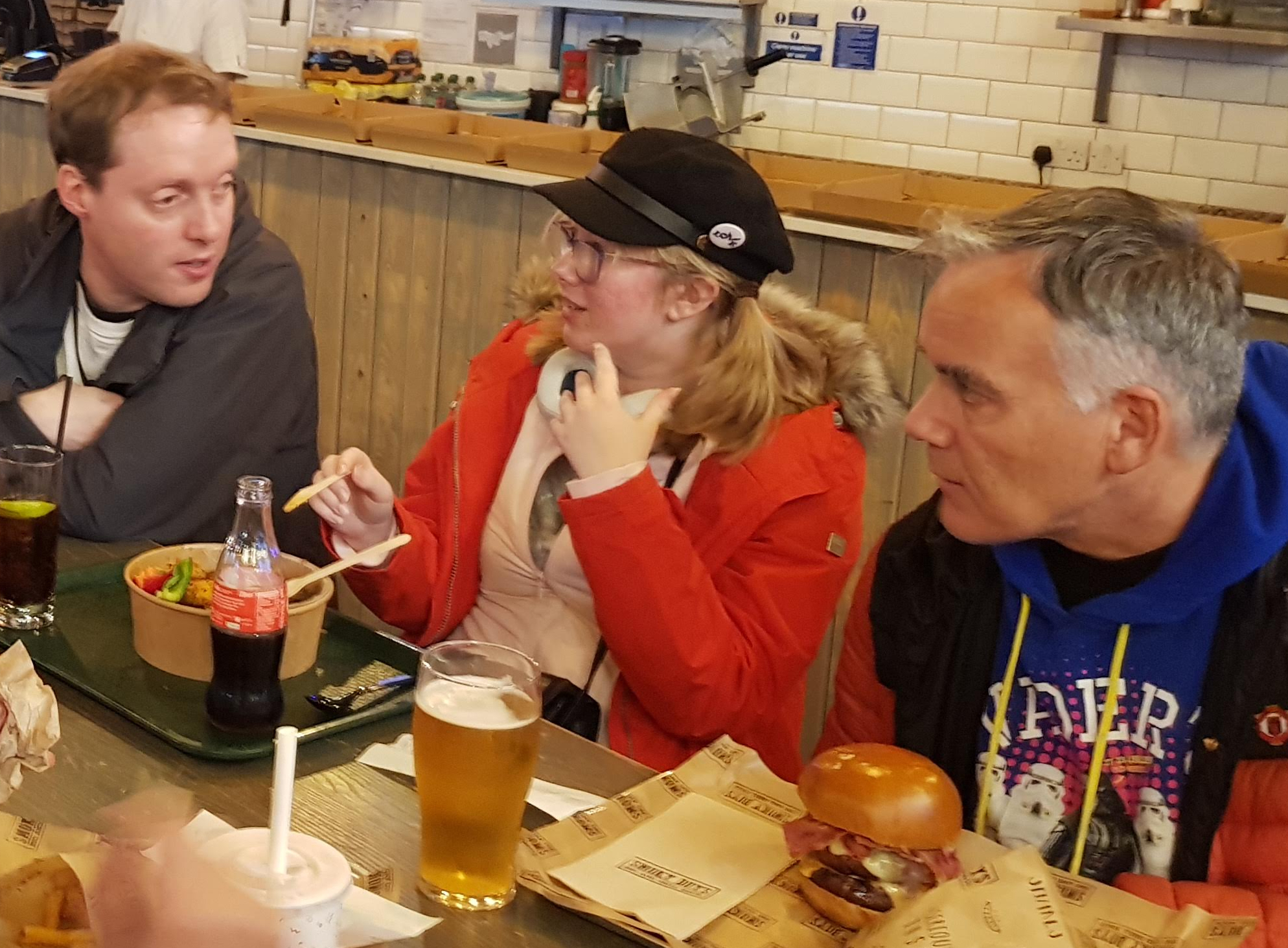
Two men and a women talking while eating from trays
Glen, Sophe and Danny

Posted in Aniridia Network news | Tagged , , | 3 Comments

Down Syndrome Act could negatively affect support for WAGR

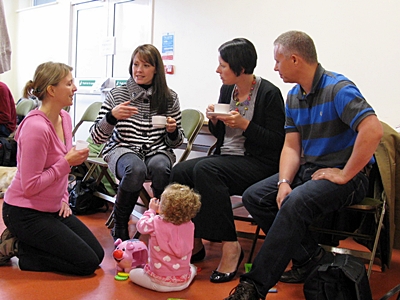
Parents talking while drinking tea and a toddler plays on the floor
Jane, Elly, Susan and Chris talk while Tara who has WAGR/11p deletion syndrome plays

An alert from Genetic Alliance UK warned us about the potential impact of new legislation called the Down Syndrome Act.

It raised the prospect of people with Down syndrome being treated better than others with similar learning difficulties, caused by other condtions such as WAGR.

Following this, we and many people who know someone with WAGR wanted to air concerns about it in a consultation run by Departmetn for Health and Social Care (DHSC).

The act will see guidance produced about supporting people with Down syndrome covering:

  • National Health Service
  • social care
  • education and youth offending
  • housing

The key concern is that if the guidance does not capture all of the overlaps in needs that people with Down syndrome have with people who have other conditions such as WAGR 11p deletion syndrome, then a hierarchy of access could be created, to already scarcely available services.

We passed these details on to the International WAGR Syndrome Association (IWSA). They and several other organizations voiced worries:

“Why single out the Down Syndrome for these improvements, when many other disorders have similar needs and those individuals certainly deserve the same?”

The UK government requested input via a call for evidence to help draft the guidance. Anyone, such as UK relatives of and adults with WAGR, could help avoid them being disadvantaged by using this to make their views known. IWSA encouraged their members to do this and also sent in their own submission expressing their concerns.

Trustee Andy wrote a response on behalf of Aniridia Network insisting that the guidance must be to treat people with learning difficulties equally.

Read more about the Down Syndrome Act and the Genetic Alliance position statement.

DHSC are now analysing the responses and Genetic Alliance UK feel there will likely be a public consultation once the draft guidance is ready at some point in 2023. They, Aniridia Network and IWSA will be sure to keep us members updated through our newsletters, social media and website. 

Posted in Campaigns, Other agencies | Tagged , , | 1 Comment

Internet & social media research study: participants wanted

Emily Sterling, a Masters student from the Cardiff University Centre of Medical Education, is looking for adults with aniridia to take part in a research study about their use of the internet and social media.

Emily has provided the information about the study in the text and video below. You can also watch a video of Emily talking about the study at our online conference in August, where she answered questions from our attendees.

If you are interested in taking part or have any questions after reading through this, please contact Emily at SterlingER@cardiff.ac.uk.

Continue reading
Posted in Research | Tagged , , | 1 Comment

2022 Volunteer Awards

We rely completely on the brilliant people who use their spare time and skills to run our charity.

We are so thankful for the efforts of all our volunteers and hence what they get done for our beneficiaries.

To aknowledge particular individuals’ awesome work, we created an annual award scheme. Each winner receives a certificate and a £20 shopping voucher

Outstanding Contribution Awards

Lyn Buller, the winner of this acolade last year, announced these new recepients.

Trustee James Buller announced the winners of this

Dave McKay

We thanked former trustsee Dave McKay for diligently organising conferences (from 2018 to 2021, including the 6th European Aniridia Conference, and more) that were engaging, educational and community-building. These are our flagship offerings and benefit people all around all UK and far beyond too.

Keith Spink

We also thanked Keith Spink for managing and developing the charity’s vital Salesforce database of contacts since 2011. Using his professional know-how Keith has provided the infrastructure enabling us to grow and communicate with everyone interested in aniridia.

Volunteer of the Year Awards

Trustee James Buller announced the people who have stood out recently as worthy of special recognition.

Nikki Hall

We thanked Nikki Hall for wrangling speakers and jointly writing the successful grant application for the 5th European Aniridia Conference. Without her medical expertise and administrative help we would have lacked the money and star speakers to put on such a fantastic event.

Glen Turner

Last but not least we thanked Glen Turner for social media and video production, especially relating to events. Glen posts on our Twitter and Facebook accounts. He also records and edits talks at conferences and other materials, such as for Rare/Aniridia Days. It all massively helps to inform and motivate our followers.

Get involved

Come and join Dave, Keith, Nikki and Glen and the rest of the brilliant Aniridia Network team so we can do even more together. We are eager to use the skills you already have and provide the opportunity to develop more, through training and experience. Look at all the ways we are looking for volunteers to help and get in touch.

Posted in Aniridia Network news | Tagged , | 2 Comments

2022 Annual General Meeting

An Annual General Meeting (AGM) of Aniridia Network, a charitable incorporated organisation was held online on Saturday 13 August 2022 to transact the business below, in accordance with our governing document. It was a session of Conference 2022 between fascinating online seminars by patients and professionals between 2 and 4pm.

Read Minutes of the Aniridia Network Annual General Meeting 2022 and watch the recording.

Agenda

  1. Aniridia Network AGM minutes 2021
    to be agreed
  2. Matters arising.
  3. Reports & Accounts
    To receive and consider the
  4. Appointment of charity trustees
    To appoint the following as trustees until the 3rd AGM after this one, subject to the compulsory retirement of 1/3 of trustees by rotation at each AGM as described in the charity’s governing document: Andy Baghurst.
  5. Any other business
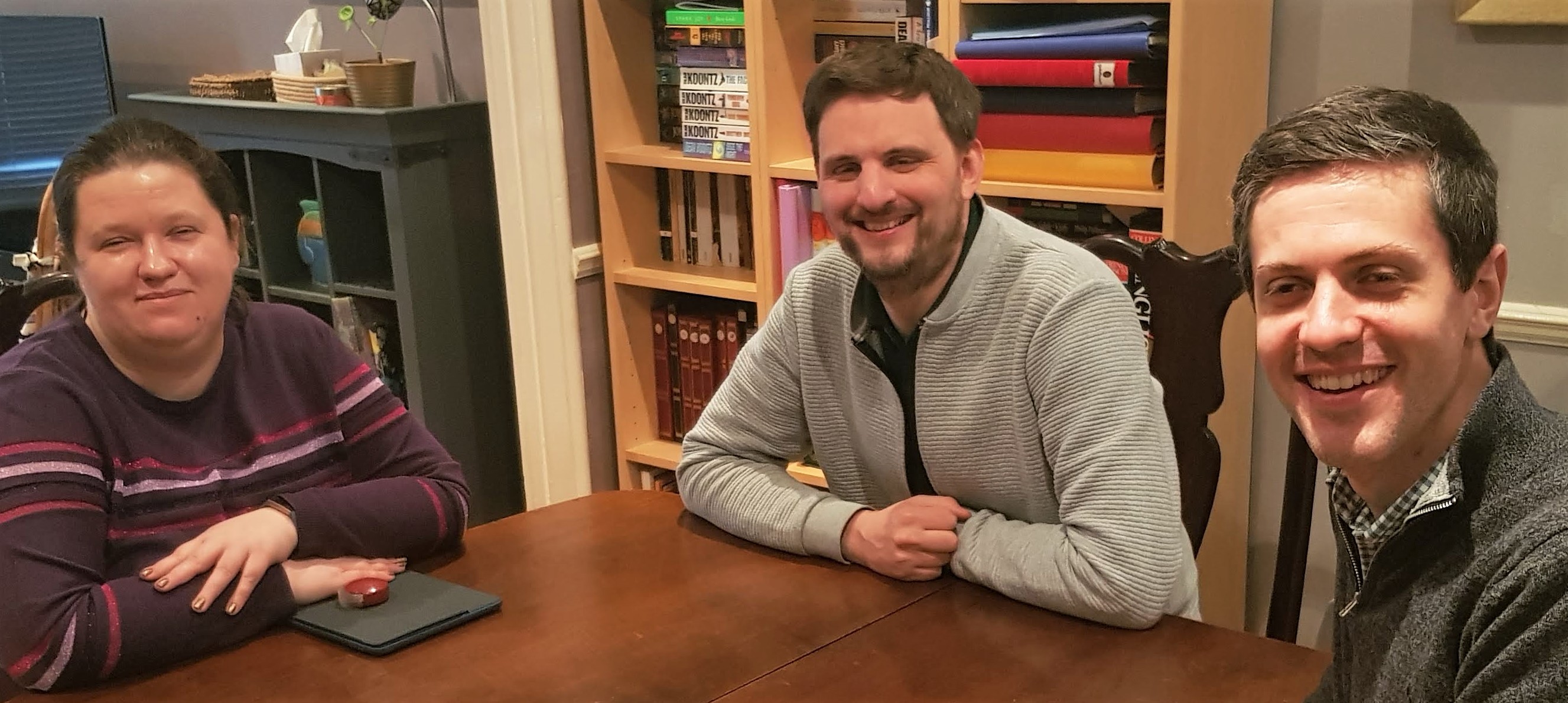
Katie James and Andy sat around a dining table with bookcase behind them
Katie, James and Andy


Posted in Aniridia Network news | Tagged , , , , | 2 Comments