Read details of what our officials, members and supporters did as well our finances between 1 April 2023 and 31 March 2024 in the Aniridia Network Annual Report for 2023/24.
Key points
Successful in-person conference
Multiple meetups around the country
Befriending, education and medical advice services useful and used
UK-wide leaflet distribution campaign
Converting child members to adult members challenging
Very little activity by fundraisers
Very few active volunteers
Long time Medical Adviser retired
Expenditure greater than income for first time
Thanks to the the amazing input by everyone who helped with all these activities.
However, we continue to really struggle to do some basic things well and rely too much on a few very active volunteers. We badly need more people to help us achieve our goals. Please volunteer and fundraise if you can.
Our long-time go-to for all medical queries, Melanie Hingorani, has retired from working as a consultant at Moorfields Eye Hospital and with us too. Her career had a focus on engagement and quality in eye healthcare, including answering our members’ complex questions.
We first heard of and appointed Melanie as our Medical Adviser on the recommendation of our Patron Veronica van Heyningen. They had collaborated on significant scientific papers about aniridia.
As she steps down, we, representing the aniridia community, are showing our gratitude with our Outstanding Contribution Award.
Clinical expertise in aniridia
Melanie worked as a Consultant Ophthalmologist at Moorfields Eye Hospital where many with aniridia attend. She specialised in genetic eye conditions including aniridia, cataracts, and glaucoma, microphthalmia, and coloboma especially in children.
Her research helped establish the understanding of aniridia as a condition affecting the entire eye, not just the iris. She contributed to key publications including comprehensive reviews in the European Journal of Human Genetics and GeneReviews. These are still important resources for clinicians treating aniridia.
Professional Leadership
Beyond her clinical work, Melanie held several leadership positions. At Moorfields she served as Clinical Director for Quality and Safety and later for External Engagement and Policy.
She also chaired committees and was joint Honorary Secretary at the Royal College of Ophthalmologists.
In 2017, she founded the UK Ophthalmology Alliance (UKOA), which now includes over 95 hospital eye units across the UK. The Alliance works to improve eye care services through standardisation, shared learning, and quality improvement initiatives.
Later she became Clinical Lead for the National Outpatient Programme in Ophthalmology.
Volunteering with Aniridia Network
Leading our medical advice service, Melanie gave detailed, yet understandable answers to questions from our members. For example queries about treatment options and complications with eye drops. She would explain the words of other doctors and give a second opinion. She could explain complex issues without jargon and while giving reassurance.
She presented and provided consultations at Aniridia Network conferences about the surgical approaches and therapeutic options for aniridia.
Her expertise and approach helped many members better understand their condition and choose the best course for them.
Recognition
In 2023, The College of Optometrists awarded Melanie Honorary Fellowship for her contributions to the profession.
Her work on aniridia and related conditions was published in major medical journals. It continues to inform clinical practice for healthcare professionals treating genetic eye conditions.
The recipients of her treatment and guidance continue to benefit from her skills.
On behalf of all her visually impaired patients, many with aniridia, we thank Melanie for her years of dedication and service. We wish her very well in her retirement.
It’s an important and exciting role where you can influence the support provided to aniridia researchers, doctors, associations and patients, across Europe and beyond. Together the directors discuss issues and take decisions about what the organisation does. They also often do the tasks agreed, for example: liaising with doctors, running events and fundraising.
These activities take place mainly in English and online, so being comfortable with both of these is important. Directors need good critical thinking, administration and communications skills. As volunteers they need to have time, enthusiasm and dedication to the objectives of Aniridia Europe.
If this sounds like and interests you follow the process decribed at the form linked to below. If you would like to discuss or find out more about the expectations, browse the Aniridia Europe website and contact post@aniridia.eu
Candidates for directors must be part of and nominated by one of Aniridia Europe’s full member aniridia associations such as Aniridia Network. Get in touch if with us if you are at all interested.
18 members came to one of 4 meet ups around England to celebrate international Rare Disease Day 2024. They got to meet fellow aniridia patients and relatives to chat about all aspect of aniridia. As always it was a wonderful atmosphere and really interesting conversations. It was also a leap year so we could do one on the rare extra day in February too.
London: Thursday 29 February
Debbie, Kathy, Mary, Dan, Andrew, John and Keith came or a drink with James in a Wetherspoons and who all have aniridia.
Birmingham: Saturday 2 March
Katie and Simon chatted for 2.5 hours over lunch in a coffee shop.
Simon and Katie
Reading: Saturday 2 March
New mum Helen came with her baby with aniridia. She had a quiet chat with Rachel who has aniridia as well as her young twin boys alongside downs syndrome.
I can’t explain in words how valuable I have found speaking with other families with aniridia so thank you both for making this possible for us.
Helen
Cambridge: Sunday 3 March
Mum Anastasia, Annie (with WAGR) and her dad joined Andy the Treasurer of Aniridia Network for lunch in Waterstones. Two of his 3 young children have aniridia like him. All enjoyed talking about use of canes, dry eye, artificial irises, school/college and support (EHCPs).
It was lovely meeting up, can’t wait do it again.
Annie
If you couldn’t get to these events, our next conference is planned to be online on 27 July 2024. We may also have events around Aniridia Day on 21 June. Save the dates.
Rare Disease Day
We host events around this time of year to mark Rare Disease Day. It’s an international celebration held annually on the 28th February (29th on rare occasions!)
It’s aim is to work towards equity in social opportunity, healthcare, and access to diagnosis and therapies for people living with a rare disease.
Since its creation in 2008, Rare Disease Day has played a critical part in building an community that is multi-disease, global, and diverse– but united in purpose.
You may be sceptical or nervous about coming to a meet up. Tiereny wasn’t sure about our last event. Afterwards she said:
This was my first meet up and I definitely look forward to going to my next one. It was great to meet some really cool people and get to know them”.
Tiereny
It was good to chat to others there. It’s always encouraging to hear of others experiences and challenges and how they make adaptions to cope with aniridia. Sometimes its just the simplest of things like not noticing people waving at you or finding people in a large place which affect us the most, but its good to chat over these things. It was also good to hear about how those with aniridia are still able to live full lives, both in and outside of work.
Mother and daughter Bernie and Abbie Reddington both have Aniridia and Auditory Processing Disorder (APD), which have impacted their lives in a variety of ways.
They spoke openly at our 2023 Conference in Birmingham last September about the challenges they’ve faced and the coping strategies they’ve developed using assistive technology and communication techniques. They also shared their advice for others affected by the conditions and took questions from the audience.
You can watch their discussion in the following video, below which we’ve also included the transcript.
Transcript
[Bernie] So just a little bit of information before we start. So if we talk about APD, that’s going to be Auditory Processing Disorder. So we will just shorten that to APD, especially with only 20 minutes to do it. And I’ll let Abbie begin.
[Abbie] Yes. So hello, I’m Abbie. We’re both also reading from notes as well. So if we pause briefly, it might take us a while to process.
So I’m Abbie, I’m 25. Just qualified as an occupational therapist in palliative care. And like we say, I’ve got aniridia and APD.
And as important the question is, I hate the question of how much vision do you have, because it’s so hard to explain. But I have about 8 to 10% in my right eye and 2 to 3% in my left eye. Do you want to do you, Mum?
[Bernie] Okay, yeah, brilliant, okay. So my name is Bernie. And I have aniridia as well. I have had the bingo card of all the different eye conditions associated with aniridia. And therefore, I don’t have any vision at all now.
I lost my sight completely in 1994. So it’s been quite a long time without any vision. I’ve got prosthetic shells. So I’ve actually got my sighted daughter’s eyes now. So I’ve stolen some irises from my daughter, but they’re in prosthetic form.
And I work for the RNIB, as I’d already said earlier on. I’m in work in the regional campaigns, I’m a regional campaigns officer. So we talk to decision makers and community members about things that affect them and try to make improved services and make things easier and help people really. So that’s my work.
And yeah, I have APD too. But I’d like to ask Abbie actually, so what was your experience of being diagnosed and education and that kind of thing?
[Abbie] So I was diagnosed at quite a young age, at 7 years old, so beginning of school. Too young to really remember getting the diagnosis, too young to understand the diagnosis. So it was quite hard to explain, particularly to my teachers and my peers, what APD was and what they could do to support me.
So at school from other kids, because I had to wear a microphone and headset and the teacher had to wear… well, the teacher had to wear a microphone, I had to wear headphones to be able to process the information that the teacher was saying… kids just assumed that I was just deaf.
So I was always known as the deaf-blind kid, despite the fact it’s not a hearing loss. But as a kid, you just can’t understand why you have this equipment and it makes you not really want to wear it.
[Bernie] And you actually had a bit of an issue, didn’t you, with the teacher, when they went off out of the classroom with the microphone?
[Abbie] Yes, so my teacher went out of the classroom with the microphone on still. I thankfully had taken the headset off, and I went to find them and I found them coming out the toilet with it. So I’m glad that I took that headset off!
And I found a diary from when I was younger and it had like headings for different environments and you had to say your feelings. And under school I just put “angry”.
[Bernie] So your experience at school was quite different to mine really.
[Abbie] Yes. Would you like to say yours?
[Bernie] Okay. So really from my experience, I just knew I was weird, and that was it. And I knew there was a problem and it was the listening.
It was like if it was a lot of information all at once and as I got older, once you get through middle school, it seems that all the writing starts to get smaller, and everything gets longer and bigger and faster.
And I did struggle to keep up with what was going on. And it wasn’t because I didn’t understand. It was just that, I don’t know, there was just something unknown, but no one really knew about it.
So I only actually found out in 2005 when we did the research with Dr. Doris-Eva Bamiou around APD. And that’s when I found out.
And I read about it, and I read about the symptoms, and I just cried. Because it suddenly felt like, although its label isn’t actually helpful, I just understood that there was a reason why I felt very misunderstood at school and how I struggle with social situations and listening in busy classrooms or in the playground. I suddenly realised why that was actually so difficult. So that was a bit of a pain really. But yeah, I didn’t really get a diagnosis until I was a grownup.
So what kind of things these days, how does it affect you Abbie? What sort of things does it cause a problem with?
[Abbie] So my memory’s the big one. I have terrible memory, particularly around if there’s like a lot of instructions at once, or even if I’m having a conversation with someone later on, they’ll reference that conversation, and I’m like: “You’ve never told me this before.” And they’re like: “We’ve had a whole conversation over it. Do you not remember?” And I’m like: “No, I literally remember nothing from it.” And it’s just weird, thinking I’ve had this whole conversation and I can’t even remember it.
[Bernie] And I think people think you don’t care or you’re not really being that very diligent or attentive. So like: “Haven’t you listened to me?” And you think, no, actually, I can’t listen.
[Abbie] Yeah, my organisation skills are terrible. No matter how much I try to organise my stuff, organise life. I struggle a lot with it, don’t I?
[Bernie] You do, yes. She needs lots of prompts and I think having little routines, and I think that feeds in a bit to the OCD side of you really, doesn’t it?
[Abbie] Yes, so I have OCD as well. And I also have what my friends call time blindness. So they’ll always tell me half an hour before the time that we’re actually meeting up.
[Bernie] Yeah, absolutely. So are there any other things? Do you struggle with the phone and doing things online and that kind of stuff?
[Abbie] Yeah, so with being on the phone, I really struggle to have conversations and actually be able to follow the conversation and remember the conversation. I really struggle if there’s a really strong accent or even regional accents. And then what was the other thing you said?
[Bernie] Well, languages at school, I think for both. We had a bit of a laugh about this, because we were just saying how rubbish we were at learning languages. Especially if a word is pronounced differently to how it’s written, that is actually really, really hard.
And the way people say things, we hear a thing in our heads. So it’s almost like you’re trying to predict what someone’s going to say. So you almost have your own agenda. So you hear the word coming out and you hear a certain word. And it’s definitely not that word.
[Abbie] And it’s almost like you can’t make those sounds that they’re making and you just can’t connect the two.
[Bernie] It literally does go in one ear and out the other. And you say: “Can you repeat that?” And you hear it, and you hear it again and again. And it still doesn’t make any sense.
[Abbie] And it is almost like they are speaking another language. But sometimes I can say the sentence back to them, but it doesn’t mean I know what it is.
So my prime example is going into a shop and them asking if I wanted a bag. And I just stood there and stared at them and I was like: “Do I want a bag?” So I was able to change the sentence to first person, but I still couldn’t understand what the question was and what the answer was.
[Bernie] Yeah, that’s quite a handful really, isn’t it? So I think people get very frustrated with us, because you hear what you think you’ve heard, and you believe in what you’ve heard, and you have to go with that.
And sometimes it can shake your confidence and your self-esteem, because now we know what the reason is behind it, it makes you doubt. You think: “Well, is what I heard the right thing?”
And when Abbie was a bit younger, a teenager, you know, very bolshie, something would kick off at home, she would shout through from one room to another, I would mishear her. I would answer back to what I thought I’d misheard. She’d get annoyed with me because it wasn’t anything like what she’d told me. Then she would mishear what I said. And we’d just end up down this APD rabbit hole. And it’s like: “Ah!”.
But we’re a bit better now in standing back and realising that actually it’s not, you know, why are we just not understanding each other?
And I do wonder, because a lot of people who don’t have aniridia have APD as well, and I think it’s very under-diagnosed really. Do you think enough people actually understand APD Abbie?
[Abbie] I feel like no one understands it. I’m constantly having to explain it to people. And I think it is just not known about enough at all.
[Bernie] And I think we’ve often just put it down to the sight loss. So I think it’s more obvious, because it’s actually a hidden disability really, there’s something underneath. And I find, at work in particular, it’s as much of a pain as the visual impairment.
Because I can use a screen reader to get over the visual impairment, but actually I’m reliant on a form of information gathering for me that actually is inherently hard for me, because everything I do is coming through my ears and it’s really exhausting, it’s really tiring.
So though people think: “All you’ve been doing is listening to something all day”, it’s mentally really, really tiring. But people just see the visual side of it and put down all the issues to that. But actually I find that people forget that these things sort of like intersect with each other and they kind of affect each other.
So normally, if you were to look up APD online, they’d say to get around this problem, do a video call or make pictures, so that person can reinforce that learning. Because we’re both visual learners, even though we’ve got deficient vision we think in pictures rather than words. Which is great, but actually when you can’t rely on that, it makes it incredibly difficult.
And at work, over COVID we changed our way of delivering courses from face to face courses to on the telephone courses. And I found that really, really hard going, getting used to that. Because I was trying to read a script and trying to talk to people, trying to listen to people on the phone, and it was like a mental car crash for me personally. But yeah, it was hard work. But you do get used to things in a way.
So what sort of ways have you found to get around your APD Abbs?
[Abbie] So one of the ways is at work, through Access to Work, I got a pen, which is called a Livescribe pen. So when I’m writing notes in my notebook, the pen also records it at the same time.
And I have an app on my phone, so then that information goes onto the phone. I can click on headings that I’ve written in my notebook and it will play the recording from that section of the meeting. And then I can also get it to transfer my handwriting into written text. It’s a bit like dictation where it doesn’t always get it right, but you get most of it.
[Bernie] Yeah. And I find that going into a quiet place. So if you’re talking to your kids or another person, and you know that they have APD, it’s always good not to shout across a room to them.
Sometimes when we’re in different rooms, I’ll actually come out of the room and ask her to stop shouting at me. I’ll say: “Look, I’m going to have to come”, because I’ll go: “Pardon? Pardon? Pardon?” three times because I don’t get it.
So making sure that you’re facing the person, that you’re talking really clearly and slowly, not giving them too much information all at once. And, you know, just being considerate about the background noise. Because you know when your internet signal goes down on a meeting and all you get is like broken-up speech, that’s basically what it reduces it to when lots of stuff is going on in the background.
And naturally, sighted people lip-read across the room, and when you’re visually impaired, and you’ve got APD as well, you just cannot follow a conversation.
So including your friends or your family members with APD by just being a little bit more attentive, or just making sure that they’re in, say, a central position or in a quiet space, that that can make a massive difference, can’t it Abbs?
[Abbie] Yeah. And I’ll also repeat what I’ve heard to almost confirm what I’ve heard is correct. Because another thing I find I do as well is I worry about mishearing something, or I worry too much about missing information, that I then start trying to predict what’s going to be said. Which then means I hear what I want to hear, rather than what is actually being said.
[Bernie] So yeah, actually saying it back. And actually if you’re a teacher or a parent, it’s no good saying to your child: “Did you understand that?” Because if it’s us, we’ll go “Yeah”, just to get you off our backs. And it’s better to say: “Can you tell me about what I asked you to do?”, and actually ask them to speak it back, because that really reinforces what has been said to that person.
So sometimes I will mutter back and it sounds like I’ve gone slightly delirious, but all I’m doing is actually just talking it back to myself and I can remember.
And actually, if someone’s in the middle of doing something, if they’re really busy, I find that actually it doesn’t sink in as well when I’m in the middle of a task. But on the other hand, when I’m trying to remember things, I will associate with the task that I was doing when I heard something or we had a conversation. And I can actually drag back those details out of my memory from that activity that I’m actually doing.
So do you think that’s enough Abbie? We covered all the main things.
[James] You’ve got about 10 minutes.
[Bernie] Oh, wonderful, okay. So I was just wondering if you’ve had any humorous encounters with APD, Abbie, anything that’s happened which has made your friends or yourself laugh over it?
[Abbie] So one of them is… so we’re from Norfolk originally.
[Bernie] I’m not from Northallerton by the way, even though it says I am, I’m not. [Laughter] Might have been an APD moment there actually.
[Abbie] So in Norfolk we say chimley rather than chimney. And until I was about 15/16, I thought that it was chimley. And I’ve never heard or been able to process the fact that people were saying an N instead of an L. And it wasn’t until I was looking up Norfolk terms and I saw that it said that people in Norfolk say chimley and I’m like: “That’s what it is.”
[Bernie] Yeah, and I think my favourite moment as well, we were coming back to Norwich… I think we were coming back to Norwich, but through Cambridge on the King’s Cross to Cambridge line. We went through Hitchin and Baldock. And the kids were delighted when there was a station called Pigeon and Bulldog. [Laughter] So it does have its humorous moments.
And songs, and I know lots of people mishear songs. And I think in the Titanic song, “the heart goes on” is translated in APD language to “the hot dog goes on.” And “rhythm is going to get you” is now “vitamin’s got to get you.” And you’ve got a couple as well, haven’t you?
[Abbie] So “I’m every woman” has turned into “climb every woman.” [Laughter]
[Bernie] And there’s a few rude ones we can’t really say which we discussed on the way, but we felt it was inappropriate.
[Abbie] And another funny story was recently I’ve gone to a local town with a friend and we were going to the Abbey and she turned to me and she was like: “Oh no, this is a police station.” But I heard “poo station” rather than police station. I was like: “What? Where are we?”
[Bernie] It’s not the public toilets?
But, you know, I think when we talk about it with each other, we realise that actually it’s a really varied experience. And some people with aniridia won’t have APD symptoms at all, but actually some people do and it does affect us. There’s a lot of overlap in what we experience, but it is a very individual thing.
But we’ve learned to step back sometimes. And I think when we do misunderstand each other, we’re able to step back and say: “Actually, I think we might have had an APD moment. Let’s step back from this. And did you actually mean whatever you said?” And it’s often better mended like that if we can. But now we’re actually acknowledging it, and actually sharing with people. Because I think, until recently, I wasn’t owning up to it.
Even at work, I’ve got a support worker to write notes for me now, for example, in meetings, so that I can concentrate on listening to the meeting. And things like that can make such a massive difference, just small little adaptions and things.
And I think we should all be letting people know what these things are It’s just a part of us. It’s how we are, it’s how we tick. There we go.
So have we got time for any questions or comments, if anyone has any? Have you got a question? Hello.
[Woman] I’ve got retinal dystrophy and I find it very hard because I share an office. And a lot of the time I’m the only one in the office who’s got the VI. But I hear what you’re saying, like you find it very difficult to concentrate.
Because I’m losing my train of thought, because I’m using audio to process instead of using the visual cues that we would have had. I’m using my audio cue, because I have got Ushers, but at the moment my hearing isn’t affected, but I find it very difficult to try and concentrate to dictate to my support worker, who is here today, and it’s very difficult to process what I was trying to say. And I do get very, very tired. I thought it was just me though.
[Bernie] It’s exhausting, no, it’s not…
[Woman] But I do get very exhausted, especially later on in the afternoon, because you’re constantly talking, you’re constantly dictating.
[Bernie] Yeah, absolutely. I shouldn’t be interrupting, but actually that’s a symptom of APD in itself, is interrupting people. Because we had this incident at breakfast where Chris interrupted Abbie, and I told him to shut up, and then he forgot what he was going to say. And that’s why we do it, it’s this interruption thing. So I’m so sorry.
But yes, I totally get the exhaustion. And what I’d think about really carefully, and building into your support plan at work, is making sure you take a regular break during the day. So not doing, say, back-to-back meetings, or just making sure you’ve got five minutes just to go outside and get a bit of fresh air, or just take an auditory break.
And I think that’s for VI people without, I think that’s really important for everybody. And you should be entitled to that as a reasonable adjustment in your work or in school.
And I think it’s important for kids at school to make sure of that actually. I think when my mum was a teacher, one of her kids wrote an essay and he said “School is like a warm zoo.” And I think that is actually very true. It can feel very overwhelming, and APD and general sensory overload. You need to take yourself out of that sometimes, so it can help you to deal with those intense times.
[Woman] It’s actually very hard. I mean, because I think people forget – “But you managed it so well”.
[Bernie] It’s the swan syndrome. You’re paddling like mad underwater, but you look serene on the top.
[Woman] Absolutely. The interesting thing I wanted to ask Abbie was the pen. What is that device called?
[Abbie] It’s called the Livescribe.
[Woman] The Livescribe?
[Abbie] Yeah.
[Woman] Thank you. Thank you very much.
[Bernie] We’re happy to talk to people at lunchtime as well or whenever. We’re always available.
[Woman] Thank you.
[Bernie] Okay.
[James] Any other questions?
[Man] I just want to say Abbie, you’ve taught me a lot today, especially with my grandkids. You know, the two youngest, he tends to, when you ask him to do something, he looks through you, and he’s not taken in. But then you look at the other grandchildren who can do things.
But he wants you to hug him, he wants you to cuddle him, but if he was left alone, he would just sit and put ear mufflers on so he can’t hear things like that. But when you take him on holiday, and give him a little bit of a prompt, he’s coming down water slides. “Oh, he’ll never do that, he’ll never do that.” But if you guide him correctly.
But sometimes it’s so frustrating and you think” “That is so simple, how does it not? How does it possible help do that?”
[Bernie] Yeah.
[Man] But it’s made me realise I need to spend more time, and when he’s got that fear in his face, he genuinely doesn’t know what he’s saying.
[Bernie] Mmm. And it’s just taking that little bit of extra time and maybe just taking it more slowly, giving them a little bit less information all at once. You know, cracking it down to one or two tasks or things at a time, and just building it up, and getting them to reiterate what you’ve asked them. And that just helps them.
And not in an antagonistic, in a kind of “Why haven’t you listened to me?” way, because I think then it can make you very anxious. And I think both of us have suffered over time with depression and anxiety.
And I think that goes to sight loss and to APD, and the two things combined. It can be pretty isolating sometimes. So I think people just pacing it out. So if people want tips and hints, again, we’re very happy. We’ve tried all sorts of different things over the years.
And I think because it’s quite a fairly unknown thing, it’s trial and error. I think someone said earlier about learning things as you go, and you learn what works and what doesn’t work. And sometimes the things that don’t work are as important as the things that do, because you know what to avoid in the future. So they’re not failings, they’re just a learning curve.
[Abbie] I would also say, you said about him wearing earmuffs and stuff, allowing him to have that time. Because sometimes you feel like you need that audio break and it’s just like closing your eyes when it’s too bright. Obviously you can’t easily close your ears, so it’s really important to be able to have that time to almost reset.
[Man] How do you find eating? He eats the same thing all the time.
[Bernie] Ooh, ah.
[Man] He will not change, no matter what we do.
[Bernie] Right, this is anecdotal. We were talking about this last night as a family. We think that actually it’s wider than APD, it’s more than just auditory processing. It’s more of a sensory issue.
So Chris in particular, my son, who’s sitting somewhere in the room, he’s over there. You’re very anxious about different textures of food and stuff like that. And for a long time, when he was a baby, all he would eat was cucumber and ham. And the health visitor was just: “Well, actually it could be worse.” And she said: “Just carry on.” And he was okay. But you do avoid a lot of different texture foods, don’t you?
[Chris] Yeah, and even textures of clothing. I was very nervous about having numbers on your football shirts and stuff. I remember, it sort of ages me, but having Beckham on the back of a football shirt, and I was really nervous to wear it because I really didn’t like the way that the waxy stuff felt on my back.
And even to this day anything touching, I’m a bit like “Ugh”, if anything touches my upper back it’s very sensitive. And I think, yeah, foods, touches, sensitive clothing. Even the way I have my hair. I will feel my hair and if it doesn’t feel the way I want it to feel, I will wash it. I’m like that, because I’m very high maintenance.
[Bernie] Exactly, yeah. I think it is, it’s a wider thing.
[Abbie] I think it also kind of goes the other way as well, because quite often I crave particular feelings and textures.
[Bernie] You touch things a lot, don’t you?
[Abbie] I touch things a lot with my OCD, I have to touch things a certain amount of times because I’m craving those feelings. And yeah, I have to be able to get those textures, otherwise I just can’t sit still, I get really fidgety and uncomfortable.
[Bernie] You use fidget toys a lot, don’t you actually?
[Abbie] Yes, I have a lot of fidget toys.
[James] I’m going to call a halt there, because I’m sure everyone’s keen for some lunch. But you can obviously continue this conversation over lunch. So thank you very much.
[Bernie] That’s okay, thank you.
[Applause]
Thank you to Glen for the video editing and write-up.
Dulce Lima Cunha is a postdoctoral researcher from UCL Institute of Ophthalmology, currently working at Radboud University in the Netherlands.
Last year she published the results of a study demonstrating that Amlexanox rescues PAX6 levels in aniridia stem cell-derived models, in comparison with Ataluren and other translational readthrough inducing drugs.
Other researchers involved in the study were Hajrah Sarkar, Jonathan Eintracht, Philippa Harding, Jo Huiqing Zhou and Mariya Moosajee.
Dulce spoke about the outcomes of the study and answered questions at our 2023 Conference in Birmingham last September. You can watch her presentation in the following video, beneath which you can also read the transcript. The full research paper is also available online if you want to delve into the details further.
Transcript
[Dulce] I’m Dulce, I was a postdoc researcher at Mariya Moosajee’s lab around the same time as Viv was working there as well, so we worked quite a lot together.
And I’ll be showing today part of the results that we had from my main project at the time, which we now published as well end of June, I think it came out in the journal, so it’s also open access if you’re interested.
And I’ll be talking about Amlexanox as a possible new therapy for aniridia and how it rescues PAX6 levels in stem cell models of this disease.
So, just a quick introduction. We all know about this and Viv also introduced it before. We know that aniridia or congenital aniridia is rare and inherited in a dominant way.
It’s mostly characterised by the underdevelopment of the iris. That’s what really gives away the initial symptom.
We do know that there’s also macular foveal hypoplasia, nystagmus, and then this progressive appearance with cataract, glaucoma and corneal keratopathy.
We do know that it’s mostly related to mutations or changes in one of the copies of PAX6.
So we all get one copy of each gene from the mum, or the other from the dad, one problem in the PAX6 gene is enough to cause aniridia.
And the general mechanism that we think is behind it is called PAX6 haploinsufficiency, which means that because one copy is affected we have less amounts of PAX6 in the cells and that’s what really causes the problems.
So we have only one copy of functional protein as I’ve written there.
We also know that the majority of mutations affecting the gene are nonsense, like Vivienne mentioned.
And these nonsense mutations, what they do is there’s a little letter change in the DNA code, and that is enough to introduce a stop signal. So then, when the machinery is reading the DNA, the code, there’s a little stop signal there and the machinery stops, and that protein is affected.
So there’s a type of therapy that addresses this kind of problem called nonsense readthrough therapy.
So there’s two options when it comes to nonsense mutations.
They introduce the stop signal, so then one option is the machinery continues and it produces this shorter, we call it truncated protein.
The other option is the machinery doesn’t even read it at all. And that mutated code is degraded by a process called nonsense mediated decay.
I was trying to find a simple scheme, but I don’t think we can see it here very well, but that’s pretty much what I’m explaining now.
So there’s these compounds called translational readthrough inducing drugs that act on this machinery, and they sort of confound it so that when it gets to that early stop signal, instead of stopping the machinery, they confound it and allow the process to continue.
So there’s an amino acid introduced there, and then a full length normal protein comes again. So that’s what we’re trying to do here in this case.
Ataluren, as I think some of you might have heard, also kind of works in the same sort of way.
So we work with stem cells and a specific type of stem cell, which is human induced pluripotent stem cells. So these are stem cells that we generate in the lab from a sample of skin or blood or urine even.
We can get those cells, we give them specific compounds that force the cell to rewind and go back to a stem cell way. And then we get those stem cells and we force them into different cell types.
So from that stem cell we can grow, for example, neuronal cells, we can grow pancreatic cells. We can grow, in our case, eye, cornea or retinal cells.
And that’s what we do and this is a great way to study these kind of genetic diseases, because from the same sample of the patient we end up being able to grow cells from all different parts of the body. So this was the concept behind it.
We had two patients that we got samples from, they both have nonsense mutations. That was the location of each of the mutation in the PAX6 gene, but they are both causing this stop signal.
So the strategy for this research, we do have the two aniridia patients. We did use two controls, so patients who did not have a PAX6 mutation. We generated these stem cells, and then we developed two models.
So we wanted two models where we could test these drugs on. One which we called early retinal organoid, or an optic cup, and then limbal epithelial stem cells, which are the cells that maintain the corneal epithelium and we know the cornea is quite affected in aniridia patients.
So we tried to model a bit of the back of the eye and a bit of the front of the eye to test the drugs. And then we use them for the drug screening.
So we tested four different compounds.
G418, which is one of the most famous of this class. It’s very, very effective but quite toxic.
And then we did Amlexanox, which was new, recently reported. Also FDA approved, which was quite important for us, because if this goes further it actually saves a lot of time in clinical trials.
We tested Ataluren, which we knew already was quite good for PAX6 and it did even go in clinical trial.
And then we tested a very recently identified one called DAP.
So what we did first, the first model, we grew these cells for 35 days. So we induce the stem cells into these kind of 3D shape organoids, we call it. They’re very distinctive.
Here you cannot see, but there’s like this golden kind of layer outside, which is the neural retina, and then there’s always a black bit in the middle, which will then become the retinal pigmented epithelium, but that’s why it’s dark.
So this takes approximately 35 days to get to that stage. And then we dose them from day 15 onwards.
So we tracked this process and we saw when PAX6 was being turned on, and then we started working with the drugs. And the first thing we saw, even before we test the drugs, was that by measuring the levels of PAX6 in the aniridia versus the control.
So in here the controls are in blue here and throughout, they will always be the blue bars or the blue lines, and the aniridia will be in red.
So what we see is, throughout, there’s a trend of a reduction of PAX6 levels, compared to the controls, and it’s only really significant. So it’s like the results are consistent enough for us to say, okay, it is indeed less than in the controls around day 35 so that was our end point.
And what we also saw is that we actually don’t see just half the levels of PAX6. We see less than half, we see sometimes three, even four times less.
But anyway, what we saw, and this was actually consistent with what we know from mouse, is that even though there is this less PAX6 it is enough to form the structure.
So this structure kind of mimics a very early developmental eye, and we know if we have no PAX6 at all, the eye is not formed, but people have one copy, one good copy of PAX6, and that is enough to have the eye formed, at least on these very early stages.
And we see this in the mice as well and we see this here in these cells, that even though we have less PAX6, they do form the same kind of structure. And they do have these very two key layers that I mentioned – the golden ring, which is in the neural cells that will become the retina, and the dark bit, which is this mid F marker, which will become the pigmented part of the eye.
When we dosed it, so with the four compounds, G418 and actually surprisingly DAP were cytotoxic, so they killed all the cells. G418 we sort of expected, because we knew there were a lot of toxicity reports. Amlexanox, Ataluren were quite alright. And that’s just a figure of how the structures look.
And then here, when we quantified PAX6 levels, we see that… so the blue is again the control, the untreated, so UT is the not treated aniridia cells, so you see there’s a reduction, right?
And then when we dose them with Amlexanox and Ataluren, we see that the amount of PAX6 increases. And Amlexanox is actually significantly increased, so we are confident of this. Ataluren showed a bit more variable results.
We also tested if then, when we increase PAX6 levels, if that PAX6 is actually functional, if it goes and does what it should do. So we checked a few markers that we saw were affected in the untreated cells.
For example, this VSX2 which is, I won’t go into detail, but we saw that there was more VSX2 in the patient cells and in the controls.
And then when we dose them, this is just a figure of the fluorescence, but focusing on that graph there, you see the dosed one, so the two last bars, they go lower, to similar to the blue dots, so to the controls. This was quite encouraging for us. And we did test other markers as well in the paper, but I won’t show here.
So this shows that we increase PAX6 levels when we dose them, and that it seems to have a good effect, because it lowers certain markers to levels similar of the controls.
The second model, so the cornea model, was about 15 days of cell growth. So we see these cells growing on a dish which have this kind of cobblestone appearance.
Again we tracked for the days when PAX6 was on. And then we saw that it was on already at day 15. We dosed them from day 13 to 15 with the drugs.
Again, first of all, we checked the PAX6 levels. We do see, again, a lower expression of PAX6 compared to the controls.
At this point, for the cornea model, we tried both aniridia patients, so you will see aniridia one and aniridia two are the two different patients. For the first model we could only grow the first one patient’s cells.
So when we checked PAX6 levels, we do see again a reduction, and we do see again less than half reduction.
And then when we dosed them, we see first G418 cytotoxic again, so this really confirmed that we could not use this compound. And then we actually see a good increase in the PAX6 in Amlexanox, Ataluren and DAP. So all three of them seem to have increased the levels of PAX6.
When we look at the functional, so when we saw again if PAX6 was functional after we dose, we saw that DAP did not really show. So we are wondering why, but there’s also discussion about that I can mention in the end.
But we do see that Amlexanox again, this was a marker that we saw was increased in the aniridia cells compared to the controls. And these two concentrations of Amlexanox lowered it again to very similar levels of the controls. DAP, like I said, did not cause a change. Ataluren was again a bit complicated.
And this actually we could replicate on the second patient as well, so it showed that it works for more than one mutation.
So to conclude, we grew these models. This technology was not done to aniridia patients yet. And we think, well I personally think, it’s a very good model to use, not just to understand how the disease works, how PAX6 acts in these cells, but also to use these cells as a drug screening.
And then we tested these four drugs. To recap, G418 was toxic in both.
DAP was toxic in the organoids in the optic cups. It did seem to induce PAX6 readthrough in the cornea cells, but we did not see a clear functional rescue, so we are thinking it’s probably because of the amino acids that the drug allows to be introduced.
Ataluren, again supporting the clinical trials and the nice pre-clinical data before. It seems to induce PAX6 readthrough. We did have some variability, but I do think it was more technical than biological.
And Amlexanox we propose as a promising candidate, because it did increase PAX6 levels in both models, and we do see a functional effect, we do see that it’s changing something in the cells for the better.
So just to wrap up, so I’ve since left the UK actually, I’m now in the Netherlands, but I will be continuing working in aniridia.
I actually got a grant approved to grow corneal organoids. So cornea 3D structures that will have not just one cell type of the cornea, but actually we can model all three main cornea layers. And we will be using, for me, some very cool lab techniques to really understand how PAX6 affects the cornea development, but also the cornea maintenance. And then hopefully also use these for drugs and for drug screening. So I will be staying around for two years in the field at least.
And yeah, these are everyone that helped me in this project, Mariya Moosajee and Vivienne as well from UCL and other colleagues. Now at Radboud University in the Netherlands, Jo Zhou is my current supervisor. And then people in Finland as well who helped with the cornea cells.
I think Aniridia Network also funded our projects and were also very much involved. I think a lot of you I ended up meeting throughout. And thank you for listening.
[Applause]
[James] Thank you. Any quick questions? If I can ask you to keep it just one question each please. Any queries?
[Man 1] Yeah, just a quick one scientifically. Has any science been looked on around using AI and would it?
[Dulce] Using, sorry?
[James] AI.
[Man 1] Artificial intelligence.
[Dulce] For aniridia?
[Man 1] Yeah.
[Dulce] I know there’s a very… at Moorfields and UCL there’s Pearse Keane, he does a lot of very cool AI studies for the eye. I’m not sure it’s aniridia specific, but definitely he’s the top. I think he’s at the forefront in AI applied to eye diseases and eye research. But I don’t know if anything’s been applied to aniridia yet.
[Man 2] Would the treatment work at any age? If you’ve given the treatment to an older patient, would it have any effect or would it just affect the sort of…
[Dulce] Well, I’m not really a clinician, so I’m really very careful in mentioning.
[James] Maybe you’re talking about the previous study in Canada?
[Dulce] In theory, PAX6 has kind of two main roles, which is one is in the development, so while the baby is being formed, and that part is very difficult to treat, right? But then it has this progressive part, which for example affects the cataracts, the cornea mainly. And that’s why we also wanted to grow cornea models, because we know as a therapy it’s easier and actually more quite relevant for the patients, right?
So, in theory, you could treat at any age the cornea part at least, but of course if you already have it and it’s too damaged and you have all these other complications, I think that would be very patient-specific, and talking with the clinicians and everyone to really decide when would be the best. Because the developmental part would be very difficult to treat in any way, right?
So of course then these progressive parts, the earlier you would start. This is something also I want to do in this new project that I’m starting, is really finding out the very early changes that happen in the cornea, so that we can hopefully find a way to clinically treat them as soon as they appear, or even before they appear to prevent them from appearing. But in that sense the cornea has more probability of success, so targeting the cornea would be better in that sense, or easier.
[Man 3] I think it’s slightly outside of the box, but a significant percentage of us will probably at some point require stem cell transplants. Now, would there be a viable scenario where you could have… you’re growing and forcing cells, the stem cells, to use your own cells to be made into new stem cells, so you don’t have the rejection and being able to correct them?
[Dulce] That has been explored for other diseases. Of course if you use your own cells, it has the advantage of not rejecting them, but also they carry the same mutation, right? So in theory they would also keep failing at… the problem could be appearing.
But there are strategies about that for other genetic diseases, where you could for example correct. Of course that’s very personalised, right? That’s very specific for each person, which is for example less attractive for companies and pharma.
[Man 3] I was just wondering, using what you’d said, and trying to think outside of the box, and how that could correlate to people and their own personal treatments which they have?
[Dulce] In an ideal world, yes, everyone would have, okay, I have this change that is causing my problem, we can correct it, we can grow your own cells in the dish, give them back to you, error free. But, yeah, in real life it’s a bit more complicated. But it is being done for other diseases, yeah.
[James] Any other questions? No. Alright, thank you very much Dulce.
[Applause]
Thank you to Glen for the video editing and write-up.
300 million people worldwide are living with a rare disease, including 3.5 million (1.6%) in the UK. There are over 7,000 rare diseases, one of these being aniridia. February 29 is Rare Disease Day, a time to raise awareness and bring light to these people and conditions.
What is aniridia?
Aniridia means the partial or full absence of the iris, which is the coloured part of the eye. It is a genetic defect affecting around 1 in 47,000 people. This is why aniridia is classed as a rare disease
People with aniridia are usually visually impaired and often have a variety of other eye conditions too, including; nystagmus, cataracts, glaucoma, dry eye, photophobia, strabismus, keratopathy, ptosis and auditory processing disorder. Find out more about the associated conditions or at Gene.Vision.
What is Rare Disease Day?
Every year, 28 or 29 February is dedicated to raising awareness for those living with rare diseases worldwide. But it is also the start of a global movement for people to step into the light and share their stories of living with a rare disease. There are multiple campaigns to raise even more awareness. One of the biggest is Voices from across the world, which involves more than 80 people from different countries sharing there story in one video.
Video from Rare disease day YouTube channel
Another campaign, is Share your colours. This involves things like meet ups, share your story, educate and Light Up For Rare . Use #RareDiseaseDay on social media. There is more information on what you can do on the Rare Disease Day website and social media:
In 2021, the results of a significant study were published by Vivienne Kit, Dulce Lima Cunha, Ahmed M. Hagag and Mariya Moosajee.
It assessed 86 aniridia patients with a variety of mutations in the PAX6 gene, through the retrospective review of their clinical notes and imaging.
The study explored the prevalence of vision loss, iris hypoplasia, cataracts, glaucoma and aniridia-related keratopathy, to see if there were any patterns in relation to different PAX6 mutations.
That detailed analysis resulted in the largest in-depth clinical description of PAX6 genotype-phenotype correlation and natural history of aniridia in the UK to date, which therefore provides valuable insights for patients and clinicians.
Vivienne shared a summary of the results and answered questions at our 2023 Conference in Birmingham in September last year. You can watch her presentation in the following video, below which is the transcript. The full results are available online if you wish to find out more.
Transcript
[Vivienne] Hi, good morning everyone. My name is Vivienne, I’m a junior doctor specialising in ophthalmology in London. During my training I took a year out to do some research with my supervisor, Professor Moosajee, at Moorfields and the Institute of Ophthalmology.
So one of the research we’re going to talk about is a paper that we published in 2021. I’ve taken out what I think are the interesting bits of it, because it’s quite a long paper, but if it’s something that you’re interested in, it’s something that you can access online, it’s open access to everyone. So if you search these words online, you’ll hopefully be able to find it.
So before I begin, I also want to give thanks to my supervisor, Professor Moosajee, who couldn’t make it today, Ahmed Hagag, who helped with the paper, and Dulce, who will be our next speaker as well today.
So our paper, published in 2021, looks at the natural history of aniridia, looking at genotype-phenotypes of 86 patients with a confirmed PAX6 mutation. So a bit more information about it.
So aniridia is truly a panocular condition. And what I mean by that, is aniridia, the name, means without an iris, but actually patients with aniridia don’t just have a lack of an iris. They have problems that affect the front of the eye through to the back of the eye.
So the cornea, the front of the eye, you can have something called an aniridia-related keratopathy, which affects the front surface of the eye.
Iris hypoplasia – So the iris is either missing or partially missing, or in some cases actually appears full in some patients with aniridia, which we’ll come onto later when we talk about our results.
Glaucoma – So glaucoma isn’t something you see from the outside, but something that affects patients in how they see. So things like increased pressure in the eye can affect the nerve at the back and cause a gradual loss of vision.
Cataracts – So cataracts is something that everyone with eyes will develop, but they’re probably a little bit more difficult due to the other complications of aniridia to operate on in patients, but also something that we’ll talk about in terms of our study.
And then other things are foveal and optic nerve hypoplasia, so underdevelopment of the fovea and the optic nerve.
Okay, and a bit more about the gene. So the first bit was more about what you find clinically in a patient, and this bit is more about what you find genetically in a patient.
So aniridia results from a mutation in the PAX6 gene. Now, the PAX6 gene is important because it underlies the development of different parts of the body – the eye, the brain, spinal cord and the pancreas.
Now, two-thirds of patients who have aniridia have it inherited, so from a family member, and in a third of patients it occurs sporadically, So you may not have a family history of aniridia, and then it develops in that person because that mutation has occurred.
So when you go for genetic testing, they find out do you have or do you not have a mutation in your PAX6 gene. But how many of you actually know the type of mutation you have in the PAX6 gene? So just one.
[Lady] I’ve got it written down.
[Vivienne] You’ve got it written down. Okay, exactly.
And the question is actually does the type of mutation you have in the PAX6 gene affect how your vision is going to be like? As in, if you were a child who was born with aniridia, yes, you get diagnosed with having a PAX6 gene mutation, but does the type of mutation you have affect your long-term visual prognosis?
So, on a whole, around 40% from the literature that I found online have a nonsense mutation, and around 10% have a missense mutation in the general literature. But actually in our study we found out amongst the 86 patients we had a fairly good reputation amongst the different type of mutations.
Now, without going into too much detail, but the different type of mutation you have on the gene will affect how much of it is expressed, and missense mutations tend to have the least detrimental effect of the PAX6 gene in comparison to the others. And that we’ll demonstrate or discuss in our following slides.
Right, so I’ve sort of summarised this bit already, but basically I worked at Moorfields and I went through the database, I found as many patients as I could who had aniridia, and I then sorted out those who had aniridia, and then have also had genetic testing to find that they do indeed have a mutation in this gene.
I then gathered all their notes. I started looking at their first presentation when they first came to Moorfields, be it as a child, our youngest patient was just a few months old, and our oldest patient presented to us for the first time was 66. So we had a full range of different ages of patients with aniridia.
And then I went through their notes in their entirety, so I started from their first visit all the way to their last visit, and I wanted to see things like did they develop cataracts, did they then develop glaucoma, at what age did they develop these different conditions that are linked to aniridia. And we’re going to look at the results.
So vision. Vision was one of the aspects which we looked at. So how we divided it was we looked at all their vision, and then we divided it into patients who then had surgical intervention, and those who had no surgery whatsoever.
So we found that eyes who had no surgery whatsoever had maintained better visual acuity, so better levels of vision for the first five decades of life, compared to eyes who have undergone surgery.
So you have to take that with a pinch of salt, in the sense that if you’ve not had surgery, yes, your vision is better, but does that mean you have milder symptoms, compared to someone who needed surgery to begin with.
We also found that in both patients who did have operations, and didn’t have any operations for their eyes, patients with the missense mutation, so the milder type, which I mentioned earlier, maintained better visual acuity compared to all the other groups.
So actually, this is why I’m going back to the type of mutation being important, because those with missense mutations, regardless if they had surgery or no surgery, actually had better visual acuity, better levels of vision, compared to all others with the other mutation groups.
Another aspect that we looked at was iris hypoplasia, so the underdevelopment of the iris. What we found in these patients was the majority of patients who had iris abnormalities had a symmetrical amount of iris abnormality in both eyes.
And when we looked more closely, we actually found some patients who were documented to have a normal iris architecture. So actually, when looked at by an eye doctor, they actually couldn’t see any underdevelopment of the iris, and the iris looked quite present and normal.
And we found that the missense group, amongst all the mutation groups, were more likely to have a full normal iris, but interestingly, the C-terminal extension and the frameshift mutation groups also had normal iris architecture compared to the other groups, which didn’t.
Another aspect we looked at was cataracts. So a cataract is the lens in the eye that’s become cloudy. So we all have a lens in the eye, and when it becomes cloudy, it can blur your vision.
Now, we found that the mean age diagnosis, so amongst all the patients with aniridia, cataracts was identified in their eyes around 17.4, which is quite young compared to the general population of patients without aniridia. And amongst those, we found that patients who had the missense mutation and the frameshift mutation had a lower prevalence of cataracts.
So actually, amongst all those who had cataracts, patients with missense and frameshift mutations actually didn’t have it as much as those in the other group. And also, interestingly as well, the mean age cataract surgery was younger in the missense group, which is interesting.
Now, the next thing is glaucoma. So glaucoma was identified in 37 of the 172 eyes that we looked at, and the mean age of diagnosis was 25. We didn’t find any significant difference between the mean age in diagnosis between the mutation groups, and 18 eyes, so around half, who did get diagnosed with glaucoma, eventually needed surgery.
Now, the interesting thing here of note, clinically I suppose, is that the mean age of diagnosis is around 25, so it’s one of those things that is worth monitoring from a young age and not neglect.
So aniridia-related keratopathy. So this relates to the cornea at the front part of the eye. So 118 of 172 eyes in our studies were diagnosed with aniridia-related keratopathy, and we found that patients with a mutation in C-terminal extension and nonsense mutations had a high prevalence, and it was significantly lower in patients with a missense mutation, so in the missense group.
Okay, so I’ve thrown a lot of results at you, what does this really all mean?
So, to date, it’s the largest in-depth description of PAX6 genotype and phenotype correlation in the UK to date. We found that patients who had a missense mutation had better long-term vision, a lower prevalence of aniridia-related keratopathy, and milder iris hypoplasia.
So how does that translate to how we practice looking after patients with aniridia?
So it gives us some information about how we can predict the long-term prognosis of patients who get a genetic diagnosis of PAX6 mutation, and it helps us in the sense that it gives us better knowledge of how we can plan future trials and management of these patients.
Yeah, that’s the end of my talk. Do I have any questions, or if we’re running late you can find me at lunch?
I hope that was something interesting. And if you do want to read more about it, it is open access, and it’s something that you can get hold of if you wanted to read about it for a bit more information.
[Man] Just a quick one. I was treated at Moorfields Eye Hospital many years ago. At the time I didn’t know anything.
It took 47 years before I found out that I’d got aniridia, and that was because we were fortunate enough to get an ophthalmologist who was interested in genetics. And he had a colleague who was a geneticist who was interested in ophthalmology. And that’s how I found out 47 years later.
But up until then, they were telling us that what I had was cataracts. In the meantime, I had 19 corneal grafts. And then eventually they said: “Oh, we shouldn’t have done that, because there’s no point in doing it, because as the body grows, the cataracts grow back.” And this is from the age of seven after I’d had an accident. And they just did all sorts of things. Basically, they didn’t know what they were doing.
So how recent have health professionals been aware of aniridia, and as well as health professionals, like other professionals who deal with benefits and things like that?
[Vivienne] Okay. So aniridia is something that is still not seen commonly.
I have done a rotation. So as a junior doctor, you rotate around different hospitals. And Moorfields I’ve been at for a few years. And even then, until I became involved with the research in aniridia, it’s not something that, as a general ophthalmologist, you would see that common. But it is something that we know about and we’ve learnt about and seen about.
But in terms of having very detailed care that’s appropriate for a patient with aniridia, then you do have to find certain doctors who are probably more experienced in managing these patients. And you do have those at Moorfields.
[Man] How much training goes into, like, when people are in training to be health care professionals, whether it be doctors or not… because when my son was born, his mother noticed straight away that there was something different. And they were trying to discharge and say: “No, no, this is normal.” But she’d had three children before then. And this was the first time that there was anything.
Eventually, because she refused to leave the hospital until they did something, he had an eye scan and we were brought onto a consultant that knew exactly what he was doing.
But there just seems to be very little knowledge given to people in their training as doctors or nurses, or even people who assess benefits nowadays. Because they know the common eye conditions, but there seems to be very little knowledge amongst professionals about aniridia.
[Vivienne] No, that’s interesting. I can’t talk on behalf of the other subspecialties or other people who work in the health service. But certainly I agree, from a medical school perspective, it’s not something that we’ve come across often. But I think doctors that work with patients with aniridia may have more understanding of it, because you see it more often.
But I think overall, I can’t really speak amongst all different specialties in medicine, because some specialties won’t come across it per se. So if you’re specialising in bones, like an orthopaedic doctor, then you probably wouldn’t come across or be very aware of someone who has an eye condition, because they spent most of their years in training just looking at treating bones and fractures. So I think it’s individual and down to the exposure.
[Man] And the last thing is, I can’t remember if it was yourself or one of the earlier speakers that said, aniridia can also have other offshoots. And my son has had problems with his ankle, his knees and his back from a very early age, and nobody seems to be able to diagnose what it is. Could that be something that’s connected with the aniridia as well?
[Vivienne] Well, the PAX6 gene is expressed in different parts of the body, and aniridia itself isn’t just purely affecting the eyes. We do know it’s linked to other things, which I think other speakers are speaking today, like auditory associated issues. And there is research going on in different aspects of it, but I’m not specifically sure about the ankles and such.
But PAX6 is expressed in different parts of the body and so it’s possibly linked, but I don’t have that evidence or information to give you. But I’m sure research is being done and it’s something that we can have a look at.
[Man] Thank you.
[Vivienne] Hi.
[Woman] Hiya, just one question. Did the study describe or suggest any link between aniridia and age-related macular degeneration? Obviously we know something about the macular is going to be a little bit more exposed without an iris in front of it. Is there anything there at all or is there any suggested evidence there?
[Vivienne] So we didn’t look specifically at age-related macular degeneration.
But one thing we did find was when I did try to look at the macula in a lot of patients with aniridia, because of things like the aniridia-related keratopathy and the previous cornea changes, because of the presence of cataracts, it does make looking and evaluating the macula a lot more difficult.
Because one of the other things that’s separate to this was I wanted to look at patients who had diabetes and aniridia, for example. If you had diabetes, in the general population, everyone’s invited to have annual monitoring to see if there is any damage to the back of the eye because of diabetes. But I found that in patients with aniridia, it’s quite difficult to look at the back of the eye.
So, sorry, that’s going slightly away from your question. But yeah, so looking at macular degeneration, you know, you can’t do it otherwise. You need to look at the macula. But I think it is probably harder if a patient does have aniridia and does have all the other things like cataracts and aniridia-related keratopathy, which compromises our view and ability to do things like scans at the back of the eye.
Things like nystagmus as well. So if your eye is not stable, the scan that we often use to check for macular degeneration is a little bit more difficult to perform.
Yeah, good. So I’ve got a few more questions, but I think I can answer it during the break time if you wanted to come to me. OK, thank you.
[Applause]
Thank you to Glen for the video editing and write-up.
At our 2023 Conference in Birmingham, Veronica joined fellow patron Tony Moore to reflect on developments in aniridia during their extensive careers and to look ahead to the future.
Chair of Trustees Katie Atkinson then followed up their retrospective talk with a short speech, and presented Veronica with chocolates, flowers and a certificate of her Lifetime Achievement Award with the citation:
For helping make people hopeful, confident, supported & well informed regarding aniridia. Through an illustrious career growing understanding of PAX6. Enabling Aniridia Network to better meet the needs of its members as a volunteer, donor and Patron. Aniridia Network has enormous pleasure to present this award with the unending admiration and gratitude of the Trustee Board.
Veronica intends to remain as patron while stepping back to focus on caring responsibilities. To fill the gap she first secured the eminent Tony Moore to be a new patron.
You can see the video of Veronica and Tony’s discussion below, along with the video of Veronica receiving her award. The transcripts are provided below as well.
Transcript – Veronica & Tony’s Reflections
[Andrew] I’d now like to warmly invite our two distinguished patrons, Veronica and Tony, to come up please. Patrons are a great asset to any charity, and Tony and Veronica are passionate about promoting the charity’s work and objectives, and we thank you for all that you do for us. And they’re just going to spend a little bit of time now looking forwards and looking backwards.
[Veronica] Okay, well it is wonderful to be back here again and back with you all. I’ve really been enjoying being patron. So I’m a research scientist and I have worked on aniridia for a very long time. I was there at the time when the gene was identified, I was involved in it but I’m not the only one obviously. The PAX6 gene was identified in 1991. And of course all of that work was a huge collaboration, international, between scientists and clinicians.
And actually we couldn’t have done it without the patients. Although I didn’t know many of you until much later, quite a lot of you were on the panel, and I’ve been collaborating with Tony and I will keep coming back to this for a long time. Quite a high proportion of the cases that we started analysing when the gene was identified came via Tony Moore at Moorfields. Because I think it’s one of the biggest centres and Tony is a fantastic observational clinician as well as a very good geneticist.
So the identification of the gene started with patients who had deletions, WAGR patients mainly, because that was the easiest way at that time to try and find a gene. But once the gene was identified, then we were interested in everybody who had anything like aniridia.
And indeed because we also worked with the model organism, the mouse, we identified features and published about them. So the mice have reduced eye size, the heterozygous mice, the mice who have aniridia also have reduced eye size. And the homozygotes, because we can breed them, are lethal, so we’ve learnt a lot about PAX6 just from the mice.
And because people, clinicians like Tony and others, read about that work, they also sent us people with microphthalmia, not just aniridia, so the spectrum of phenotypes that we were sent was very large. And we made cell lines from everybody and their DNA, I hope, and that the cell line actually is still I hope in Edinburgh. But I think it’s getting a bit outdated now, because as you know you don’t have to give blood anymore, you can just spit in a tube to get your DNA. So things have really advanced a lot and that’s just one little thing.
But the science has advanced absolutely hugely and in a way I think we haven’t mentioned that perhaps enough. You know, there couldn’t be the amount of information, with or without the internet, 10 or 20 years ago as we have now, because we didn’t know all the facts.
The facts are still coming, people are still working on PAX6 which turns out to be a very important gene in early development of the brain, the neural tube, the spinal cord, as well as the eye of course, but also the pancreas, and different bits of the brain are dependent on PAX6 expression.
And because we studied that expression pattern, mainly in mice ,but it’s very, very similar to the human, and Tony met up with Sanjay Sisodiya and he is the person who started the imaging, the MRI scanning of a number of you who were volunteers. And so it was he and his team who identified for example the absence or reduction of the anterior commissure, which is the link between the two parts of the brain and reduction in the corpus callosum.
So those were considered to be part of the features that might be involved in the hearing problems. So it’s the processing that is at fault. Each ear is working fine, but the connection between the two halves of the brain is probably damaged right from early development probably.
So knowledge is accumulating and we need that. We still need to come back to all of you, because to talk about what you are finding is so important to understanding the biology. And it’s only if we understand the biology that we are going to be able to develop better ways of management and treatment for aniridia but also many other genetic diseases.
So really it’s a sort of circular process, we needed you all to participate and to help us find the gene, then to look at the spectrum of mutations that we also heard about from Vivienne and possible treatments that are being thought about with different mutations, heard about from those.
So it’s a constant toing and froing, and that’s why I’ve really enjoyed being patron here and meeting so many more of you, and seeing how brilliantly you cope with difficulties that, you know, are not the easiest in life. I’m really always full of admiration when I meet any of you, so keep up the good work.
I also think Aniridia Network has developed hugely. I think it was in 2012, just as I was retiring, that you asked me to become a patron. And now I’m getting pretty old, so I’m 76 now, and my husband’s not all that and he needs quite a lot of attention. And so I thought it was really time that we had at least a second patron.
I’m still around, but I think Tony, who’s quite a bit younger than me is going to be absolutely excellent, and many of you have known him for a very long time. He is a wonderful clinician. He was the holder of the top chair in ophthalmology in Britain, the chair of ophthalmology, and he will be a fantastic new patron for you.
[Applause]
[Tony] Thank you Veronica for those very kind words. I didn’t recognize myself. When I was asked to become a joint patron of the Aniridia Network, I immediately agreed. I thought it was a very great honour.
And I’ve looked after children and adults and families with aniridia my whole professional career. It’s been a great privilege. And when you’re as old as I am, I’m only two years younger than Veronica, but you have the privilege of seeing children with aniridia go through life into adulthood. And, as old as I am now, you have the privilege of seeing them having their own children with and without aniridia themselves. And it’s been a great joy. And as Veronica said, I have nothing but admiration for the parents who fight the system to get the best care for their children, and also the fortitude of the children and doing so well as they’ve grown older.
When James asked me to do this today he said “Well, you should introduce yourself.” Well, Veronica has done that to a large extent, but to give you my background, I’m a clinician who has an interest in research. I went to the local grammar school in Slough – you know “come friendly bombs and fall on Slough”, and I got out of Slough as fast as possible.
As an aside actually, my nephew saw an ad in a competition in the Slough newspaper to write a eulogy about Slough to counteract John Betjeman’s poem. And he won first prize. And the prize was given by Attila the Stockbroker, I don’t know if you’ve ever met him, a very great poet. And his opening words were “Come friendly bombs and fall elsewhere, not on Slough so fair.” Anyway, it went on like that.
And then I read physiology at Oxford, then went to medical school there, and did junior medical jobs in Oxford and then Moorfields. And then I did sub-specialty training in paediatric ophthalmology looking after children, I did a year at Great Ormond Street and a year at the hospital for sick children in Toronto, which is a fabulous institution. And I came back and I did inherited retinal research for a while, waiting for a job.
And you’re all too young to remember this, but in those days you only got a job as a consultant when someone died or retired. They didn’t create new jobs. And in fact all of us senior trainees at Moorfields who were waiting for a job had a little map of England, with the red mapped recently died, the black one seriously ill and the yellow one was still thriving.
And it was very sad, because some very good ophthalmologist died in Cambridge and I got a job at the Addenbrookes hospital in Cambridge, which is a wonderful institution. I stayed there for 16 years and then, as Veronica said, I moved to an academic job to the Duke-Elder Chair at Moorfields. And that was a real fantastic institution, it was a real privilege to work there.
And after that, when I got to 65, I didn’t want to retire, and so I went to California and worked in a medical school in San Francisco for the last six years, which again was a wonderful experience, because I got to see how the American system worked. And the one big difference is the medical system is fantastic, but the social support system in the States is abysmal. If you have children with vision impairment and other things it’s not good.
And I’ve had the great privilege of collaborating with Veronica in particular and other scientists, and James says “Maybe look back at aniridia when you started and how it is different now, the management.
Well, I was appointed in 1986 to Cambridge and all that we did then, we really only diagnosed children and adults with complete aniridia, with no iris and barn door eye phenotype with nystagmus, and we knew they had it. And all that we did with children that were born with aniridia was we regularly ultrasound their abdomen to rule out a kidney tumour, and try and help them through the complications.
And then, as you say, in 1992 Veronica’s team found the PAX6 gene causing aniridia. And that had a real major influence on the field, because we could start to see how different spelling mistakes could cause different changes in the eye. And it was very, very interesting because different eye conditions you would never have thought had aniridia had different changes in the PAX6 gene. And then the next thing was, well, this gene is switched on in the brain, the pancreas and the eye, and in specific parts of the brain. What does it do?
And Sanjay Sisodiya, who Veronica just mentioned, was a very bright neurologist in London, and he had a grant to look for developmental brain genes, and it wasn’t going very well, and he had an idea. And he came to talk to Veronica and I. The idea was take a gene that gives you an eye abnormality that’s absolutely recognisable, but who appear in talking to patients, and I can talk to all of you in here and know that you’re normal and intelligent, just normal people, and ask the question “What’s wrong with the brain?” And he said “Do you think that’s a good idea?”
And I thought, well, it’s quite a good idea, but there was one drawback, and that was I had to write the Moorfields ethical committee approval form. Has anyone ever seen one of those? Well, it takes days to write, and so I held the project up for a while because I had to write this. And the other interesting thing was, when I was reading about this to fill the form in, there was one case report of a patient with aniridia that didn’t have a sense of smell. So we put smell tests into the thing. And the smell test is you scratch a pad, sniff, and say what… you know, is it pine or whatever. Anyway, so the project got off the ground and it was amazingly interesting, as Veronica said.
And the other serendipitous thing, which is related to the earlier talk, is a patient rang me up. There was a patient in Sanjay’s study, who’d gone for a hearing test at Queen Square, the big neurology hospital, and the doctor said “Well, she’s got normal hearing in each ear, but she’s got this rare thing where you can’t put the hearing together, you have this hearing processing disorder. And isn’t it strange she’s in your study.” So we then recruited other patients Veronica had found into that, and that started that whole thing.
So there are a couple of lessons from that, is that often little accidents like that, if you don’t just leave them aside, if you think about them they can push the research forward. And the second lesson is it’s always better to have lots of scientists with different interests sitting in the same room drinking coffee, so that you discuss these things.
So the final thing is, what else has improved over this time I’ve been in? Patient care has improved. Sub-specialisation in ophthalmology has been fantastic. You can now see a corneal stem cell expert, you can see someone who can do a very good cataract operation in an aniridic eye, you can get very good treatment for glaucoma, and that’s been fantastically good for patients.
The drawback to that is there’s a danger of you going from A to B to C and back to D again. Like, I’ve done the cornea, but you can’t see any better, why don’t you try a cataract doctor? Why don’t you go to a glaucoma doctor? So you need someone to give you good holistic care, and that’s a challenge. And I think we’ve learned a very interesting last talk about how technology has really, really helped children and adults.
And I think the management of aniridia… now, I am old now. Since 1986 when I started as consultant, the management of patients from the medical point of view is amazingly better, and I think it’s also the management from the point of view of school support is improved, maybe not good enough but it has improved. And we know a lot more about the genetics about why changes in PAX6 give you the problems with the eye, the brain, the hear and the sense of smell.
What’s the challenge that’s left, what’s the future? Well the challenge is to, like all genetic eye disease, develop treatments. Because if you’re like me and see a lot of other genetic eye disease, if you’re born with vision impairment and you’ve got a stationary condition that doesn’t get any worse, that has vision about the level of aniridia, those patients go throughout life much more easily with less challenges than those with aniridia, because of the later complications.
And I think that the combination of the new genetics, gene editing, stem cell therapy, are really going to solve the corneal problem. Won’t be too long either. And that just leaves you with glaucoma to prevent and treat, and that will probably be in the hands of the surgeons. But techniques are improving all the time in that field.
So I hope that gives you a bit of optimism for the future. And again, I want to thank all of the patients with aniridia that have helped my research and Veronica’s research over the years, and also say again it’s been a great privilege working with aniridia. I’m looking forward to working as a joint patron with Veronica for the Aniridia Network. Thank you very much.
[Applause]
Transcript – Veronica’s Award
[Katie] So if you haven’t seen me yet today, I’m Katie, I’m one of the trustees. I am here with what’s hopefully a little bit of a surprise for Veronica. If you’ve been to our conferences before, you know as well as thanking all of our volunteers, we do like to recognise the contribution of volunteers who have gone that little bit the extra mile. And so we’d like to present Veronica with a lifetime achievement award.
As she said, she’s been patron for over 10 years, and in that time I think she’s been to almost all of our conferences that we’ve held, as well as attending, I think, again, all or most of the European aniridia conferences, which bring together the medical, the scientific and the patient communities all together in one place. And I think she’s also been to conferences for aniridia in the US and beyond.
So having someone like her, who’s got a distinguished scientific career behind her, really helps us build the links between the patient groups and the medical and scientific communities, and really helps to push forward the research into aniridia.
So we have a certificate and a small gift to give Veronica now. And we’re also going to send you a bunch of flowers.
[Veronica] Thank you. You are one of my examples of a real successful person, you know, you’ve really done fantastic. You’ve got a PhD in physics.
[Katie] That’s right, thank you very much. And thank you for everything you’ve done.
[Veronica] Thank you. And you were one of the people who asked me.
[Applause]
Thank you to Glen for the video editing and write-up.
We have a great Christmas present and new year offering for you. But you need to act quickly to have a chance to take it!
We want to help 18-30 year olds with aniridia kickstart your careers, advance your studies or gain more independence and enjoyment in life.
We’ll do this by paying to send a lucky few to meet others like you to an event in Stockholm in 2024. The first ever European Aniridia Leadership Academy will empower and equip you with the skills and knowledge to unlock your potential.
Over 3 days you’ll benefit from discussions and activities run by leading lights in the aniridia community. They will share their experiences and expertise to help you follow in their footsteps and go beyond. They come from a wide range of professions plus 3 paralympic athletes who have aniridia
Ben Goodrich: judo from USA
Veronica Tartaglia: fencing from Italy
Gianmaria Dal Maistro: skiing from Italy
Katie and James who have aniridia and who sit on the Aniridia Network trustee board will also be presenting sessions and be available during the event. So there will be some friendly British people there as well as all the continental Europeans.
Plus you’ll connect with other young people from across Europe, who face similar challenges relating to aniridia, to gain practical tools for your daily life and future endeavours.
Afterwards there will be opportunities to get direct mentoring to push your personal and professional development further. You will also get an attendance certificate to show your commitment and knowledge gained.
We would also like to see you volunteering for Aniridia Network or Aniridia Europe in future.
Plus you can explore the vibrant city of Stockholm, Sweden. Perhaps you could extend your stay to visit the sights and soak in the culture more.
Becoming a leader is both rewarding and exhilarating, but it also entails dedication and hard work. The European Aniridia Leadership Academy (EALA) will put you on the path to success by expanding your horizons, growing you as an individual and showing you how to make the most of your opportunities….
…. Like this one to come to learn about both aniridia and leadership! Your first challenge is to make a successful application to take part in the European Aniridia Leadership Academy.
Costs
Aniridia Network will cover reasonable expense for taking part in the academy including for: travel, accommodation, food and the academy ticket. You may need to pay for some of these yourself at first and then request reimbursement afterwards.
Eligibility
You must
have aniridia
be a member of Aniridia Network
be a UK resident
be between 18 and 30 years old on 31 May 2024.
be able to travel to Stockholm for the event on 31 May to 2 June 2024 (this covers your availability, assistance, health, passport for example).
commit to documenting your academy experience for publication online by Aniridia Network or Aniridia Europe and perhaps elsewhere.
Apply
For a chance to grasp this great opportunity email your name and contact details to info@aniridia.org.uk. Include a statement no longer than 500 words setting out how taking part in the EALA would help you to:
develop an aspect of your life
help other people through actions, setting an example or taking the lead in something.
contribute to the success of Aniridia Network and/or Aniridia Europe
The deadline is 11.59pm on 3 January 2024.
The trustees of Aniridia Network will decide whose application to support.
The final decision on who can go to the EALA will be made by representatives of Aniridia Europe later in January.
There are likely to only be 1 or 2 successful applicants from the UK. It is not common to have aniridia so we are looking for ‘rare talent’!
More information
If you have questions about the European Aniridia Leadership Academy email conference2024@aniridi.se
If you have questions about the application to Aniridia Network email info@aniridia.org.uk

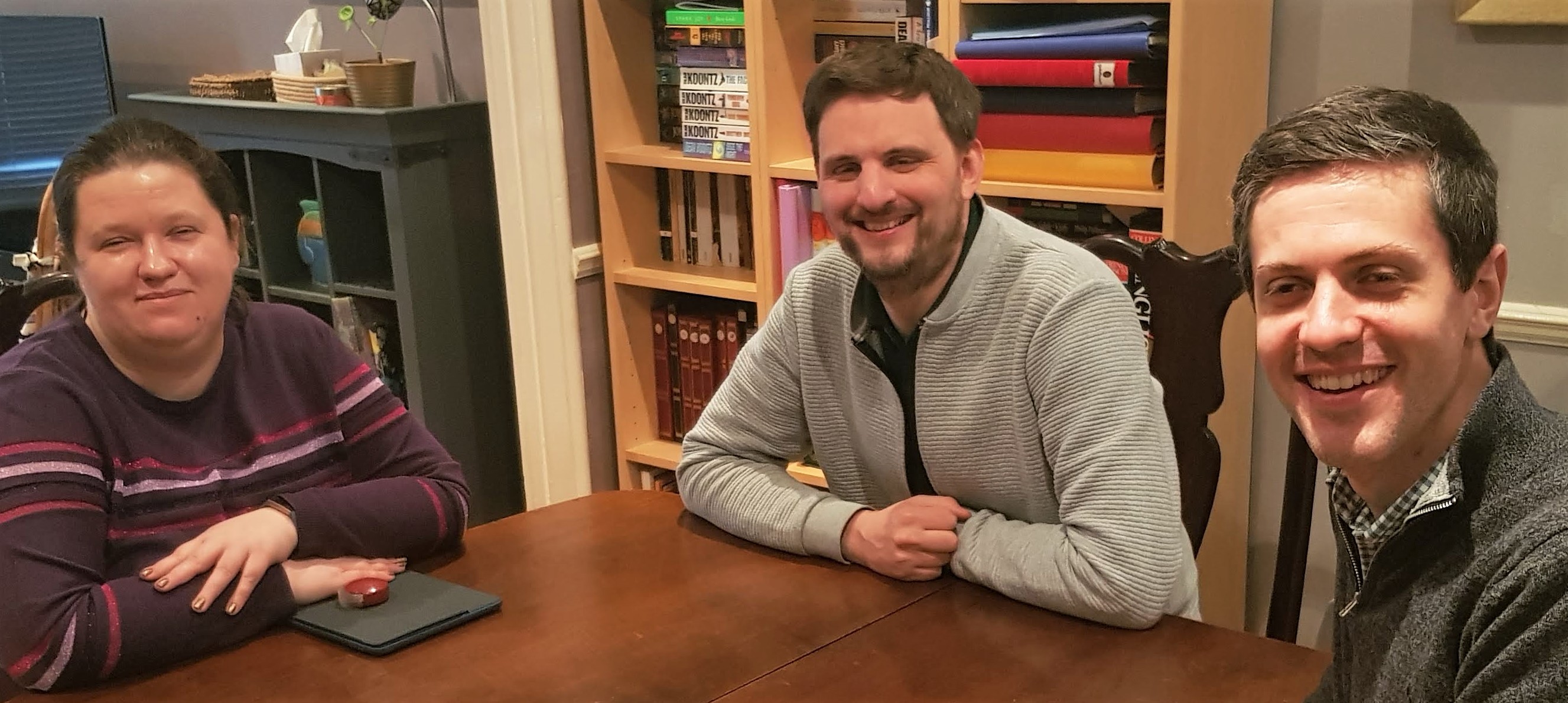
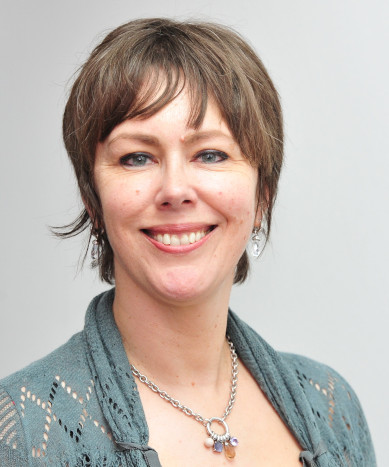


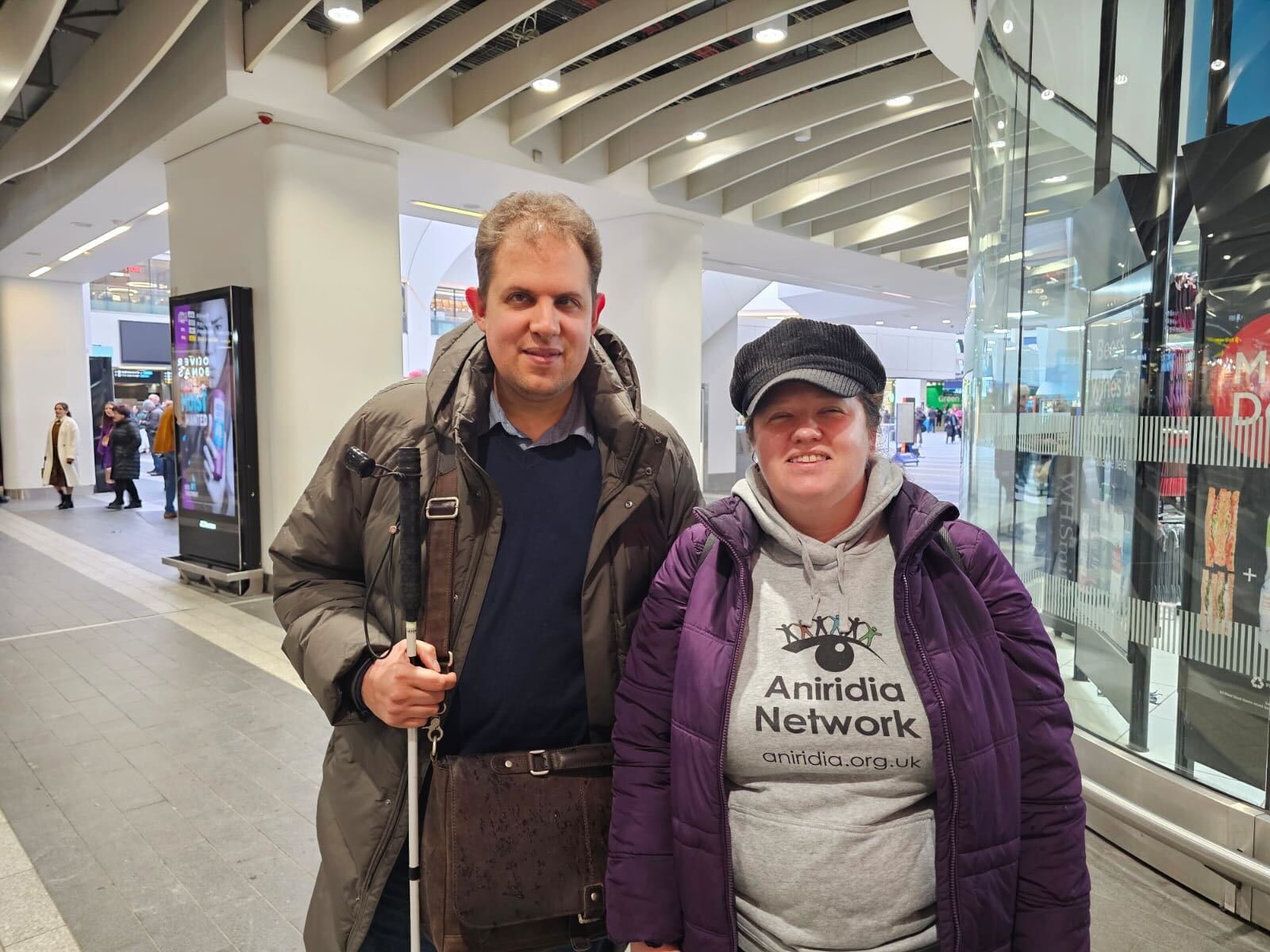
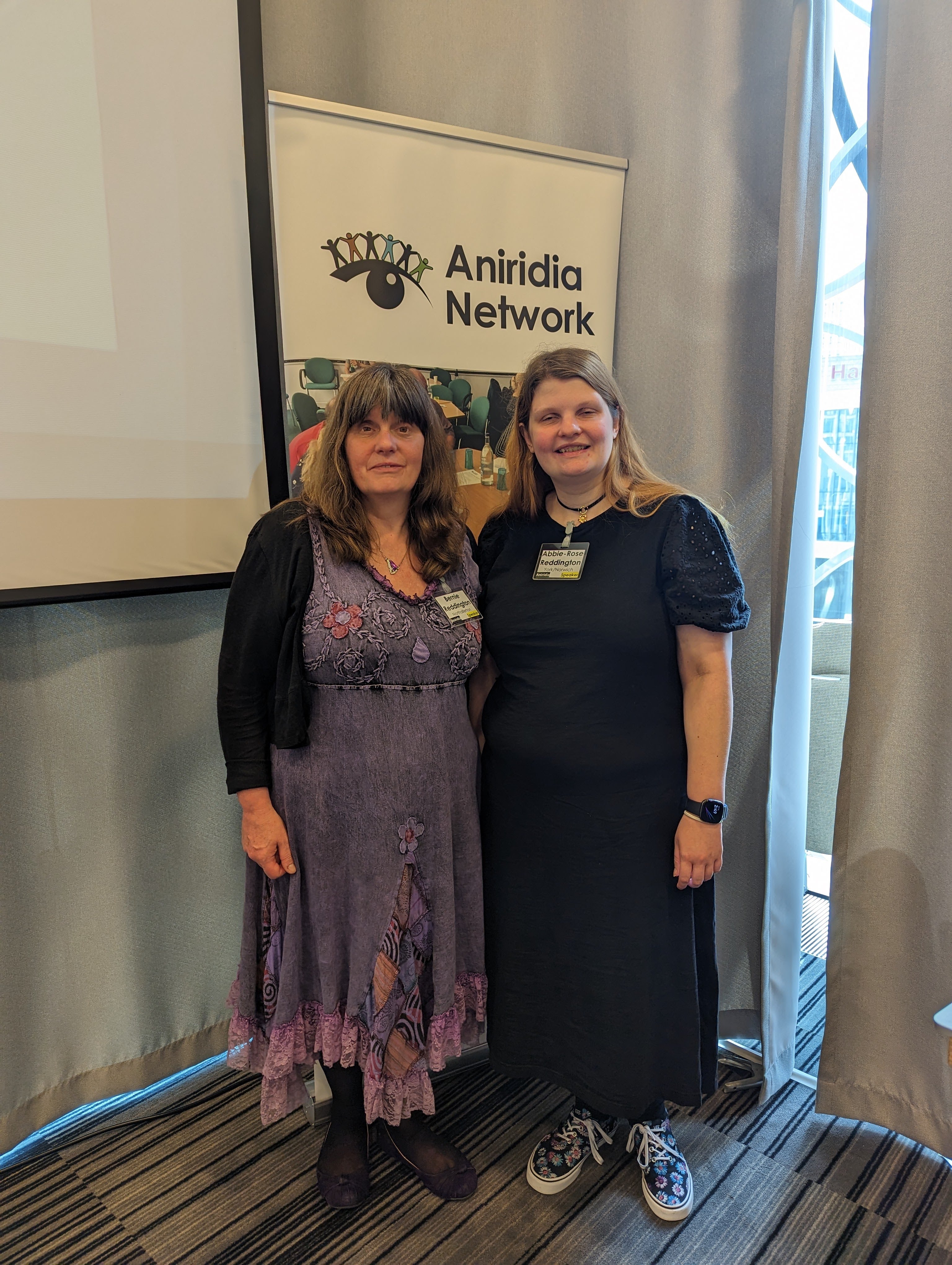


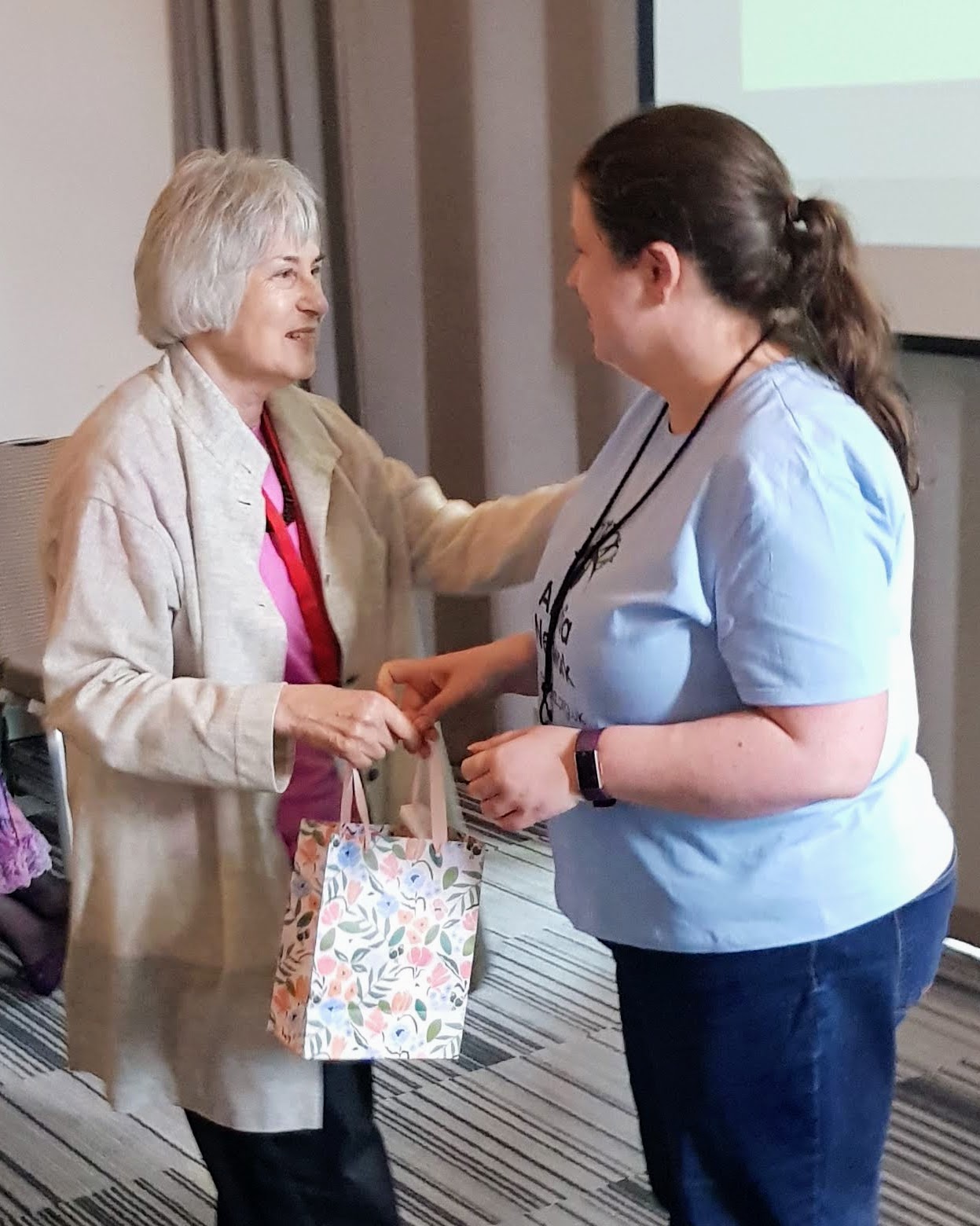
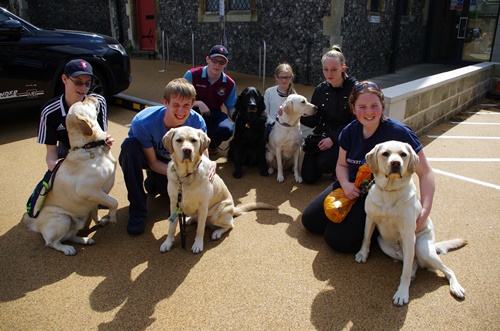





 Aniridia Network