Q&A with girl with aniridia

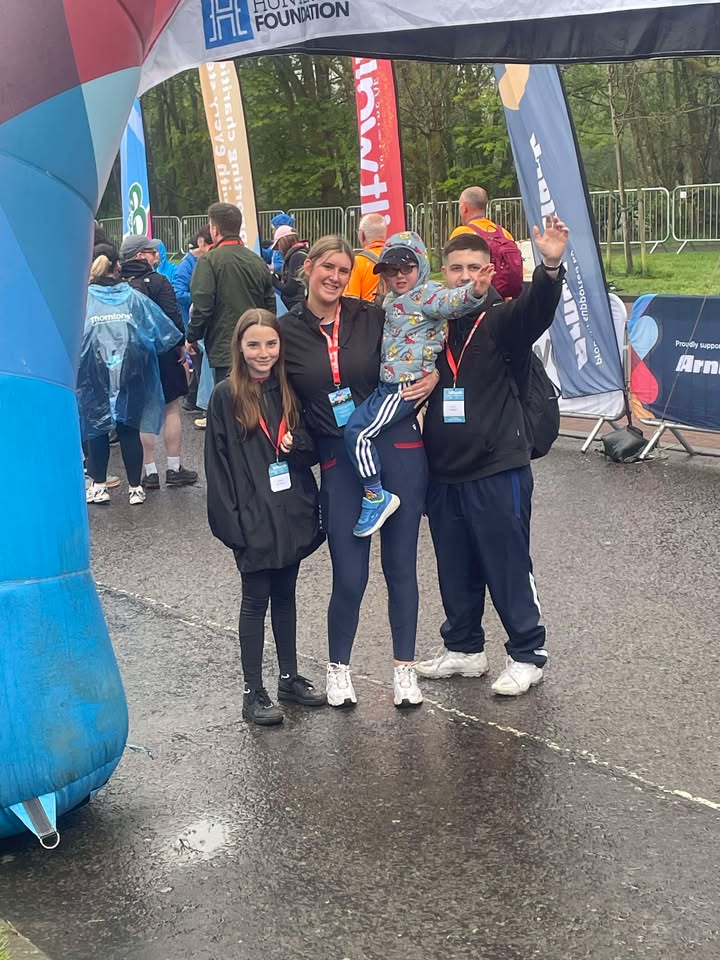
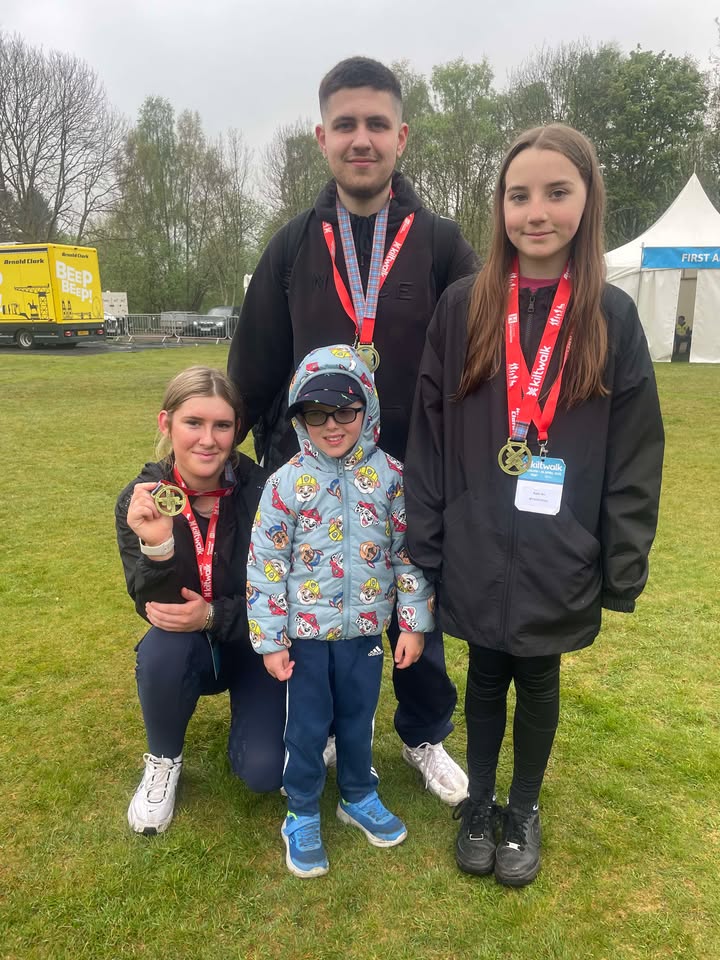
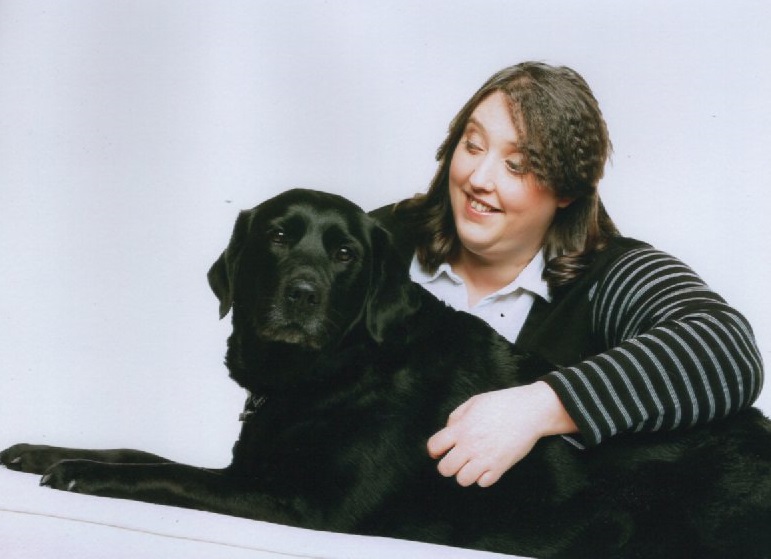
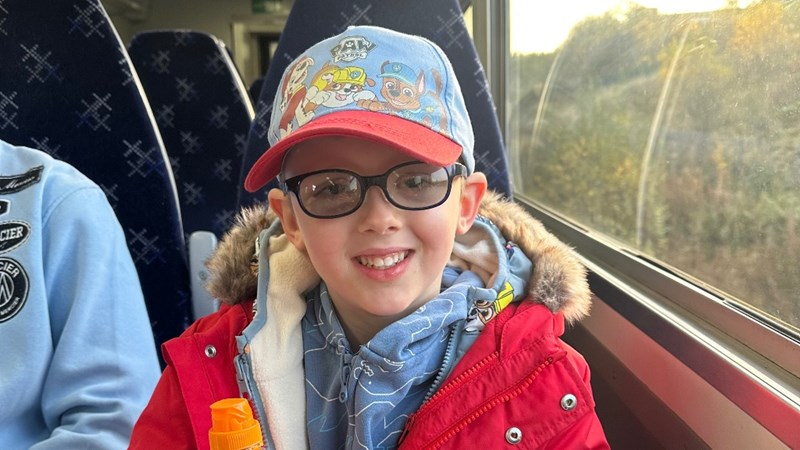
Lacey has put out a great video of her answering questions about her life with aniridia. In a rare outing on YouTube Lacey is 18 and studying at university in the UK and one of our members. They responded to queries from their 1500+ followers on TikTok and Instagram about what its like for her to have visual impairment.

Aniridia Network has an Instagram account but not TikTok. What do you think we should we do with those channels?

Posted in Patients' tales | Tagged , , | Leave a comment

Meet up for Rare Disease Day

6 people talk at a table in a coffee shop

We held two great friendly gatherings to celebrate Rare Disease Day 2025 with patients and their relatives.

The first was online on Friday evening. 11 peole joined in. For up to 2 hours they discussed their personal stories about living with the condition, as well as it’s genetic aspects, and related treatments such as the RAFT research trial at Moorfields Eye Hospital. They shared thougths on managing symptoms like dry eye and keratopathy, and the emotional and practical challenges of vision loss.

The second event was at Starbucks at Euston Station on Saturday afternoon. 9 people came for a coffee and chat on similar subjects for a few hours.

It was really nice to talk, meet new people and reunite with those who have not come recently.

Simon who madet he arrangements said:

I really enjoyed the conversation and the opportunity to discuss and share experiences with other members of Aniridia Network. It was really good that a large number of people joined the meeting. I think meet-ups like this will help to build a community and support network for people that have aniridia and related eye conditions and their families.

I would definitely be interested in helping to facilitate future online/in-person meet-ups for Aniridia Network. I think hosting such events will grant an opportunity for members to come together and build friendships and support networks.

If you would like to host a meet up in your area email meetup@aniridia.org.uk!

Rare Disease Day

Rare Disease Day logo

We host events around this time of year to mark Rare Disease Day. It’s an international celebration held annually on the 28 February (29th on rare occasions!)

It’s aim is to work towards equity in social opportunity, healthcare, and access to diagnosis and therapies for people living with a rare disease.

Since its creation in 2008, Rare Disease Day has played a critical part in building a community that is multi-disease, global, and diverse– but united in purpose.

Find out more and get involved in supporting Rare Disease Day

Posted in Aniridia Network news | Tagged , | Leave a comment

Having aniridia in Gibraltar

Eloise with their back to the camera, wearing a sun hat, sitting on a quayside, looking out at a very bright glitteirng sea.

Eloise was the first person born in Gibraltar with aniridia – which given the sunny weather there must be a challenge! She is part of the committee of the Gibraltar Society for the Visually Impaired (GSVI)

When yonger, Eloise got artificial iris implants alongside cataracts surgery, and went to study at university in Coventry.

Eloise recently appeared on ‘The JD Dragon Disability Rights podcast’ to share her struggles and experiences growing up being visually impaired in Gibraltar. She was interviewed by the podcaster Joshua Downey who having a disability himself is driven by his passion to have people connect, network and in turn raise awareness to achieve a more inclusive world for people with disabilities.
You can listen to the full interview on the links below

Rare Disease Day logo

It’s Rare Disease Day today and Eloise has just become the latest member of Aniridia Network . This post is an example of how we are buidling a strong community of people affected by aniridia so we can be hopeful, confident and well informed together.

If you are in the UK and or Republic of Ireland and want to get or give support then sign up for free now:

Join us
Posted in Patients' tales | Tagged , , , , | Leave a comment

Be a part of cutting-edge brain and aniridia research

Living with aniridia and want to make a difference?
Help a student with a groundbreaking research project!

About the project

Edinburgh BioQuarter
Photo by Lisa Jarvis CC BY-SA 2.0

Sam is a Phd student at University of Edinburgh. Before they did research at Max Planck Institution. They are diving deep into understanding aniridia and its effects on brain development. Using amazing new technology, Sam is growing brain cells in the lab to uncover the secrets of early brain development affected by aniridia.

With your help they hope to improve scientists’ understanding of neurology that could lead to treatments or other measures to improve quality of life for people with conditions such as aniridia.

Who they need

They are looking for someone with aniridia who’s excited to meet up regularly to discuss the research. Sam hopes you will actively contribute to their work with your own ideas and lived experience so that both of you learn from each other.

No special skills or knowledge are needed – just your curiosity and willingness to share your experiences.

How you will meet

The meetings will be every 1-2 months for an hour each time. It can be online or in person at Edinburgh University. You can include family members too!

You can get reimbursed for travel time and expenses up to £50 for each meeting.

What’s in it for you

  • Learn about cutting-edge brain research.
  • Share your story and ideas.
  • Help shape the future of aniridia research.

If you’re interested, email samuel.heczko@ed.ac.uk this week to set up a casual first meeting. Have a friendly chat over coffee or tea, and see how you can work together to make a difference!

Posted in Research | Tagged , | Leave a comment

Online meet up for Rare Disease Day

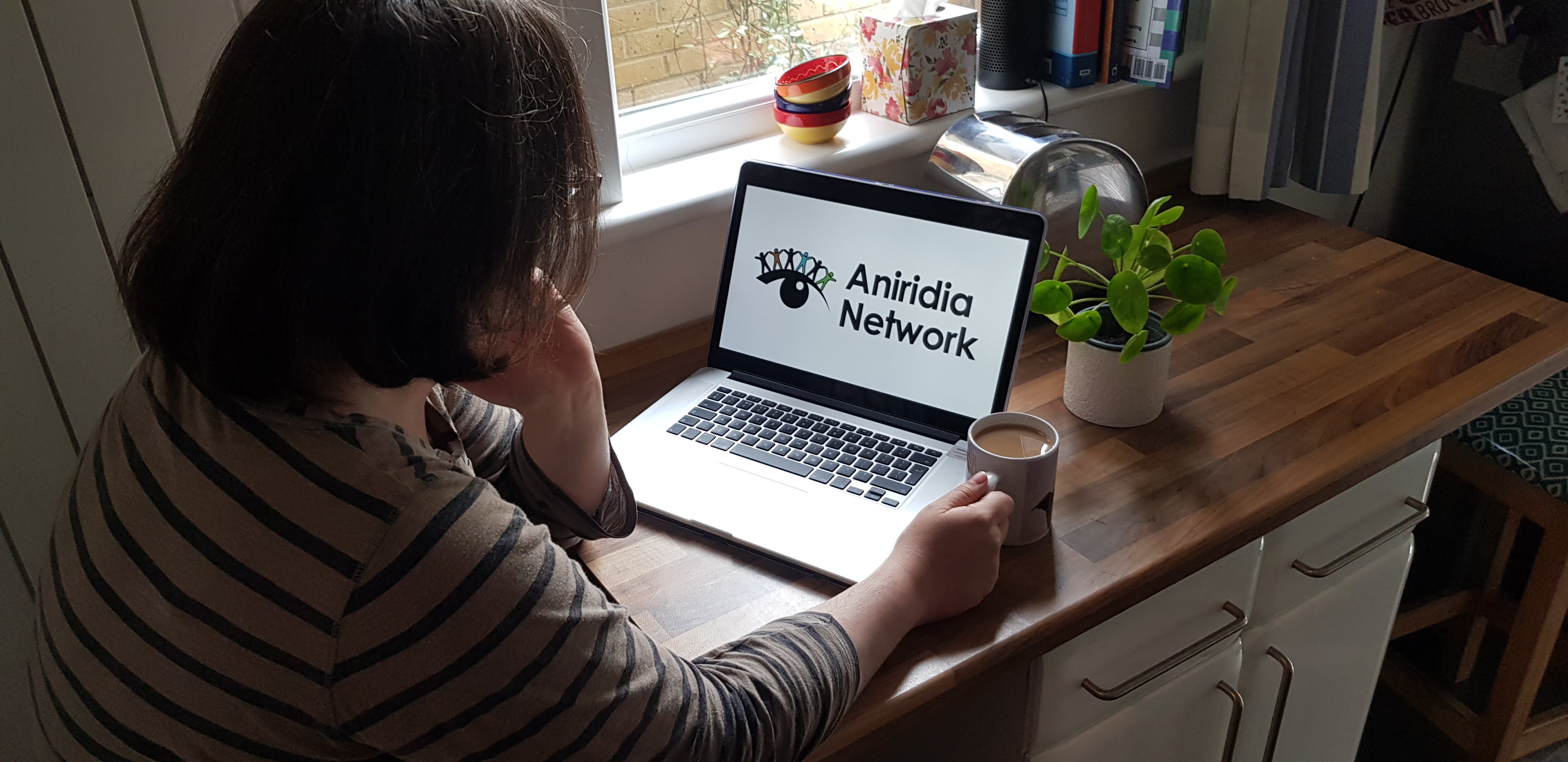
Woman sitting in front of laptop with a cup of tea. The screen shows the Aniridia Network logo.

To mark Rare Disease Day, we hosted a special online meet-up for the UK aniridia community!

Most people there were adults with aniridia, both sporadic and familial. There was also a parent with an aniridic child, and a scientist. They discussed their personal stories of living with the condition, its genetic aspects, treatments and managing the symptoms, as well as the emotional and practical challenges of vision loss.

Support and Coping Strategies

A big theme was the challenges of adjusting to vision loss over time, the emotional and psychological toll it takes. However, accessing appropriate medical care and support services ia a real challenge. Counseling, support networks and sharing experiences to help others cope with aniridia was highlighted as important.

We discussed the use of guide dogs and long cane training to maintain independence and quality of life.

We noted the need for better awareness and understanding of aniridia among healthcare professionals.

Medical Experiences and Treatments

We shared our experiences with various treatments, including cataract surgeries, corneal transplants . The use of (blood serum) lubricating eye drops was talked about at length. This led into the success for one person present of the RAFT trial at Moorfields Eye Hospital, which involves a corneal graft procedure.

Genetic Testing and Research

We discussed genetic testing, the role of the PAX6 gene and other genetic factors in aniridia.

The researcher, expressed interest in understanding the genotype-phenotype relationship in aniridia and spoke about his interest in the PAX6 protein.

Conclusion

The meeting provided a great way for poeple individuals to talk through important issues and improve their underdstand.

Based on this event we hope to organise more regular online meet ups.

Rare Disease Day

Rare Disease Day logo

We host events around this time of year to mark Rare Disease Day. It’s an international celebration held annually on the 28 February (29th on rare occasions!)

It is a global event aimed at raising awareness and advocating for the needs of individuals living with rare diseases. With over 300 million people worldwide affected by rare diseases, this day serves as a crucial platform to highlight the importance of research, support, and resources for those who often feel overlooked. It’s a day to stand in solidarity, share stories, and foster a sense of community among those facing unique challenges.

Since its creation in 2008, Rare Disease Day has played a critical part in building a community that is multi-disease, global, and diverse– but united in purpose.

Find out more and get involved in supporting Rare Disease Day

Posted in Aniridia Network news | Tagged , | Leave a comment

Taking part in the European Aniridia Leadership Academy – Good things come to those who hustle

Haya Hassan

Haya Hassan is a 25-year-old woman from Wiltshire with sporadic aniridia. She graduated from university 2 years ago and has since been working in different charities, including a major UK sight loss charity. Some of her interests include reading, travelling and getting involved in small DIY projects.

Aniridia Network sponsored Haya to attend the European Aniridia Leadership Academy, an initiative to create leaders out of young people with the condition. It took place alongside the 7th European Aniridia Conference in Stockholm.

At our online conference on 27 July 2024, Haya explained why she took up the opportunity and reflected on what the experience was like. You can watch her talk in the video below, and we’ve included the transcript underneath as well.

Transcript

[Tierney] We will move on to our final speaker of this session.

So I will be handing over next to Haya Hassan. She’s going to give us some information about the Aniridia Leadership Academy experience that she’s been on and also taking part in the European conference. So over to you Haya.

[Haya] Hi everyone. So I’ve been asked to talk about my experience at the Aniridia Leadership Academy.

I attended the conference and the academy at the end of May. Apparently I was the only person from the UK attending it as a young person, as well as Katie and James as trustees. So no pressure but I will try to do my best.

And just to sum up a few words, the academy was a very inaugural event. So it was the first of its kind and it’s not run before.

And I think there were about 11 attendees. Most of the young people, a lot of them were from Aniridia Italy, some were from Spain, a few people from Sweden. And a lot of people travelled a good number of hours to attend the conference, which shows its value and how motivated everyone was to come to the conference.

The academy was split into two and a half days. And I also just want to thank and acknowledge all the organisers, the volunteers who were with us, and of course the facilitators.

So the main facilitators who were with us throughout the whole of the weekend basically was someone called Ben Goodrich and he was the event moderator, I think he’s part of the Aniridia Sweden Committee. And his background is he won a silver medal in the Paralympics. I think he went to Tokyo and he won that in judo. So what an amazing achievement.

And he is also currently working as a project leader in a charity local to Sweden again. And he helps visually impaired people get into athletics, I think specifically judo, but he does other different types of work. And before that his background was in finance and consulting.

So looking at his achievements by a wide variety of things, and he also is running his family, so giving his time and energy towards this was a very generous thing.

Another speaker was Gianmaria (Dal Maistro), I hope I pronounced that right, but someone from Italy and he won a medal gold medal in skiing at Paralympics a few years ago.

And then Matteo (Castelnuovo), he is the vice-president of Aniridia Italy and he was one of the main speakers. He’s a radio host, he’s also a journalist by profession, they have a podcast.

So Aniridia Italy is one of the main or one of the largest national charities among those in Europe, like Aniridia Norway and Aniridia Spain. And they do a lot of things. I’ve been looking into their work the past three days and I was thinking our local charity RNIB, Guide Dogs and they run so many things, they’ve done an enormous amount of work.

And Matteo is also involved in the Erasmus+ programme and that’s running quite recently. So that supports the education, training, and youth and support programmes that are run in Europe. And so he was involved in that. I know the last day of the conference he was staying a bit longer, I think he was staying until Monday, to attend one of the meetings.

They’ve also contributed to a children’s book for aniridia. So I have it here. It made me quite happy actually, looking at this book. I know there are a few books already dedicated to patients of aniridia, but this is what it looks like if anyone can see it.

And I was reading through it and it’s quite an informative book. It also makes me laugh, it’s got some humour in it. The illustrations are great as well. So even though I’m 25 myself, I was reading it and I was like “Oh, I can relate to this.” So they put a lot of time and dedication to that clearly.

They have also gone to museums. They’ve done training sessions with them to make museums more inclusive by putting audio guides in. I think they have a Guide Dogs group, and they run some demo tech sessions to teach people how to use magnifiers on their laptops, and just learning more about accessibility.

And one last thing, I know they’ve done something called Aniridia’s Roots. So that is a conference that I think has been initiated by them, and it’s just dedicated to genetics. So they talk about genetics of different eye conditions including aniridia.

So yeah, those were the main three speakers.

And, oh, actually I forgot sorry, Veronica. Veronica (Tartaglia) is a medallist in sword fencing, also from Italy, she won that. And she gave a small talk about how she got to that point in her personal life.

And yeah, in terms of the conference itself, it was quite interactive. We got to know each other. We did a bit of one-to-ones, we also talked in groups.

For example, we talked about our goals, what we wanted to achieve later in life. There were a wide variety of ages, so some people were 16, some people were 19, some people were at school, some people were about to go to university. So we talked about what jobs we wanted to do, what new subjects we would take on, going to further education.

And we also did some public speaking practice that and I think one goal of that was to help raise our voice and develop our body language and our confidence in general. And with that public speaking there was a Q&A session, so we could practice that, answering questions directly, and working together as a whole.

And other talks, one of my fondest talks was by somebody called Sølvi (Ørstenvik). So she is a committee member of Aniridia Norway, and I really admired her talk for how optimistic she was and how she convinced us to take her similar approach.

For example, she talked about creating an image in our heads and affirmations, so saying that I can do this and this is possible for me. And she said that self-image is such an important thing and not to compare ourselves all the time.

Sometimes that comparison can be good, in terms of competition, but it’s important to remember that we are as good as the next person, whether we have a disability or not.

And once we have that belief in ourselves, once we have repeated that in different contexts, then we can take that further on. That will establish ourselves in our careers, in all the roles we do, and maybe that will help in labouring through our career, so like going into managerial roles or superviser role, for example.

And a few other things I’ve learned from the academy is one, pursue my passion. Once you’ve identified that, everything just flows in line, and it’s just a lot easier. And everybody has a talent and they’re accountable for their actions towards the goal that they set.

And in terms of once you set the goal, resilience is a very important part, in terms of resilience in the face of disappointments as well. Because it’s not always about toughening up, but it’s about developing resources in terms of self-care, and in terms of going out into the world.

And I know being visually impaired myself, I’m good at problem solving, because I’ve had to do that in so many situations, in terms of job hunting, in terms of using public transport in terms of explaining my disability to others.

So I recently got a new job and it’s quite a different job to what I used to do, because I used to work in the sight loss sector, and I forgot how difficult sometimes it can be to explain to others, because they don’t know. But yeah, that’s what I’ve learned.

And I think meeting other visually impaired people and relating to them, it just makes it a lot easier, because they get it, and you don’t really have to explain it.

And a few other things I’ve learned is never underestimate the power of a plan. Planning was one of the most important things at this day. If you fail to plan, you plan to fail.

And then I know sometimes things can go wrong and sometimes you have to change directions, so it’s important to be prepared to change direction to get where you want. You might start in one area, like I said I used to work for the sight loss sector and now I work in a different area, and sometimes that can be good.

And also in terms of pursuing goals, it can be in anything. It can be in education, it can be in employment. So although I finished my university degree a few years ago, I might go back to it. But right now I want to focus on my job, I want to focus on like the career I’m planning.

But then when I go back to university I want to just thoroughly commit to that, because it’s important to finish what you started. And that’s something that Ben said to me when I was saying “This is where I am at, what do you think?”.

And the ladder to leadership, it’s quite a dynamic thing. It’s like scaffolding, you have to build these strong structures, these solid structures, before you get into anything else.

And you need to have a strong support system, you need to have connections. And that’s why they say it’s who you know, it’s not what you know.

And I also was fortunate and so grateful that I had enough time to meet some of the attendees from the main aniridia conference, which was more of the scientific conference.

And it was a very terrific experience. The energy in the room was great. I met a lot of keynote speakers, some from a research background, some from a more education background.

And yeah, every moment was charged with inspiration, determination and seeing people having travelled from all over the world.

And I think it was such an immersive experience, it reminded me of the importance of empathy and connecting with each other, collaborating with one another.

And yeah, overall the conference was a fantastic experience. There were milestones recognised, opportunities identified,and there was space held for each of us to tap into our potential. So I’m so grateful for everybody involved that organised the academy.

And I haven’t spoken to my fellow peers who attended the conference academy, but I think they would say the same. So thank you so much for listening.

[Tierney] Thank you so much Haya, that was really, really interesting, and it’s great to hear that you had such a good time and you feel like it was really worthwhile and beneficial going. I’m sure there’d be a lot of our members who would love to experience a similar thing.

So whilst people are thinking and you want to put questions in the chat, I guess I’ll start off with what do you feel was the most important take home point for you? What was the most beneficial thing that you experienced? And then also what would be your one key bit of advice to give to others in a similar experience?

[Haya] Oh wow, what a big question!

Yeah, it’s hard to put it into like one lesson I’ve learned, because in two and a half days you just take on so much. And in the conference there was a lot of information, but I didn’t want to be bombarded, I just wanted to make the most of it whilst I was there. Because I know these opportunities don’t come as often.

But I guess one take home message was making the use of your connections, like learning from others. And the beneficial part of networking events like this is you can teach others something that you have learned.

I think I was one of the oldest persons there. I was 25, others were younger than me. So I could tell them the importance of experience. So studying is one thing and then your career is something so different.

So I told them to have long-term goals and see the big picture, because then when you finish your studies it might be easier to figure out what you want to do as a career.

And I’ve also learned from them. Like, I met somebody who could speak five languages. And coming from an ethnic background myself, I’m originally from Pakistan, I can’t speak any language besides English. I can understand my language, but I can’t really…

So fostering those interests outside of work, like volunteering for example, which she does I think outside of her studies, that’s quite an important thing, that contributing, giving back to the community.

So yeah, that’s what I’d say, I hope I answered the question.

[Tierney] Yeah, that’s brilliant, thank you so much. And it was a pleasure to hear from you.

[James] It’s James here. I’m curious to ask you Haya about what can we as Aniridia Network do to help you further on this confidence and leadership journey? And what would you suggest that we do for other people like you?

It’s possible that there might be another leadership academy like this in two years time, but we’ll have to wait and see.

But just within the UK, what would you like to see Aniridia Network doing for young people?

[Haya] Yeah, in the UK unfortunately, I hate to say this, but I’ve not attended any support groups recently or in the past. So I don’t know who has attended those groups.

But I guess, as a young person, right now the job market’s quite tough, it’s not easy to find a job. And I know lots of people come out of university struggling even finding that foundation to start their career, like finding an internship.

I know the charity Thomas Parkington Trust, they have this Get Set Progress Internship programme, which they’ve started recruiting new interns from the summer. So I guess partnering with different charities like that and getting people involved.

If there’s already volunteers who, for example are doing comms work, I recently found an apprenticeship scheme, part of the Get Set Progress Internship programme. So the beneficial part of apprenticeship is you get a qualification and you also get that experience at the same time So promoting those internships I think.

And yeah, I think after you do an apprenticeship or internship you can go further on into getting like a solid job and yeah so that’s what I would say Does that answer the question?

[James] Yeah. If there is anything specific that you’d want to see Aniridia Network do for you or for our members, any other additional services or mentoring or anything like that?

[Haya] I don’t know. I think employment is such a big part. In the UK I think it is 40% only employment and that’s full-time employment.

Part-time employment, it gives you that flexibility and everything. But I know some of the jobs you don’t have that security, some of those jobs are only like one year contracts. So I think employment is one thing.

And I guess learning from Aniridia Italy with all the things they do, like making leisure centres more accessible. I think, like I mentioned, they also have a Guide Dogs group. So yeah, there’s so many different things that can be done.

And yeah, in terms of leadership, you can see that in so many different ways. It can be public speaking, it can be leading a group of volunteers, whether that’s running a support group or whether that’s for a fundraising event.

Just making yourself known to the public and partnering with other charities, it can be a small charity of, I don’t know, 25 people. It doesn’t have to be Guide Dogs because Guide Dogs have small fundraising groups all over the country. So yeah, that’s what I’d say.

[James] Briliant, thank you very much.

[Tierney] Brilliant. I think that’s all the questions we have so far. But, as with anything, if you do have questions for our speakers, do feel free to get in contact with them.

But we have pretty much drawn to a close, that was our final speaker.

From me and the Aniridia Network team, we’d like to thank all the speakers for donating their time, and we’ve heard some really interesting topics, which I’m very excited to follow along and learn some new things that are going to be coming along down the line.

And just thank you for everyone for attending.

[James] Yeah, absolutely.

So on behalf of Aniridia Network, we’d really like to send a massive round of applause to Tierney for hosting today and pulling together this whole event. It’s the first time she’s volunteered with Aniridia Network and this has been a real ‘in at the deep end’ exercise for her.

So yeah, big thank you to Tierney for pulling together all the speakers and organising the agenda and all that gubbins. So yeah, brilliant, well done, thank you Tierney.


Thank you to Glen for the video editing and write-up.

Posted in Patients' tales | Tagged , , , | 1 Comment

3D corneal organoids for disease modelling and limbal stem cell deficiency cell therapy research

Dulce Lima Cunha

Dulce Lima Cunha is a postdoctoral researcher from UCL Institute of Ophthalmology, currently working at Radboud University in the Netherlands.

Currently, her main research interests are uncovering rare disease mechanisms using induced pluripotent stem cell (iPSC)-derived 2D and 3D models and developing novel therapy approaches for aniridia and other rare diseases.

For her latest project, she has been working on using aniridia patient stem cells to pinpoint the initial cornea cell changes that occur in aniridia. This could help them to find early action compounds or therapies that could potentially slow down or even stop cornea disease progression in people with aniridia.

Dulce gave us more details about this project at our online conference on 27 July 2024. You can watch the video of her presentation and read the transcript below.

Transcript

[Tierney] So next up we have Dulce Lima Cunha who’s going to speak about their work. So I’ll just pass over to you Dulce.

[Dulce] Hi, so thank you very much for having me here today and I’ve been enjoying a lot of the talks so far.

I was working with Vivienne and Mariya before at UCL, that’s how I came about with Aniridia UK. Now I’m working in the Netherlands but I’m still quite involved with aniridia and I’m still working on it.

And I don’t know if you remember from last year, I work with stem cells and today I’m just going to give a brief update on what I’ve been working now this year and the next year as well for the future.

So I’ll be talking about 3D corneal organoids for aniridia disease modelling and for potential cell therapy approaches.

So a little bit of background. The cornea is this outside transparent layer in the eye that covers the eye. At the very edge we have the limbus, which is this kind of ring around.

And then outside of the ring you have the conjunctiva. And the conjunctiva is not transparent so the limbus actually works as a barrier to separate the transparent cornea from the non-transparent conjunctiva.

When we look at the centre of the cornea and we cut through we see three main cell layers. We see the epithelium, which is this very compacted cell layer here, which is at the very outside and really is the barrier from all the aggressions from the outside.

We have the stroma which is the thicker part, which provides support. And then we have the endothelium, which is a very thin monolayer at the inside, and this is mostly for hydration, so it regulates the levels of water coming in and out.

When we look at the structure of the limbus, which is this ring I told you about just before, it has these limbal epithelial stem cells. And these cells are very important because these are the stem cells of the eye that actually differentiate and replenish this central epithelium.

And there’s this disease, which you’ve probably all heard about, limbal stem cell deficiency, that happens when these cells are malfunctioning or they’re lost for whatever reason – a genetic disease, a chemical burn, a lot of different causes.

These cells cannot be replenished, the central cornea epithelium has problems and then there’s persistent scarring, loss of transparency and ultimately people lose their sight.

So, like I said, I’ve been working with stem cells, and I think I also already explained to you about induced pluripotent stem cells.

So these are cells that are generated by taking a sample from a bit of skin or blood, or even urine nowadays, and from these cells we can reprogram them and rewind them back to a pluripotent state. And this means that these cells then gain the ability in the dish to become all sorts of different cells – brain cells, lung cells, cornea cells, retinal cells.

So we have already been going on with this project for a long time, we published last year with Mariya as well.

So we have two IPS lines from aniridia patients, so they have the PAX6 mutations. And this is very important because with this approach we actually have cells from the patient, without having to for example go and get cells from the eye, which is terribly complicated.

So what we do is we reprogram, so we induce, we generate these IPSCs, induced pluripotent stem cells, and then we can differentiate them into all sorts of cells.

What we are doing now, and this is my novel part that I started late last year, is instead of growing them just into one cell type, so let’s say limbal stem cells, we’re now differentiating them into organoids. Which means that, and I’ll show in the next slide, we now have a sort of 3D cell model that has multiple cell types of the same tissue.

So, for example, I can actually go ahead, these are the corneal organoids. We actually have a system that we can grow in the dish that is a little cornea. Of course, this has limitations, I will go through them, but this is how they look, if you see here.

On the left side you see these kind of big balloons, they’re very cute to actually handle, and they grow in the dish and when people actually cut them through they see a similar structure of the cornea. This is compared to the mouse cornea for example, but it’s quite similar to human as well.

Of course there are several advantages of this, some I already said. Looking at it we see they’re transparent, that’s also quite important because the cornea is transparent. It does have a similar organisation, like I mentioned here, compared to the mouse cornea.

And when researchers have stained them and looked for specific marker genes, we do find markers for the epithelial cells, for the stroma cells and the endothelium. So we can say that these models mimic the cells that are in a human cornea.

Of course there are still some disadvantages or limitations.

The very little cell types of the cornea – like some blood vessels, melanocytes, so there’s other cell types that are also part of the cornea – these are still absent from these models, so they’re not fully recapitulating the cornea.

And when we actually look at the global gene expression we see that they are not fully mature. They are still more comparable to embryonic corneas than to actually the corneas, our adult corneas.

So of course these are all limitations in all of these organoids, not just the cornea, I have to say.

And these graphs here, I don’t want to bring too much attention, but this is just to show that on the left you have the cells of the human cornea.

So we see for example 61%, which is the pink area, are stroma cells, and the green 36% are epithelial cells. What we see in the organoids is that the percentages are still not exactly the same.

But what’s important, at least for our case, we try to look on the bright side, right? We have all those cells in this system, which is really something amazing, I have to say.

So I’ve been growing these organoids, they take about four months to grow, which is quite a time investment. But I’ve started already a couple of rounds and every four weeks – at least every month, so every four weeks – we take samples to analyse how they look, and then we analyse the gene expression and we do stainings. I don’t have so many today, but hopefully for the next one I will.

And you can see these are two different lines – not patients, these are just with our PAX6 mutations. You can see they really form these clear bubbles here. And then sometimes they grow really big.

There’s still some variability, so for example some lines I grow a lot of them, other lines I grow not a lot, so this is really also some technical aspects that still need to improve. But overall we can generate them and we can grow them.

These are week 12, so three months, I have them even longer, I already collected for the four-month time point, so it’s actually going very well in my hands, I was quite happy. And growing them for four months in a dish is really quite an investment, so I’m always very happy when I reach the end of it.

This is a technique that we have been also implementing in the lab and we’re now doing it quite routinely, which is very nice, which is single cell RNA-seq.

So basically from a clump of cells we can look at the gene expression in each individual cell. So it’s really important for us to understand how, as a whole, the gene expression of a certain tissue, or organoid in this case, happens.

And I won’t bother you too much with the details, but we have optimised it now and we have actually some quite preliminary results. And what this shows here on the left is a graph that plots all the cells that we analysed.

So these are I think from 10 organoids, so I had to pull them together. We can see all the cells here, so each dot is a cell.

And then based on how similar these cells are to each other you give them a colour, and this represents a cluster we call it usually, or a cell population. So you see the different colours, these mean different clusters.

What we also already saw, I won’t bother you again with the percentages, this is just to say that we actually see quite a lot of different cell types or cell states. We already can tell, from a very superficial analysis that I had time to do so far, that we have identified some very interesting and cornea-related cells.

For example there’s two clusters here in orange that are related to epithelial cells, we also see one cluster which is related to stroma, which I think is the green, and then we have others that I’m still looking into.

So this is all going very well I think. And the goal now is of course to generate the cornea organoids from the aniridia cell lines and these are also on the way. And so far they’re behaving quite well, we get a lot of nice bubbles.

I have been taking time points to look into more detail, to look at the structure of the cells. I need to check expression of PAX6 of course, other genes that we know are affected in the human cornea, but this is all still ongoing, I don’t have the results so far. But as you can tell here, they are growing very well now.

We’re at the two-month stage – no, actually nearly the three-month stage. So I will pick the three months around early August, so in a couple of weeks, and then the last time point, the four-month-old organoids, I will pick early September if all goes well.

So this is ongoing and I’m very excited to really now go deep and analyse these organoids.

And then another project that actually literally I wanted to tell you anyway and then last week or two weeks ago I actually got confirmation that it was approved, so we are definitely doing this, is to check the potential of these organoids as a cell therapy.

So for the current cell therapy approaches, for example for limbal stem cell deficiency, what’s being done is, if you look at this schematic here, there’s a little sample of limbal tissue that people take.

And this has been approved and it’s routinely done, but it’s mostly for patients who have limbal stem cell deficiency, again because of a chemical burn or some accident. And then they still have one eye that they have no limbal stem cell deficiency and one eye that is affected.

So what the treatment does is it takes a small biopsy from the good eye. You take out the cells and you grow the cells and you expand them into this sort of scaffold. And then this scaffold is of course validated, everything is checked up, and then it’s put back into the bad eye. And then it heals and it has good success rates.

The problem is when both eyes are affected, for example in the case of aniridia patients, where you have a mutation that affects both eyes.

So in this case what we propose for this project was to actually use the IPS derived stem cells, which are still cells from the patient, so there wouldn’t be problems like rejection. And we actually extract the limbal stem cells from the cornea organoids and we grow them the same way across on this scaffolding and then put them back in the patient.

This is like the biggest goal, where we would have a personalised limbal stem cell therapy using these cornea organoids.

So this is the breakdown of the project, so the steps that I prepared to do it. Of course this hasn’t started yet.

So for the first step we will generate the organoids of course and we will try to find out within the organoid first if we have limbal stem cells in there, and then how similar they are to the cells from the actual eye.

And we will do a lot of tests, lab tests like immunofluorescence, gene expression, the single cell RNA-seq that I explained before. And the goal is to show that these organoids are a source of limbal stem cells.

And then from the second objective we aim to purify these cells from the organoid. So we will prepare single cells, we will sort these cells using this machine that basically just selects the cells that express a specific marker. So we can put them in a separate tube and then if we achieve this we will have purified limbal stem cells that came from this organoid.

And then in the third objective we’re going to put them into this transplantable scaffold that is used routinely for cornea stem cell transplantations, and we’re going to check with a battery of tests to really see how they grow, if they grow at all, if they have the right markers.

And then if all this works out then we do have proof of concept that these cells can be transplantable, or at least can have the potential to be used for this kind of therapy.

So to conclude, these 3D organoids we are growing now that are aniridia related, I’m really excited about it, we can really track the PAX6 levels, the PAX6 effect in this process across the four months.

The idea also is to, across the different cell types of the organoid, the cell layers of the organoid, we try to pinpoint where is the earliest time point that there’s changes happening, and then if we can target that with certain drugs.

And like Martin for example mentioned earlier, we’re also quite interested in drugs that are already out there that could save us time for clinical trials. So we’re looking into drugs that have already been approved to see if we can target these changes.

And then we can also use the organoids for dosing, so we can add the drugs to the organoid and see the effects. And then for the newer project to explore their potential as a cell therapy approach.

This for aniridia cases could be also applied. I think some of you have already gone through a limbal stem cell transplantation of course.

If we do this, because these cells come from the patient they will also still have PAX6 mutation, so that would require an extra step where you could, for example, correct the gene, the mutation, and then grow the cells and give them back to the patient. But that is for the very long future.

And yeah, this is my last slide. I want to acknowledge everyone in my new group at the Radboud University who have been working with me in this project. And then of course always Mariya and Vivienne from UCL for all the foundation that we managed to start here. And people from Turkey as well have been helping us with organoids.

And thank you all for listening.

[Tierney] Thank you so much, Dulce, that was really interesting interesting work and some fascinating stuff going on there.

We’ve got a question in the chat. Is making organoids novel as a whole or just for the cornea? What are the particular challenges you face doing this type of work?

[Dulce] It is fairly novel overall. For the retina it’s far ahead, for brain organoids is also very much far ahead. For the cornea it’s more recent as in I think the first studies came out 2017.

So it is fairly new in science terms where, you know, everything takes 20 years, like we heard earlier And for the cornea we always have the disadvantage, at least in my field, in the stem cell field, that there’s always less people working with the cornea than there is with retina, for example.

So I kind of piggyback from the retina organoid protocol actually to grow the cornea organoids.

There’s a lot more research going on on retinal organoids. But it is established enough that, for example, I can now go into the lab and I could get it to work, which is actually quite nice.

What are the particular challenges? For the cornea organoids not specifically, but for IPS-derived work in general is the variability.

So I have these cells in the lab, I start a differentiation round, it works wonderful. I keep growing those cells in the lab, I start another differentiation in two weeks time, and sometimes it doesn’t work at all, and I use everything the same, right?

So the variability is really what struggles me, and I’ve been working with IPS cells for 10 years now and I still don’t know why sometimes it works so well and others not. I know some things I can tweak, but still sometimes it’s like “Why didn’t this work?”

So when it works and it’s been working I try to get as much material as possible, so that I know for the rainy days I still have work I can do.

[Tierney] Yeah, I mean working with biological cells and items, they seem to have a mind of their own.

[Dulce] A bit, yeah.I usually joke that it’s the moon phases that also affect them. God knows.

[Tierney] Off that, I had a question, which was what sort of conditions are needed in order to grow these organoids?

And you mentioned that they do have slightly different cellular proportions to obviously the cornea itself, but do you have a minimal level of that cell percentages that you’re hoping to reach in order for an organoid to be considered a successful growth?

[Dulce] Well, for now I’m still a bit learning on how they should look.

So these techniques, the single cell RNA-Seq, is really good for me to understand okay these are the real structures, these are the good structures or not. And by that we look at the gene expression, and if we see that they express the genes that we also know are expressed in the cornea, that’s the good condition that, ok, these cells are cornea organoids.

They will never express exactly the same. It’s never the same as human tissue. There’s a whole lot that does the cornea than just a layer of cells on top of each other. But it’s much more representative and much more complex.

And, for example, for a disease like aniridia that affects so many different cell types in the eye and even outside the eye, the more complex models we have in the dish, the better we can understand the disease.

But I would say the gene expression is the key thing that will tell us “Ok, we are on a good track, these are the good cells”. Or visually it’s also easy because they have this very unique bubble.

But yeah, I would say that how these organoids look in culture and the gene expression are very important.

[Tierney] Brilliant. And then we’ve got another question in the chat. Is control of oxygen levels in the culture critical particularly for the cornea?

[Dulce] I don’t know if it’s something that people particularly control.

Our incubators, we grow the cells in incubators, and these have controlled temperatures, CO2 and oxygen as well. I don’t necessarily play with the oxygen levels.

It is quite interesting, now thinking about it, but we just keep them in the standard oxygen and CO2 and temperature conditions of course.

[Tierney] Great, thank you so much Dulce, it was really interesting work. I’m sure we’re all excited to see where this goes.

[Dulce] Thank you.


Thank you to Glen for the video editing and write-up.

Posted in Medical staff talking, Research | Tagged , , , , , | Leave a comment

Retinal detachments in Aniridia research at Moorfields

Vivienne Kit

Vivienne Kit is an Ophthalmology Researcher at UCL Institute of Ophthalmology. In addition to her clinical duties, she is pursuing a postgraduate research degree in aniridia under the supervision of Professor Mariya Moosajee.

In 2021, Vivienne and her team published the largest PAX6 genotype-phenotype study on aniridia patients in the UK. She shared the results at our 2023 conference.

In amongst their findings, they discovered that a small proportion of those patients had developed retinal detachments. And having since conducted a case review of those affected, they’ve observed a surprisingly high incidence of exudative retinal detachments, which are typically considered uncommon.

Vivienne joined us again at our online conference on 27 July 2024 to tell us more about this discovery and their aim to investigate further. You can see the video and transcript of her presentation below.

Transcript

[Tierney] So we will be hearing next from Vivienne Kit, who is an ophthalmology researcher from UCL, and she’s going to give us a little insight into what she’s been working on.

So I will hand over to Vivienne and I look forward to hearing from her.

[Vivienne] Ok, hi. So first and foremost hi to everyone. I think I might have met some of you before, I recognise some of the names in the group.

But I’m Vivienne, I’m an ophthalmology registrar from North London and I’m currently doing some research on aniridia.

So one of the things that I’m going to talk about today is aniridia and retinal detachment, not something that often is associated with aniridia.

But something that we found when we did a search through our database, I thought would be interesting to talk about today. So that’s what we’re going to talk about today.

So first off, so a bit of background information.

So aniridia is a panocular condition and if you were at the meeting last year you might have heard me talk about this before But we’re going to go through it again, in case there’s anyone new here today.

So aniridia is truly a panocular condition, meaning it affects all aspects of the eye from the front to the back.

So the cornea, which is the front see-through window of the eye, that’s involved in a condition called aniridia-related keratopathy, where you get a limbal stem cell deficiency and generally causing a gradual sort of clouding, a progressive clouding of the cornea, which can reduce your vision over time.

Iris, so in aniridia you can have variable degrees of iris hypoplasia, which is defects of the iris per se.

So in some patients, patients may have a presumably normal-looking iris but may still have PAX6 aniridia. But more classically, patients may present with partial or complete absence of the iris.

Now, moving even further back, the lens.

So again, the lens is important, a bit like the cornea, it helps focus light onto the back part of the eye, called the retina, which helps us see.

So the lens can become cloudy over time and it seems to happen a bit earlier in patients with aniridia.

But also another thing that’s structurally affected is we sometimes see lens dislocation or displacement in patients with aniridia.

Now, nystagmus and foveal hypoplasia is another thing we see very commonly in patients with aniridia. There’s glaucoma and optic nerve hypoplasia.

And the things I’ve mentioned here are things that we generally see in a lot of patients with aniridia.

Now, aniridia is caused by mutation in the PAX6 gene.

And PAX6 is important because it’s involved in development of the eye from when you’re an embryo, so when you’re in the womb, but it’s also continued to be expressed after you’re out of the womb and well into adulthood.

And so there’s a role of PAX6, not only in the development of the eye, but also maintaining its health and function.

Okay, but now here’s the interesting thing.

So aniridia means without an iris, but not everyone born with iris deformities have aniridia related to PAX6. Actually iris deformities from birth are also noted in some other congenital conditions involving genes such as the FOXC1, PITX2, etc.

Now, the other thing is some people may present to a clinic later on as an adult and they might have parts of the iris missing, but they weren’t born with it. It might have been something that was picked up because of injury, so either trauma or because of some surgical incident.

So when you see a patient with an iris defect, it isn’t always PAX6 aniridia.

And so that made us do some research. What we wanted to do was, actually, we wanted to learn more about aniridia in patients with the PAX6 mutation.

So we developed a database. We searched through the electronic and paper records at Moorfields Eye Hospital.

And having attended the genetics clinic and going through these notes, I managed to find 86 patients with PAX6 mutations. And we did an analysis.

We basically looked at every single patient from their first visit to our hospital right to the end, to the most recent, and we looked at what happened to them.

What was their vision at the beginning? What was their vision at the end? How many developed glaucoma, cataracts, aniridia-related keratopathy? All the very typical things that are associated with aniridia.

And in 2021, we published the UK’s largest PAX6 aniridia genotype phenotype study, which I presented last year. And last year when we presented it, we talked about the glaucoma, the cataract, and the aniridia-related keratopathy.

Now, one thing that we didn’t talk about last year, but actually I found very interesting as an ophthalmologist was that, in our database, out of 172 eyes of these 86 patients, 9 had developed a retinal detachment.

Now, a retinal detachment isn’t too surprising, because retinal detachments are more likely to happen in patients who’ve had intraocular surgery.

So if we are looking at a cohort of patients who have had cataracts and had cataract surgery, has glaucoma and has glaucoma surgery, noticing some retinal detachment is not too surprising.

But what was interesting was that over half of these patients with the 9 eyes had something called an exudative retinal detachment. And exudative retinal detachments are considered very rare. It’s not a commonly seen type of retinal detachment.

And it was something that struck me, because why are we seeing more of this type of exudative retinal detachment in our cohort of patients?

Okay, so first, going back a little bit, what is a retinal detachment?

So like I said, aniridia is a panocular condition. It affects the front of the eye right to the back.

And I suppose you can consider the retina the very back bit of it, because the purpose of the cornea and the lens is to focus light onto the photoreceptor layer of the retina, which is right at the back of it.

And the retina has a function in turning this image into signals, which goes to our brain and helps us form an image for us to see. And this retina has a very good blood supply because it’s very active.

Now, what happens in a retinal detachment is this layer of this retina, it starts separating from its underlying retinal pigment epithelium, which we’ll call the RPE, and the choroid, which is highly vascular.

And so, as you can imagine, as it separates, and if you leave it untreated, this retina will become ischemic, or lose its blood supply, and they’ll start damaging these photoreceptors, which is important for helping us to see.

So if you were to leave a retinal detachment, you can get loss of vision.

So retinal detachments, you can divide them into different types.

Rhegmatogenous is probably the most common one we see. And rhegma means tear, and what happens in a rhegmatogenous detachment is you get a tear in the retina. And fluid in the vitreous goes behind that tear and pushes the retina off. That’s a rhegmatogenous retinal detachment.

Tractional. So a tractional retinal detachment occurs when you have a tractional force on the retina. So these are more commonly seen in, say, patients with diabetes, for example, and you develop new vessels which fibrose and pull on the retina and cause it to separate from its underlying layers. So that’s a tractional one.

And then what’s least seen is probably an exudative retinal detachment.

So what happens in an exudative retinal detachment is for some reason you get accumulation of fluid in the subretinal space in between the retina and the RPE and the choroid, and that fluid builds up and causes the retina to detach. And it happens in the absence of a retinal tear or tractional forces, and that just separates it from the other two.

And in the literature, and actually from what we see in clinic, there’s lots of causes for exudative retinal detachment. The list is, I wouldn’t say endless, but it’s a very long list and includes causes like inflammatory conditions, infectious diseases, vascular conditions affecting the eye, even certain medications can cause it and tumours, etc. But aniridia isn’t one, when I looked in the literature, that’s normally associated with it.

And so when we looked at our patients, I wanted to find out, actually, is this something that’s interesting? Is this something that hasn’t really been talked about and is something for us to find out a bit more about?

So we looked a bit more closely at these 9 eyes from 6 individuals with PAX6, who had retinal detachments in our cohort of 86.

So these patients had nonsense, C-terminal extensions, intronic mutations and large deletions. So they had PAX6 mutations.

And 3 patients had bilateral retinal detachments, meaning in 3 of our 6 patients, both of their eyes developed retinal detachments. And in 3 other individuals, they had retinal attachments, but only affecting one eye.

And of note, because I mentioned right at the beginning that having retinal detachment in a patient with aniridia wouldn’t be completely something that I would not consider, simply because if you had intraocular surgery, you’re probably more at risk of developing a retinal attachment.

But actually, in our group, 6 eyes had prior surgery. So of our 9, more than half had had previous surgery.

But 3 eyes were surgically naive. So what that means is in 3 of these 9 eyes, a third of our eyes, these aniridic eyes had no previous surgery, and they still developed a retinal detachment.

And so that makes us wonder actually, is there something else that’s a risk for it?

Now, just of note, I mentioned, yes, previous surgery. All the eyes that had had previous surgery all had had cataract surgery, plus or minus a lens insertion.

Right, so the interesting bit.

So of our cohort of 9 eyes, 5, so just over half, had this rare type of retinal detachment. And 2 individuals actually had it in both of their eyes.

And it makes me wonder, is this actually because of their mutation? Because there is clearly something that’s happening in both of their eyes at the same time.

But at the same time, what was interesting was there was one individual who had a PAX6 mutation, but they had extensive unilateral exudative retinal attachment, meaning they had exudative retinal attachment in one eye, but the other eye, the retina was completely pristine. There was no tear, no traction, no detachment, nothing.

So it’s interesting how in 2 patients, they had extensive exudative retinal detachment. And in another, they had 2 very different looking retinas, despite having the same mutation going on.

And of note, just to completely document what we had, there was 2 other eyes who had retinal attachments, and 2 eyes where we know they had a retinal detachment type, but we weren’t really able to determine what type they had.

Now, when I looked into the literature to find out a bit more about exudative retinal detachment and aniridia, it’s actually very sparsely reported.

There’s been cases of exudation in patients with aniridia, but actually there was no PAX6 confirmation. So like I mentioned earlier, you can be born with a congenital iris deformity that’s not related to PAX6.

And so when I look specifically for patients with a PAX6 mutation and exudative retinal detachment on PubMed, there was only actually ever one case that I could find through my search.

And this was actually a study that looked at coats-like vasculopathy. So coats, this is the condition where you get exudative changes and can result in an exudative retinal detachment.

And they looked at patients with inherited retinal diseases. And in this group of 67 patients, they only reported one single patient with PAX6 and an exudative retinal detachment. And that was all I can find in the published literature.

So it was quite interesting that in our cohort, when we actually went through it and looked in detail, we actually found 5 cases that were there.

Now, there is a possible bias as to why we were seeing more of it. And I think that’s very important to consider.

Because exudative retinal detachment is not something that’s very commonly seen as a type of retinal detachment. And to be fair, some of these patients who came into our hospital were actually referred in because of exudative retinal detachment.

And so we might be seeing more cases of exudative retinal detachment because we are a tertiary centre where more complex cases may be sent to our department. Whereas more straightforward retinal detachments, like red rhegmatogenous retinal detachments, which I mentioned earlier, are more commonly seen, and probably more easily treated at a local hospital, local ophthalmology department, for example.

Okay, so I then wanted to find out, so yes, there’s an interesting thing that we found, which is this exudative retinal detachment in this cohort of patients. But why is it happening?

I’m going to be honest, I don’t actually know. Because if you look down into it, it’s more happening at a cellular level. And actually, I did a research on the patient’s notes, and we never really got down to the cellular level.

But I tried to look up what could have caused it. nAnd there are some things that I found, which is, well, as mentioned earlier, PAX6 is important in the early embryogenesis, so the early development of the eye. But also, once you’re out of the womb, postnatally, it’s also expressed in the retina.

So if PAX6 is involved in the maintenance and the function and health of the retina, could this be an area that we should be looking more into?

Another thing is that PAX6 is involved in expression of different cells in different areas of the eye, but it’s also involved in expression of adhesion molecules, which hold these cells together, and whether that in itself has a role in retinal detachment.

So further study on a cellular level will help us further understand this. But at the moment, I don’t know.

But what I do know is that we found something that was quite interesting and quite not previously reported much in the literature.

So what are the clinical implications?

Now that I’ve mentioned this, I don’t want everyone to rush off and actually, when you go to an appointment, to ask to rule out a retinal attachment, because these are quite rare. This was actually nine out of 176 eyes.

But it’s something for us as a clinician to consider. Because when we see a patient with aniridia, and we know they have a background of aniridia-related keratopathy, clouding of the front part of the eye, we know they have cataracts, and we know they have glaucoma.

And if this patient then tells us “our vision is getting a bit worse”, it’s very easy to attribute it to just say “Oh, your glaucoma might be getting a bit worse, your cataracts is a little worse, and your cornea is a little bit more cloudy, and that’s why your vision is poor.”

Because the aniridia-related keratopathy, the clouding of the cornea, and the clouding of the lens, actually makes it very difficult from a clinical perspective for us to actually evaluate and look at your retina.

So unless we use other means, so unless we purposely dilate if we need to dilate, if you’ve got only a partial iris defect, or unless we try to look at the iris, or we do something like an ultrasound scan, of the eye, we can miss retinal detachments unless we’re specifically looking for it.

And so from an aniridia patient and from a clinician’s perspective, if there ever is a mention of a sudden deterioration in vision, patients complaining of noticing lots of new floaters, flashing lights or shadows, I think those are good enough reasons in an individual without aniridia for us to really have a good look at the retina.

So if anyone does have aniridia and has those symptoms of retinal detachment, it’s worth flagging this up urgently to your care provider.

Right, so watch this space. So we’re currently writing this up as a case series, and hopefully we’ll get that published soon.

So we’re going to be the first case series on retinal detachment in molecularly confirmed PAX6 aniridia patients, with an interesting find of the high degree of patients with exudative retinal detachments. It’s an interesting finding, and there’s only been one published case I found in the literature.

My talk last year was on genotype phenotype, and in our study we found a slightly milder phenotype in patients with missense mutation. And in our case here, 9 patients, no patients had missense mutations.

So that was just another interesting thing we found. And whether there’s any correlation, there’s not enough data, but it’s just something that I noted.

Right, so that’s the end of my talk. It was a whistle-stop through aniridia and retinal detachment. And hopefully it’ll just give something for us to think about and for us to consider in the future. And hopefully we’ll get this published soon.

[Tierney] Thank you so much Vivienne, that was really, really interesting.

And I think it’s interesting for everyone as well to see and hear the method by which you guys actually go through the process of discovering new information. It’s quite an intense process and a lot of work goes into it.

So we’ve got a question in the chat here. Will you continue to work on aniridia at all once your study ends?

[Vivienne] Yeah, I aim to.

I mean, at the moment, I’m still writing a lot of papers, I’m hopefully trying to finish my postgraduate studies focusing on aniridia.

I don’t know what the future holds. I’m a trainee, so I’m running into my last year of training next year. And so it’s all the great unknown of where I’ll be, what I’ll be doing. And I don’t know where I’ll be in 2 years time, because my training ends.

But hopefully, my aim is to continue working with aniridia and learning more about it. But I don’t know where I’ll be.

[Tierney] Always the age old question, where will I be?

And so the next question is was the age of the patients a factor? And is this more common with age?

[Vivienne] Okay, that’s a good question actually.

Off the top of my head, I can’t remember, and I’m not going to be able to tell you because I’m presenting on a laptop whereas I normally work on a desktop, so I don’t have it right in front of me at the moment. But certainly, I know you well, so I can look this up and let you know.

But is age a factor? Normally, I would say, from clinical experience, as an ophthalmology trainee perspective, I don’t think so, because I see retinal detachment in all ages. Certainly, previous intraocular surgery is a risk factor for retinal detachment, not so much for exudative.

Is this more common with age in our cohort? I don’t know. But I can look this up and let you know.

[Tierney] Great, thank you. Are there any other questions from the group?

[Vivienne] Hopefully, once we publish this paper, it’ll be readily available for you to read all of it.

But I tried to compress it all into a talk that I hope wasn’t too… because I thought if I just talked about the numbers, it would be quite boring for everyone. I just wanted to talk about the clinical aspects of it.

But certainly, once we publish it, it’ll be readily available. But I don’t remember it off the top of my head, if I’m honest.

[Tierney] No, that’s fine. That’s brilliant work. Thank you so much, it was an enjoyable talk.

[James] That’s great, yeah. I have one question. Again, not related to the talk itself.

But, as you said, you’re a trainee. So I was wondering, what reflections you had on studying a rare disease versus others and how you felt that compared to your peers, maybe? What difference that made to your studies and education?

[Vivienne] It’s been an amazing experience actually. And I’m not just saying that because I’m giving a talk at an aniridia meeting. But genuinely, aniridia is something that I had no experience of.

I’d never met a patient with aniridia until I saw this research project that came about. And actually, that was my first encounter with patients with aniridia. And it was enlightening in the sense that it’s something I’ve only ever read about in our Oxford Handbook of Ophthalmology, and it mentions it on one little sliver of a page.

And actually, to then see patients with aniridia, and through doing the research that we’ve done to actually understand how it’s impacted them, it gives you a different perspective.

Because when you see a patient, some conditions you can just imagine, you can empathise. But actually, because aniridia is a condition that affects so many different… it’s not like going to a glaucoma clinic and seeing a patient with just glaucoma. But it’s actually a patient who has glaucoma, as well as so many other ocular comorbidities.

It makes you appreciate how difficult it can be, from a clinical perspective, to manage these patients, but also from their perspective, the impact of the condition.

So in terms of researching it, it was quite a good personal experience to learn more about the condition itself.

But it’s also quite different in that aniridia is not that common. So it’s not comparable to, say, a study on glaucoma where you have clinics full of patients with glaucoma. It’s few and far between, but I guess at Moorfields we see more of it.

But it’s been a good learning experience, and one that I’m really glad I picked up that email and replied and signed up to and got involved in.

[James] Well, we’re glad too, thank you very much. And yeah, best wishes for the rest of your studies.

[Vivienne] Okay, thank you.

[Tierney] Brilliant, thank you Vivienne, it was lovely to hear your chat.


Thank you to Glen for the video editing and write-up.
Posted in Medical staff talking, Research | Tagged , , , , , , | Leave a comment

Progress on developing eyedrops to treat aniridia-associated keratopathy

Martin Collinson

Professor Martin Collinson is based at The Institute of Medical Sciences in the University of Aberdeen, and has been working on the roles of the PAX6 gene in eye development and adult life for over 25 years.

He enjoys opportunities to make current research into aniridia and other eye conditions accessible to all those who are affected by or interested in the science of vision.

Martin is currently focused on understanding corneal health and the development of drugs that can prevent corneal opacity in aniridia, with the aim to develop eyedrops that prevent corneal disease.

He gave us an update on his work at our online conference on 27 July 2024. You can see Martin’s presentation in the video below, along with the transcript.

Transcript

[Tierney] So hopefully everyone’s had a little bit of a break, you’re feeling refreshed and ready for the second session of this conference, where we’re going to be started off by Professor Martin Collinson. He’s going to tell us about some of his great research he’s doing at the University of Aberdeen. So I’m going to hand over to you Martin.

[Martin] Hello everybody, thank you very much. Thank you very much obviously for asking me to present today.

What I’d like to be able to do for you is to describe some of the work that’s happening in my lab where we’re looking to develop therapies for aniridia-associated keratopathy.

This slide has a picture of the eye of somebody with aniridia and their experience and, if you can see, quite a severe corneal opacity.

And this is what we call aniridia-associated keratopathy, also called aniridic keratopathy or aniridia-related keratopathy, that’s all the same thing.

And as you’re probably aware this corneal opacity is a progressive condition that can happen in most people with aniridia to some extent as they get older.

The surface of the eye starts to vascularize, it gets blood vessels and can become inflamed and this can lead to loss of vision.

Not everybody will get the keratopathy as bad as this person here, but of course – and as we’ve heard earlier today – the lack of certainty about the extent to which keratopathy can affect people’s vision in the future is a very significant source of anxiety to both the people with aniridia and to their parents.

And what we’re trying to do in our lab is to be able to prevent this from happening, or in people where it has already happened potentially to reverse this opacity to maintain vision long into adult life.

Now for those of you who are familiar with aniridia keratopathy you may be aware that it’s treated as a so-called limbal stem cell deficiency.

This slide has a picture of two eyes. Top one is a healthy non-aniridic eye with a nice blue iris, and the lower eye is a vascularized inflamed essentially opaque cornea, due to a known limbal stem cell deficiency.

And to explain a bit of the background to this, the front surface of the eye, the cornea, is essentially a specialised skin, and just like for the rest of the skin cells fall off all the time, just through normal wear and tear due to abrasion, and they have to be replaced.

And our skin has stem cells that divide to replace the cells that are lost and so does the cornea. And you may be aware that the stem cells that maintain the cornea live around the edge.

The boundary between the blue bit on this side and the whites of the eyes has a population of stem cells that are dividing all the time, fairly slowly, to replace the cells that have been lost.

And in people where these limbal stem cells don’t work, either because of disease or injury – alkali burns for example – the surface of the cornea can’t be maintained, cells are falling off but they’re not being replaced properly, and you get the sort of opacity and vascularization that you see in the bottom eye here.

And this looks very much like aniridia-associated keratopathy. And historically the condition has been treated as a limbal stem cell deficiency and many people with aniridia end up getting limbal stem cell transplants from non-aniridic individuals.

And these can help with the maintenance and vision for a few months or even years, but they’re not a permanent solution.

In order to study aniridia we’ve been using in our lab a strain of mice that has PAX6 mutations like people with aniridia do.

Not everybody is totally comfortable with the idea of using these mice. But these are perfectly happy healthy mice. But just like people with PAX6 mutation they do have all sorts of changes to their eye.

So there’s two mice on this screen, the one on the left is a normal healthy mouse with big bright eyes, and the one on the right is a mouse with aniridia, it’s got a PAX6 mutation. You may notice its eyes are smaller, it’s the so-called small eye mouse.

We’re not bothered about the size of the eyes, what we do like about these mice is that they have aniridia, they have lens cataracts and they have a kind of progressive keratopathy.

The cornea, the front surface of the eye, goes cloudy over time as they get older and it really very faithfully recapitulates the human aniridia-associated keratopathy symptoms.

So I’ve had PhD students and other people using these PAX6 mutant mice. We’ve spent pretty much 20 years working out what the link is between PAX6 mutation and aniridia keratopathy.

And we’ve had students asking the questions, is this really a limbal stem cell deficiency? And as with most things in science the answer is maybe but maybe not.

And here’s a little cartoon of some experiments that a PhD student of mine did. There’s little cartoon mice. The mice in the top row are normal wild type mice and the mice in the bottom row are small eye mice with a PAX6 mutation.

And what one of my students did, we put the mice under a general anaesthetic and she gave them a little scratch to the surface of the eye.

The idea is that limbal stem cells are meant to respond to eye wounding by making more cells to replace those that are lost.

And in a normal wild type mouse that’s what happens if you scratch the surface of the eye.

Within 24 hours you’ll see this mouse has got one yellow eye, which we’ve used to represent activation of the limbal stem cells.

So we can see the limbal stem cells dividing at high rate in response to a corneal wounding, and after 48 hours the limbal stem cells in both eyes have activated. They’re really dividing as fast as they can to repair the injury.

We’ve already seen that PAX6 mutant mice do have limbal stem cells and they do divide and when my PhD student was able to wound the eyes of these mice, again just gave them just gave them a tiny little scratch to the cornea under anaesthetic, the limbal stem cells, they do wake up after 48 hours, they respond to the injury and they’re dividing to produce more corneal cells.

But the difference was that they took longer to do it. After 24 hours there was no response for the limbal stem cells. So there is a deficiency here. It’s pretty mild.

People and mice with aniridia do have limbal stem cells. Those stem cells can divide, but they take a little bit longer to respond to injury.

And the question is can that explain the whole problem with the cornea going opaque in aniridia? And we believe the answer is no.

This slide again just shows another person with aniridia-associated keratopathy, with blood vessels growing into the cornea and a big opacity in the cornea.

And the reason why this is happening is not because these people don’t have limbal stem cells. There’s much more going on.

There’s a whole lot of things going wrong in the corneal epithelium itself, and this is really what we spent 20 years trying to work out what the problem was.

And rather than give you a summary of 20 years of research, I’ll just describe briefly what the conclusions were.

And the problem essentially is that the PAX6 aniridic cornea, the surface is fragile. The cells don’t hold together as well as in normal non-PAX6 deficient corneas and what that means is that the cornea gets small lesions, small holes in it.

This is a figure that I lifted from an old paper and it’s not too important, but what four of the panels here are showing are scanning electron microscopy. So really clever imaging of the surface of the cornea.

And the first two, the top two panels, are really boring. It just looks like nothing really, because these are normal healthy wild-type corneas and they’re lovely and smooth and there’s nothing to see.

But the lower two panels C and D show corneas with holes in them, and these are from the aniridic mice. So cells are being lost too fast, because the cornea is fragile and it develops holes in it. And because of that it doesn’t really form an effective barrier to the outside world.

I don’t know if any of you at the ophthalmologists have had… they use fluorescein, a sort of fluorescent green dye, to determine whether the surface of the eye is healthy or not. Because a normal healthy cornea won’t take up fluorescein dye, whereas one where the epithelium is lesioned, it will.

And I don’t know if you can see down here, this is a section for a mouse cornea, all the cells are blue, and there’s a little stripe of green at the top where we’ve put fluorescein on the cornea, but it hasn’t penetrated.

Whereas this is a normal healthy mouse and this is a PAX6-deficient mouse and you can see that the yellow dye has spread throughout the whole cornea, that it’s no longer forming a barrier.

So this is essentially the problem with aniridic corneas. They don’t form a proper barrier to the outside world because they’re fragile.

So stuff gets in, and it’s not normally fluorescein, but it can be oxygen, noxious agents, dust, viruses, fungi, all sorts of things that are bad for the cornea that the cornea normally keeps out. but the aniridic cornea is just slightly less efficient at doing.

We came up with what we call our triple whammy model of aniridia pathology and it’s summarised in this diagram on the right here.

And at the top in blue is the start of the process, a PAX6 deficiency. So people with a mutation in one of their PAX6 genes, that means they don’t have as much PAX6 as normal.

And down at the bottom is the outcome corneal opacity. The cornea is no longer fully transparent and people start to lose vision.

And in between are the things that we think goes wrong. And it’s summarised on the left in the yellow writing with the so-called triple whammy model.

And whammy 1, as already explained, is the corneal epithelium in aniridia is fragile, and it loses its ability to act as a barrier to the outside world. So it’s under stress. Oxygen gets in, pathogens get in, and the cornea is under stress.

The second whammy, which I haven’t mentioned yet, is that normally when tissues are under stress, they produce protective enzymes that stop that stress from damaging the tissue.

And for a number of reasons aniridic corneas have lower levels of these stress responsive enzymes. So they are more stressed. They’re suffering more stress and they produce less of the enzymes that respond to that stress.

So that’s what these two yellow boxes are showing here. We have a fragile corneal epithelium with less of the protective enzymes that it needs, and this leads to increased stress. Proteins get oxidised that shouldn’t be oxidised, all sorts of cell sickling happens that shouldn’t be happening.

And this leads to a kind of chronic wounding state, even in the so-called healthy aniridic cornea. It’s constantly developing holes and then healing those holes, and then getting more holes and healing the holes again. It’s constantly in a wound healing kind of state.

And this leads to two things, one of which isn’t obvious, that it effectively reduces the amount of PAX6 that’s available.

Because PAX6, as you might know, is a gene, it’s a protein that controls the expression of a whole pile of other genes.

So it’s a DNA binding protein and DNA is in the centre of the cell in the nucleus But what stress does, and it’s one thing that we showed, is that it drives the PAX6 out of the nucleus.

So even the PAX6 that’s there in the cells can’t do its job properly, because it doesn’t get access to DNA.

So that’s what these arrows pointing backwards are showing. It exacerbates the PAX6 deficiency.

And because of the constant chronic wound healing state eventually the cornea becomes vascularized, blood vessels grow in that shouldn’t be there, it gets inflamed, water gets in, it disrupts the structure of the cornea, and over time you get a corneal opacity.

So this is 20 years of work that we have spent trying to work out why a deficiency of PAX6 leads to corneal opacity at all.

The question is, that’s very nice to know, but what do we actually do about it?

And our vision is that when a person has aniridia, we want to be able to give them therapies, eye drops or something similar, that will prevent this triple whammy model from taking effect, and will break the link between PAX6 deficiency and corneal opacity, such that good vision can be retained late into our adult life and at best for the rest of your lives.

And we’ve taken two strategies by which we’re attempting to do that. One of which, the left hand side here, is direct antioxidant therapy.

So if the problem with the cornea is oxidation and stress, then there are chemicals we could use to reduce that stress.

And the other kind of obvious strategy, the second one here in yellow, is the restoration of PAX6 activity, so as people with aniridia are deficient in the amount of PAX6 you produce, so can we restore that back up to normal levels?

And what the next slide is going to show is three streams of research that we have been undertaking to try and address these problems.

And number one on the left here is talking about two drugs that are in the public domain has been published as increasing PAX6 dosage in the eye.

One’s called duloxetine and one’s called ritensarin, and they’ve been shown in tissue culture, in the lab, in cultures of eye cells, that they can increase the amount of PAX6 that is produced by cells. And I’m going to describe some work that we’ve done putting these drugs into aniridic mice, to show what they can do.

The second stream in the middle here is something I’m not talking about too much about today. But those of you who’ve been involved with the aniridia therapy scene may have heard of a drug called ataluren, which is a type what we call a read-through drug which allows cells to ignore mutations in PAX6.

So even if you have one copy of the gene is mutated, within the presence of so-called read-through drugs the cells will ignore that mutation and produce normal PAX6 anyway.

And there is a drug called ataluren that has been one of these read-through drugs and it’s been trialled for aniridia. It didn’t really do a lot of good.

Nevertheless it’s not the only read-through drug out there and we are testing a whole pile of other read-through drugs to see if they can help people with aniridia.

And the third stream on the right here is the development of antioxidant therapies that will allow aniridia corneas to just get out of this vicious cycle of perpetual wound healing, to be able to sort of calm down and allow the regenerative capacity of the cornea to be restored, such that the loss of opacity doesn’t occur.

And what’s crucial about these three research streams is that we’re not coming up with new drugs.

What we’re doing is finding approved drugs that are already being used to treat people for other conditions. Like duloxetine for example, on the left here, is a known safe antidepressant.

And we’re saying we’re taking these drugs that already we know they’re safe to give to people, we know that they’ve passed clinical trials for other things, but we’re asking can they help people with aniridia?

And by taking this strategy, what we’re hoping to be able to do is to accelerate the process of identifying a drug that helps with aniridia, can be taken to through clinical trial and given to people, in the minimum amount of time.

Because as you’re aware with vision loss in aniridia, time is critical, and there are thousands of people out there that could benefit from a therapy, whose eyesight is frankly not getting any better. We want to minimise the amount of time that it takes to get drugs to helping people with aniridia.

So I’m just going to do a bit of science. I’m going to describe an experiment that we did last year actually, where we gave normal mice – so here’s our two friendly mice again, the one on the left is a normal wild type mouse and the other is one with a PAX6 deficiency.

And we gave them the drugs, these two drugs duloxetine and ritanserin, together in their drinking water for four weeks. And we monitored their eyes during the process, we also monitored the health of the mice to make sure that it wasn’t causing them any harm or side effects.

Like I said, duloxetine is an anti-depressant, ritanserin is an anti-psychotic, these are quite powerful brain drugs. But the dose was very low and we put these drugs in the mice’s drinking water.

And so did their eyes get better? And the long story short is that yes, they did.

On this slide here we have some mouse eyes. Mouse eyes have all the same bits as human eyes, but they’re not nearly as pretty really. And they have black irises and they’re much more like footballs.

Because whereas we are looking at things that are very far away, mice are basically looking at sunflower seeds that are very close to them, so they have a different shape eye. But otherwise their eyes are like ours.

And at the top of the screen here there’s two wild type mouse eyes, lovely and shiny, lovely and clear, a nice big black iris.

And bottom left here is one of the aniridic mice and it still has an eye obviously, but there’s severe loss of the iris, so iris hyperplasia or aniridia, and the surface looks a bit rough.

And they’ve had fluorescein treatments, so it’s yellow because this fluorescein has penetrated the eye in a way that it didn’t with the wild types. And you can see there’s a bit of a scar in the lens maybe.

And this is the heterozygous mice that didn’t get the drugs, these just got the controls and this is a normal aniridic mouse eye with lots of problems.

And this is an aniridic mouse eye that got the ritanserin and duloxetine combination therapy. And I hope you can see it’s better.

The iris doesn’t grow back, I mean that’s gone, there’s nothing we can do about that. But the surface of the eye looks nice and smooth, the barrier function has been restored so it doesn’t take up fluorescein very much either.

And essentially this mouse with the duloxetine ritanserin therapy has better vision than this mouse that didn’t have it.

Here’s some science of it.

One, these are tissue sections of the mouse’s corneas, and we’ve labelled the PAX6 protein fluorescent green so we can see it.

And top left is a wild type cornea, and you can see there’s a streak of green cells that has the normal levels of PAX6.

And this down here bottom left is a heterozygous, so PAX6 deficient cornea, and if nothing else you can see that there isn’t as much green in these cells as there is above, because these guys don’t have as much PAX6.

But going to bottom right, the heterozygous mouse after treatment, they have much more PAX6 in their corneas. So the drugs seem to be working, they’re increasing the amount of PAX6 that the cells can produce.

Another science bit, there’s two things on this graph, one of which is a tissue section through the cornea. And you may be able to see that in the epithelium here there are some bright pink blobby cells. They shouldn’t be there. These are conjunctival cells.

So one of the problems with aniridic corneas is that the epithelium with the whites of the eyes, the conjunctivum, starts to encroach onto the corneal surface, and it’s not transparent, and it’s vascularized, and that’s bad.

So what we want to do is to prevent this conjunctivalization from happening. And this is what this histogram on the right here is showing. Basically, the bigger the bar, the worse it is.

And we have control mice with no conjunctival cells, with or without drug. And this is an aniridic eye from the mice and they all have conjunctival cells. But after drug treatment it’s been reduced, so less than half of them now have conjunctival cells.

So within four weeks we’ve managed to push the conjunctivalization of the aniridic corneas backwards, just by giving the mice these drugs in their drinking water.

And that’s lovely and everything, but I’ve already said that these drugs are powerful. Duloxetine is a powerful antidepressant. ritanserin is a powerful anti-psychotic.

Our vision, as it is, is that when a baby or a young child is born with aniridia, we can start giving them drugs that will prevent the deterioration of vision. But we can’t be giving babies and young kids powerful antidepressants just for the ocular effect from the eyes.

What we want to be able to do is to develop eye drops, so that kids aren’t getting a systemic dose of these powerful drugs. They’re getting just a very small topical dose delivered right to where it’s needed to the eye.

We’re not as far on with these experiments, but we are doing a series of experiments where we give the mice eye drops.

So mice with aniridia, PAX6 deficient, twice a day, putting a little blob of gel in their eyes that contains either nothing – the controls – or that contains duloxetine and or ritanserin. And this is an experiment where we did it for two weeks.

Again, aniridic mouse eye on the left looking a bit rough. This is a control. Aniridic mouse eye on the right that’s had duloxetine ritanserin eye drops for two weeks.

And I have to say it doesn’t look like there’s a massive difference. It hasn’t been as effective as the drinking water was.

But we do all sorts of analyses on these things and we showed that it’s not doing any harm, that cell division is normal, that the gross health of the eye seems to be improved a bit, but not massively. And we can look at gene expression in these things.

And this is the last science slide here. And it’s kind of backwards. We’re looking at the thing on the right first. In this graph here, the higher the bar, the better.

We’re looking at an expression of one of the proteins that holds the cornea together. It’s called cytokeratin, it’s one of the proteins that stops the cornea from falling apart.

And normally in people with aniridia the cornea doesn’t produce as much of this protein, it’s one of the reasons why it’s fragile.

And this is a healthy mouse eye and it’s producing loads of the stuff, a big bar.

And the control aniridic eye still produces some keratin-12 but not as much as it should. But after eye drop therapy it goes right up back to normal.

So using these eye drops, we’re restoring normal levels of expression of one of these key proteins that stops the corneal surface from breaking up.

The left hand side of this science slide is something that I haven’t really talked about yet, but these are using antioxidants.

So giving the aniridic mice have antioxidants in their eye drops, does it reduce the stress? Does it put out the fires that the aniridic cornea is normally fighting? And the answer is to some extent yes.

So in this graph, the lower the better. And because this is an aniridic cornea with lots and lots of stress… a wild-type, a normal cornea, would have virtually none, it would be down at the bottom somewhere.

And an aniridic eye that we’ve given antioxidant drugs to, the stress is reduced and the cornea is calming down, and we’re hoping that will give it time to heal.

So this is where we are at the moment. We still have quite a lot of work to do. But I’m gonna stop and I’m gonna summarise essentially where we are.

So on this slide we have our conclusions.

And on the left is a piece of artwork we did which describes the process of working on aniridia. And it’s some sort of science-based Sisyphus pushing a giant transgenic eyeball up a big hill, and every time he thinks he’s made some progress he wakes up next morning and finds that the eyeball is back down at the bottom of the hill. And he’s in a landscape of inflamed eyes.

But the essence of what I’ve been talking about is that we are trying to develop eye drop therapy that can be given to people with aniridia to either prevent the corneal opacity from ever happening, or in people where it’s already happened to stop it or to reverse it.

And in order to do that, we are testing, we are using drugs that are already approved for something else and asking the question can they increase PAX6 dosage? Can they improve the health of the of the aniridic eyes?

And we’ve shown that two of the candidate drugs that are already in the public domain, duloxetine and ritanserin, are really quite effective at improving corneal phenotype, the eyes of mice.

And we are testing new versions of the drug ataluren. So again many of you will remember there was a drug called ataluren which has been used in clinical trials for aniridia. It hasn’t really been very effective and we’re looking at a whole panel of things that might be better versions of ataluren.

We’re actually quite excited to find that antioxidants can be quite effective at reducing the stress within the aniridic corneas, because these are very widely available and they’re not even drugs. You can very easily dose up on antioxidants and it may well improve the phenotype, the symptoms of the cornea over time.

And so there’s lots of things to be optimistic about. But as always with these things there are lots of caveats, lots of questions and lots of work still to do before we’re at a stage where we’re seriously proposing putting these drugs in aniridic eyes.

I have to thank some people. So on this slide, this sort of great pancake here, is an aerial view of Aberdeen. It’s not the most inspiring looking place in the world, although it’s nice and sunny today I have to say.

We’ve been funded by Medical Research Scotland and the NHS Grampian Endowment Research Fund to do this work, so we are making some clinical backing for this work, although as always we’re short of cash.

And quite a lot of the work that’s described today wasn’t done by me, because I just sit around drinking tea. It’s done by the postdoctoral person here. This is my lab. I tried to take a photo, but it went as well as you might expect.

But most of the work has been done by this person here, Kaya Kostanjevec, with Yakup Yilderim, Tereza Senfeld, Solène Moreira (who’s not on this slide), Anouk Cohen-Solal and Yvonne Brown. And of course we’re all based at the University of Aberdeen.

So I’m going to shut up. If you have any questions about the work, I’ll be very, very happy to take them.

[Tierney] Thank you very much Martin, that was really, really interesting work.

So we do have some questions in the chat and the first one is can you give some insight into the efficacy of the existing eye drops that many aniridics already take?

[Martin] I’m not an expert in this, but I mean eye drops that people with aniridia take will be primarily aimed at protecting the surface of the cornea.

So prevention of dry eye is really important, making sure that the corneal surface is moist.

Obviously people may be taking anti-glaucoma drugs as eye drops and that’s very effective, there’s no problem there.

But there really remains no treatment that prevents the underlying causes of why aniridia-associated keratopathy happens in the first place.

So generally looking after the eyes is obviously a good thing. But there’s no therapy currently that for example increases the PAX6 dosage in the corneas. Everything is aimed at the symptoms and there’s nothing really associated with the causes.

[Tierney] Yeah, I think there’s quite a lot of issues at the moment, in terms of having that preventative treatment over dealing with the issue once it’s already there.

We’ve got a question with regards to what are the levels of the dosage regarding the drugs that you’re using, compared to the dosage they normally are related to for their antidepressant and antipsychotic roles?

[Martin] The good news is that it’s much smaller. They are much more effective at increasing PAX6 dosage than the dosage that they are given as antidepressants.

If you scale down the human dosage to what a depressed mouse might for example get, then the dosage we’ve been given to improve the eye phenotype is about a quarter of that.

That still does have a subclinical effect though. And although it’s probably safe to give kids duloxetine at a very low dose, one of the real reasons which we’re developing eye drops is to avoid that systemic dose.

If you give people the drugs as eye drops it goes straight to the target and the systemic dose that they get across the whole body will be essentially undetectable.

So the summary is that it’s a very low dose, but even so we’re trying to minimise it as much as possible, such that there’s little risk of non-target effects.

Because clearly if we develop some eye drops then the idea is that people will be taking them for their entire life, so we have to be really careful that there’s no side effects.

[Tierney] Yeah that makes sense, thank you so much.

So next question, they said you’ve done some amazing work over the last 20 years to get to this point. How long would you guess before it would be potentially available to patients? How much more work is involved?

[Martin] That’s always the million dollar question isn’t it? So we work closely with some patients and they ask the same thing.

I wouldn’t be doing it if I didn’t think we could get something within the next two or three years. That’s the target, maybe even less.

I mean, I’ve got a PhD student starting in October whose job is to start to try to take these things to clinical trial. So we’re optimistic that we can do things quickly.

But, you know, I’m very old now, I’ve had lots of disappointments in my life, and I don’t want to give people false hope that there’s something just around the corner. Unexpected things may crop up and there may be a delay.

But so far the signs are very good and we’re very hopeful that we can get something going within a couple of years.

[Tierney] Brilliant, I’m sure we all have our fingers crossed that your work goes smoothly. But yes, there’s always trials and tribulations to work through.

One of the last questions we’ve got here is do you hope that this approach might be able to actually reverse current keratopathy damage that’s already occurred in the future?

[Martin] We’re really hopeful that it can.

One of the things that not just us but lots of scientists have shown in the last 20 years is the cornea has tremendous powers of regeneration, and that if you give it a chance it will repair.

And the problem at the moment for people with aniridia is as the opacity develops the cornea is being overwhelmed beyond its regenerative capacity.

If we can increase that, give it a chance to regenerate by reducing the stress or increasing its PAX6 dosage, there’s every reason to hope that existing damage can be reversed, that we can make the blood vessels go back and give the corneal structure time to repair. I don’t see any reason why that can’t happen.

As with all human conditions, I think it’s going to be better to catch it early and stop it from happening, than to try and reverse it once damage is done.

But I’m very optimistic. I believe the power of eyes to regenerate has been shown lots and lots of times, that the cornea is a tremendously adaptable and strong tissue. And I see no reason why we can’t restore vision in people that have already started to lose it.

[Tierney] Brilliant, thank you so much Martin, I’m sure we’re all very intrigued and can’t wait to see what happens to your research over the next few years.

I think we’ve got one final question here that’s just popped up. So in regards to antioxidants, are we referring to over the counter and contributing of good diet?

[Martin] Yeah, I’m very tempted to say that eating a good diet can’t be a bad thing, because a good diet is never a bad thing I guess.

What we’ve been looking at is there are some over the counter antioxidants, eye drops, that people get for various inflammatory conditions. And we’ve been not using them, but we’ve been using some of the components of them.

So the reason we’re not using over the counter medications is that they’ve been reported to be quite irritating for the eye, that they sting a bit when they go in, and to try and persuade kids to do that. But also because the aniridic cornea is fragile, we don’t want to cause anything that’s going to be an extra irritant to it.

So we’re looking at over the counter antioxidants, but we’re trying to see what we can do with them that makes them safe for aniridic eyes. Because at the moment I’m not totally sure they’re a fantastic idea for people with aniridia.

[Tierney] Brilliant, thank you so much Martin.


Thank you to Glen for the video editing and write-up.
Posted in Medical staff talking, Research | Tagged , , , , , , | Leave a comment

Results of research into the impact of sight loss between adults with sporadic and familial aniridia

Helen Campbell at 2023 Conference

Helen Campbell has recently finished studying for her MSc in Genetic and Genomic Counselling at Cardiff University School of Medicine, and works as an Eye Care Liaison Officer (ECLO) for RNIB.

Prior to that, she worked in the charity sector for eight years, specialising in impact measurement and project evaluation, and she also holds a BA in Natural Sciences.

As part of her Masters degree in Genetic and Genomic Counselling, Helen collaborated with Aniridia Network and interviewed some of our members, discussing the psychosocial impact of deteriorating vision in those with aniridia. She also explored the similarities and differences between those with sporadic and familial aniridia.

Helen presented the results of her study at our online conference on 27 July 2024. You can see the video of her talk and the transcript below.

Read a Summary of Helen’s dissertation on Impact of further sight loss in people with sporadic and familial aniridia.

Transcript

[Tierney] Ok, so moving on to our next speaker, we will have Helen, and she’s going to tell us a little bit about her Masters project. So I’m sure we’re very intrigued to hear about that.

So I will pass you all on to Helen, and I’m looking forward to it.

[Helen] Great, thank you, Tierney. So hello everyone, and thanks very much for having me today. It’s really great to be here.

So first a little bit about me. My name is Helen Campbell, and I’m just finishing up my final year in doing an MSc at Cardiff University in genetic and genomic counselling.

And I also work part time for the RNIB as an Eye Care Liaison Officer, or an ECLO, in an ophthalmology department in Chester.

But today I’m very much speaking to you with my MSc hat on, and talking to you about my final year dissertation, which is a piece of research that I’ve done in partnership with Aniridia Network over the last year or so as part of my MSc.

So this next slide shows an outline of my presentation.

So I’ll first be telling you a bit about the research topic that I’m looking into, then I’ll be talking to you about the methodology that I used. The majority of the presentation will be about my key findings, and then finally a bit of a summary and some recommendations as well.

So the research topic that I chose, with some help from the trustees of Aniridia Network in the formulation of it, is “What is the psychosocial impact of further sight loss in adulthood in people with sporadic and familial cases of aniridia?”

So I just wanted to break that down a little bit. So what is the psychosocial impact?

Psychosocial is a word that’s basically made up of psychological, so thinking about things like emotions and mental health and experiences.

And then also the social at the end. So things like relationships, employment, social life, family and things like that.

And then, yeah, one of the things I was particularly interested in was comparing the experiences of people with sporadic and familial aniridia to see if there was any difference.

So people with sporadic aniridia, it’s the first time in the family that aniridia has cropped up and they haven’t inherited it from a parent, whereas familial aniridia is when someone has a parent with the condition and they’ve inherited it from them.

So the methodology that I used. I recruited with the kind health of the Aniridia Network using social media and their newsletter channels, Facebook groups and things like that. And then consent was taken via an online consent form.

And then after that, I corresponded with the individual and we set up an interview via Zoom, which was recorded and was one to one. The average length of the interview was 57 minutes, so quite a lot of time to get into lots of detail.

And then after that, I transcribed those interviews and applied a thematic analysis approach to it, which is basically having a look at the transcripts, picking out different codes and then using those to gather different themes up, to see what the themes were of all the data that I’d collected.

So the next few slides have some information about the demographics of the participants that ultimately took part.

So I had 13 participants in general. And on the left hand side of the slide, there’s a chart that shows the gender of the participants. So I had eight female participants and five male participants.

And then on the right hand side, there’s the type of aniridia that the participants had. So seven participants had sporadic aniridia and six participants had familial aniridia.

So I was quite happy with that spread, actually. That was one of the concerns, that everyone would have one and fewer participants had the other. But it was quite a nice balance in that sense.

And then the next slide shows the age category of the 13 participants. So there were eight who were aged 40 to 59, three who were aged 25 to 39, and two who were aged 60 to 79.

So I didn’t recruit anyone who was 24 and under or 80 and over. So slightly missing the experiences of those two age groups. But other than that, again, a relatively good spread, really.

So after analysing all of the interviews, I came up with three key themes that related to the psychosocial impacts of deteriorating vision directly.

And these were “constant adaptation”, “anxiety” and “a changing relationship with the outside world”. And then the final key theme was “support” and that related to how individuals coped with their changing sight.

So each of these four themes also had subthemes related to them. And I’m now going to go through each one in turn and each subtheme, with some quotes added in from the participants, just to illustrate the findings a little bit.

So this next slide shows the four subthemes that were related to theme one, which was “Constant adaptation”.

And there’s a bit of a cycle in the middle of the slide, which shows first changing capacity, which leads to a psychological toll, which leads to trial and error. And those are in a bit of a cycle shape. And then finally there’s a sense of a challenge to independence underneath that.

So this first subtheme was “Change in capacity”. And that relates to the fact that the majority of participants, when I was talking to them about how they experienced their deteriorating sight, they often described it in terms of the limits that it had had on their capacity and their ability to do certain things.

So there’s quite a good quote on this slide, which illustrates this from participant 7.

With all the quotes, I’ll make sure I’m reading them out verbatim as well, so don’t worry too much about reading them.

So the quote from participant 7 says: “So it’s things like, you know, I can’t see as I did to be able to say even just pour a drink. I have less confidence to go somewhere because I might miss the door, because I can’t see doorways anymore.”

So that shows the range of different things that people might have issues with when they’re noticing the decline in their sight.

And then leading on from this was subtheme number two, which relates to the “Psychological toll”.

So participants really sometimes felt that the changing capacity brought about a psychological toll, because they were no longer able to do things that they were able to do previously.

So, for example, participant 10 talks about in the first quote: “But to be honest, with a certain point, I felt, you know, helpless because of my eye condition. You know, that it deteriorated that much. I couldn’t help that much, you know.”

And then participant 13 talks about: “I think I’ve probably experienced something like a grieving process through losing my vision.”

So you get a real sense there for the way that different people, different participants, explained and made sense of the change in their sight.

The next subtheme is “Trial and error”, and that refers to the way that participants discuss their practical adaptation to their changing capacity. So aids and adaptations. And we heard about some of these in Gayle’s presentation as well.

Things like assistive technology, magnifiers, mobility aids, use of hats and sunglasses, and changing lighting levels in domestic or work environments were all mentioned as practical methods of adapting to further sight loss.

And one thing that came out quite strongly from a few participants was although these were all really useful strategies, the actual process of finding out about them and then actually testing them out and then working out how to adopt them in day to day life was in and of itself quite a challenging process for some participants, and again really took a toll, because different things worked well at different times of the day according to, you know, even what time of the year it was. So even that in and of itself could be challenging for people.

And then finally, the last subtheme in this first theme – sorry, there’s a lot of themes in this presentation! – is “Challenge to independence”.

Many of the participants identified as being fiercely independent and were very resilient, and their change in sight brought about a bit of a challenge to this.

There was sometimes this bit of a paradoxical relationship between support and independence. So participants felt that sometimes they had to admit that they needed help, which made them feel less independent. But then after that then provoked them to seek support, they would then end up increasing their independence. So there was an interesting relationship there.

And there’s a couple of quotes on this slide that illustrate that idea.

So participant 11 says: “You know, with the right help in place, you can still kind of do X, Y, Z.”

And participant number 3 says: “So over the years it’s been, it’s getting that balance right, that yeah, you want to be independent, but there’s independence and then there’s stubbornness.”

So overall, the first theme of constant adaptation really shows how people’s changing vision can – and like the adaptations to that, and how that intersects with their own independence – can really take a psychological toll on people with aniridia.

So the next theme was around anxiety, and there were two subthemes within this.

So the first subtheme was “Future sight loss is unknown”. And so fear and anxiety around future sight loss, the extent and timing of it, and the impact it might have on various aspects of people’s lives, such as caring for family members, or work and social activities.

This could be quite a big thing for some individuals, as shown by the quote from participant 11 on the slide, who says: “So that was a big thing that I had to adjust to. The future at some point will be that I have very limited sight, and I don’t know how long that would be. No one can tell me, I don’t know whether it’s going to be 5 years or 20 years. So that was a bit hard to get your head around.”

And so yeah, that really highlights having to deal with this daily uncertainty of what your sight might be doing in the future.

And a really important coping mechanism for people around this was being really proactive about researching future sources of support and future-proofing various things in their life.

So being aware of contact details of agencies that might help, staying on top of new developments, maybe learning different skills in advance of having to need them, so that people could feel a little bit more in control of that process.

And then the second subtheme under “Anxiety” was that “Treatment is worrying”. And interesting, this was a bit of a difference between people with sporadic and familial aniridia.

So people with familial aniridia may have had family members, especially an older generation who’d had poor treatment experiences, and were therefore potentially more anxious about treatment.

So the first quote on the slide speaks to this, it says: “As I say, I might not be so fearful of the operation that will be coming up at some point if hers hadn’t have gone so wrong.” And that was someone referring to an operation that their mum had had.

And then some participants waited for as long as possible before they got surgery, as illustrated by the second quote on the slide which says: “I was terrified of the surgery until it got to the point where it was so bad in my right eye it was useless anyway, so I thought I might as well do it. And then it improved the sight in that eye a lot, which is when I got the other one done.”

So there was also a bit of a sense of a postcode lottery around this as well.

So there were a number of participants who unfortunately mentioned some poor health care experiences. But these very much depended on the particular clinic or doctor that participants came into contact with, and was by no means universal as some other participants who mentioned very positive experiences. But it does show that there is some differences between who people’s care provider is and therefore what they’re experiencing.

So, theme number three, this is the third one of the big key themes, was “A changing relationship with the outside world”.

Owing to the time constraints, I’m not going to go through each of these subthemes in particular with quotes one by one, but just to speak briefly on them.

So the first subtheme was “Going out”. For some participants going out and about, they found it more difficult to go to especially unfamiliar environments and especially by themselves.

And this was made worse by inaccessible environments in society, such as some supermarkets and other environments, which might be more difficult for people in terms of layout or emphasis on self-service checkouts.

So that was very much an emphasis on inaccessibility of certain environments in society.

And then secondly, participants mentioned that they did generally become more reliant on others when they were out and about.

So this is the second subtheme, which is “Relying on others”. So for some participants it came very naturally to approach others and be very open about asking for help and support, and for others they had to force themselves out of their comfort zone, but it would often become easier the more they did it.

And then the final subtheme was relating to “Work”, and people reported that their changing eyesight did affect their jobs. And one really important factor as to whether people were able to continue working or not was flexibility of employers, which shows the importance of that for many people.

And then the fourth key theme was about “Support”, which within it had four subthemes. Hope you’re bearing with all these themes!

So the first subtheme was “No one to guide me”, and this relates to one topic which most participants brought up, which was most different for people with sporadic aniridia and people with familial aniridia.

And both groups of participants agreed that it was more difficult for people with sporadic aniridia to really find out about and access support, because you don’t know what you don’t know, and if you’re the first member of your family with the condition then it’s already much more difficult for you to find out about these things.

So there’s two contrasting quotes on the slide which illustrate this.

The first one’s from participant 11, who had sporadic aniridia, he said: “So you’re kind of going through the sight loss but no one is helping you navigate it.”

And the other quote is from participant 8, who’s got familial aniridia, who says: “You’re native to that experience. And I think it does make life a lot easier in terms of navigating sight loss.”

So I think that metaphor of feeling native and navigating – you know, you’ve got the map, you’ve got the compass, you’re really prepared for navigating this world – is a really interesting metaphor when we’re thinking about the differences for people’s experience of navigating support ultimately.

The second subtheme is “Families are complex”. So as I’ve just mentioned, families can provide really useful guides to available support if there’s already someone in the family with an eye condition or aniridia.

Also on the positive side, participants said that they would provide direct support as well, and partners, siblings and parents were very much available for emotional or practical support when participants needed a hand, which is exemplified by the quote on the slide from participant 7.

He said: “I rely on my partner, he’s got a vision impairment himself but he’s got very, very good vision though. So I rely on him, well quite a lot really, to help me out doing bits and bobs, even if it’s just like finding the towel or something. You know, whatever it is.”

However, families were not always necessarily a straightforward source of support for participants Especially on the emotional side of things, there were some challenges, such as not being able to really openly express emotions to loved ones because you’re wanting to protect them.

And I think that shows the importance of emotional support outside of a family environment as well. And we’ll be talking about mental health support a bit later on.

The third subtheme under “Support” was “the VI community”, and many participants felt that their most useful source of support when they’re experiencing deteriorating sight was from the VI community itself.

And people often talked about how important it was that it was in an informal or peer group sense, rather than a taught session – you know, a really sort of structured session. it was more important to be in this milieu and in knowing other people with a VI and having that informal network.

So participant 11 talks about this with a quote on the slide, which says: “It began to give me a bit of knowledge and understanding that there are other people out there like me, and actually my challenges are quite normal, if you have aniridia.”

So I think this subtheme shows the importance of events like this one really and community-led support groups in this space like Aniridia Network and other patient support groups, in terms of providing those networks for people.

And then the final subtheme of the “Support” theme was “Inadequate support”, and this was regarding frustrations that some participants had with support that was inadequate in some ways.

So firstly, there were two types of support that were viewed as particularly inadequate.

So the first one was around accessing financial support that participants were entitled to like PIP and things like that. And people often had quite negative experiences of accessing this and having to go through the process of applying for this, and participant 1 mentions this in the quote on the slide.

He says: “Don’t really feel like there is actually much out there to help. Although there are some benefits they make, or they seem to make, them really hard to get hold of. And it’s an effort enough going through the interview and saying all of the embarrassing things that you have to say.”

And then secondly, whilst many participants felt they would likely benefit from more structured mental health support as they were adjusting to deteriorating vision and things like that, they often either did not have access to it, or when they did, it was an inadequate structure.

So it was very limited number of sessions, or it was using an approach that wasn’t particularly helpful, or sometimes the counsellor was not well trained in awareness of VI issues, or didn’t have any lived experience themselves. So they weren’t able to provide the kind of support that people really needed.

So I know that’s been quite a lot of information there to go through quite quickly. So I wanted to give a little bit of a summary really.

So the first thing is that further sight loss can be associated with constant adaptation and that sort of psychological challenge of adjustment.

And then secondly, anxiety, especially about the future, and especially about any further treatment options. And this is supported by other research in the broader context of the impact of deteriorating vision as well.

There are some coping strategies that participants use to deal with this further sight loss, including the idea of future-proofing, and thinking about skills and equipment and knowledge that they needed to help them cope with any sight loss they have in the future.

The second one was this personal resourcefulness and resilience.

And then next was the support from family, friends and the VI community. However, other support could be better.

And the key differences between people with sporadic and familial aniridia were firstly the availability and access to knowledge and awareness about available support, and secondly, expectations about treatment, depending on the familial experiences that were present.

So some recommendations then as a result of this research.

So the first thing is better information about what support’s available, and that’s especially necessary for people with sporadic aniridia.

And ideally, it should be available at multiple points. So potentially at the diagnosis point, but also whenever that person comes back into contact with healthcare providers and people like ECLOs and other people in that ophthalmology environment.

It would be really good for them to think more carefully about that, potentially improving some ophthalmology care, especially around being sensitive, that people with aniridia may be particularly nervous about further treatment. Being more transparent about uncertainties and empathy as well.

And then better availability and quality of mental health support with counsellors who have experience of, or are trained in, visual awareness. I think that would be really important.

I wanted to say some thank yous as well. So thank you so much to all of the participants of the research. Everyone was really open, warm and patient in all of the interviews. So I really, really appreciate all of your time. Also thank you to the trustees of Aniridia Network and to my supervisor, Professor Marion McAllister.

All right, any questions?

[Tierney] Thank you so much, Helen. That was really, really interesting, especially seeing the difference between the familial group and the sporadic group. I don’t think it had really recognised with me how different it can be with your experience growing up.

We have a few questions in the chat for you. So the first person has asked what made you decide on the interview process, because it’s quite an intense process going through all of that, having the individual one by ones over maybe something like getting questionnaires?

[Helen] Yeah, that’s a really good question.

So the question that I had was really getting to grips with people’s experience of their change in vision, and I felt that a qualitative approach, so asking questions would enable me to really get to the bottom of those experiences in a very personalised level.

So although you can have questionnaires and they enable comparability and things like that, you can’t necessarily really get to the heart of people’s experiences. So, that was why I chose to go with the qualitative interview approach.

But certainly, there’s a lot of space for questionnaires and those more structured approaches, I think. You know, especially coming from this kind of research in the future.

[Tierney] Yeah, I mean there’s pros and cons to everything right?

Okay, so the next question we’ve got in the chat, I’ve got one sent directly to me, which was do you Helen have any suggestions of what area the community should be investigating further, to see how people with aniridia could be better supported?

[Helen] Yeah, I think there’s a real importance about availability of information. That was definitely one of the findings.

I should say there’s quite a long bit in my dissertation about the strengths and limitations of this research, which I haven’t gone into. I’m happy to go into great detail about it.

But definitely one of the limitations is because I used Aniridia Network to recruit, there’s a bit of a sample bias, and that I was only able to speak to people who were already tapped into those sorts of networks.

So it’s hard to know what the experiences of people who aren’t currently tapped into patient support groups like Aniridia Network might be, but certainly even talking to the participants in my research, it was clear that availability of information was really, really important.

And there are things like low vision services and other things like rehabilitation officers who do a really good job, but a lot of them are very overstretched.

And almost having continuous points of contact with individuals like that who can provide much more information about support, I think would be really, really helpful. And definitely mental health support came out very strongly as well.

[Tierney] More work needed, as always.

And then we’ve got another question here. They’ve noted that your talk was really interesting, so thank you so much for all your work.

You’ve mentioned a lot about support, and one of the three concerns for the study group was work. Do you know of any groups or organisations that help with finding opportunities for people with aniridia or visual impairments in general?

[Helen] I guess that would be in an employment environment, probably, yeah.

I think in terms of employment, the RNIB does have some availability of internships and things. I think the Thomas Pocklington Trust also has a lot of really good resources about employment for people with different types of vision impairment, including aniridia. But yeah, I think there is definitely resources out there.

And certainly, once you’re in work, there are government programs like Access to Work, which exist to try and help provide support for people who are in employment.

But yeah, definitely one of the findings was that employer flexibility was really important and should be emphasised to any employers.

[Tierney] Great. Thank you so much Helen, that was really interesting.

[Helen] Thank you. Thanks everyone.


Thank you to Glen for the video editing and write-up.
Posted in Patients' tales, Research | Tagged , , , , , | Leave a comment