
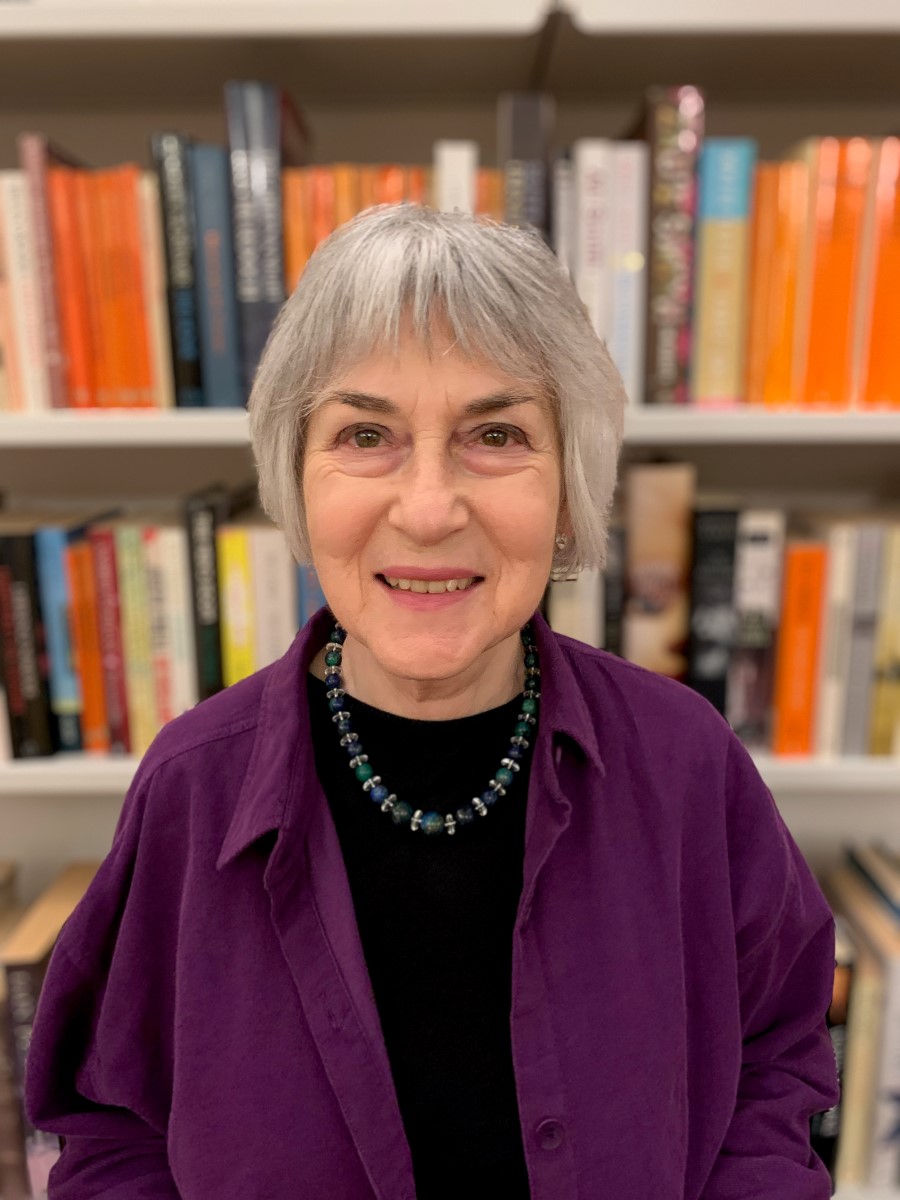
We are delighted to have Veronica van Heyningen, CBE as a Patron of Aniridia Network since 2013. Veronica is a highly distinguished geneticist who has done extensive research into the genes that cause aniridia.
Veronica uses her status, knowledge and contacts to assist the charity and further our cause in various ways. This includes seeking out and exploiting opportunities for funding, publicity and participation in activities,
The trustees heartily thank Veronica for taking on this important role and for helping the organisation to grow bigger and stronger.
Veronica provided the following introduction to herself
How the idea of becoming a patron emerged
In 2013, more than 20 years after my lab played a major role in identifying the gene mutated in most people with aniridia, I had just retired from the Medical Research Council Human Genetics Unit at Edinburgh University.
It is not easy to relinquish the research scientist role, that had defined me for 35 years in the same unit. Of course, I knew this milestone was approaching and wanted to soften the withdrawal symptoms, by seeking new roles that I would enjoy and where I could use some of my knowledge, and draw on the many contacts that I made over the years.
For example, we have collaborated with many ophthalmologists who work intensively to help people with aniridia. I was therefore delighted, and not at all hesitant to accept when trustees Liz and Katie asked me to consider becoming Patron of Aniridia Network. I had met Katie and a few other members in 2010 when they attended a small meeting on aniridia that I organised in Edinburgh.
My mini-CV
I was born in Hungary and came to the UK with my parents when I was eleven in 1958. So I have had most of my education in this country: a comprehensive school in Leicestershire and a bachelor’s degree in Natural Sciences in Cambridge (specialising in genetics in my final year)
Then I did a Master of Science degree at Northwestern University in Illinois, USA, where my husband, Simon, began a postdoctoral fellowship very soon after our marriage in 1968.
I ended up doing a PhD in Oxford on early human gene mapping. This was all a long time before the Human Genome project was possible, but it set the scene for my future interests.
In 1974 after my PhD we moved to Edinburgh where Simon was appointed a University Lecturer in Biochemistry. I was lucky enough to have a Beit Memorial fellowship which I could take with me anywhere in the UK. Another piece of good fortune was that I landed in a very well-known lab that was one of the earliest to do DNA work.
In mid-1975 our first child was born, followed by his sister at the end of 1976.
In 1977 I embarked on my research career in the Medical Research Council.
Read how we grew understanding of the diverse functions of PAX6. For more details read the biographical review of my work, showing the strong focus on PAX6 and genetic eye anomalies.
On retirement in 2012, I was appointed an Honorary Professor at University College London, and was attached to the Institute of Ophthalmology where I continued to work with colleagues on eye genetic eye disease, but no longer running a lab of my own.
Even in retirement my interest in eye genetics has continued strongly throughout my time as Patron. When invited to participate in a meeting I tend to accept. In October 2022 I gave the Heritage Lecture at the EVER meeting in Spain.
In 2010 I was awarded a CBE for services to science. I have been fortunate to have had a number of other honours bestowed on me. I am a:
- Fellow of the Royal Society of Edinburgh,
- Fellow of the Academy of Medical Sciences
- Fellow of the Royal Society
- Member of the European Molecular Biology Organisation (EMBO)
What I offer as Patron
Interactions with clinicians
Through my work I have contacts around the world with many ophthalmologists and clinical geneticists. I have introduced some of these people to Aniridia Network giving members opportunities to meet them, hear about their work and ask detailed questions in public and private situations.
Access to relevant institutions
I am familiar with:
- The Academy of Medical Sciences which includes both academic clinicians (those involved in serious research) and non-clinical scientists.
- People at Genetic Alliance UK
- key figures in the USA including the Jill Nerby and Peter Netland.
- Rosa from Aniridia Europe.
Experience of committees
I have experience of leadership and flying the flag from:
- giving evidence to Parliamentary Science and Technology committees
- being a member of the Human Genetics Commission for six years from its inception.
- serving a term as President of the European Society of Human Genetics and subsequently of the Genetics Society.





 Aniridia Network
Pingback: The diverse functions of PAX6: How Veronica grew our understanding | Aniridia Network
Pingback: A decade as Patron of Aniridia Network | Aniridia Network